A Mother Handed Over Her Child — and Never Got Her Back.4160
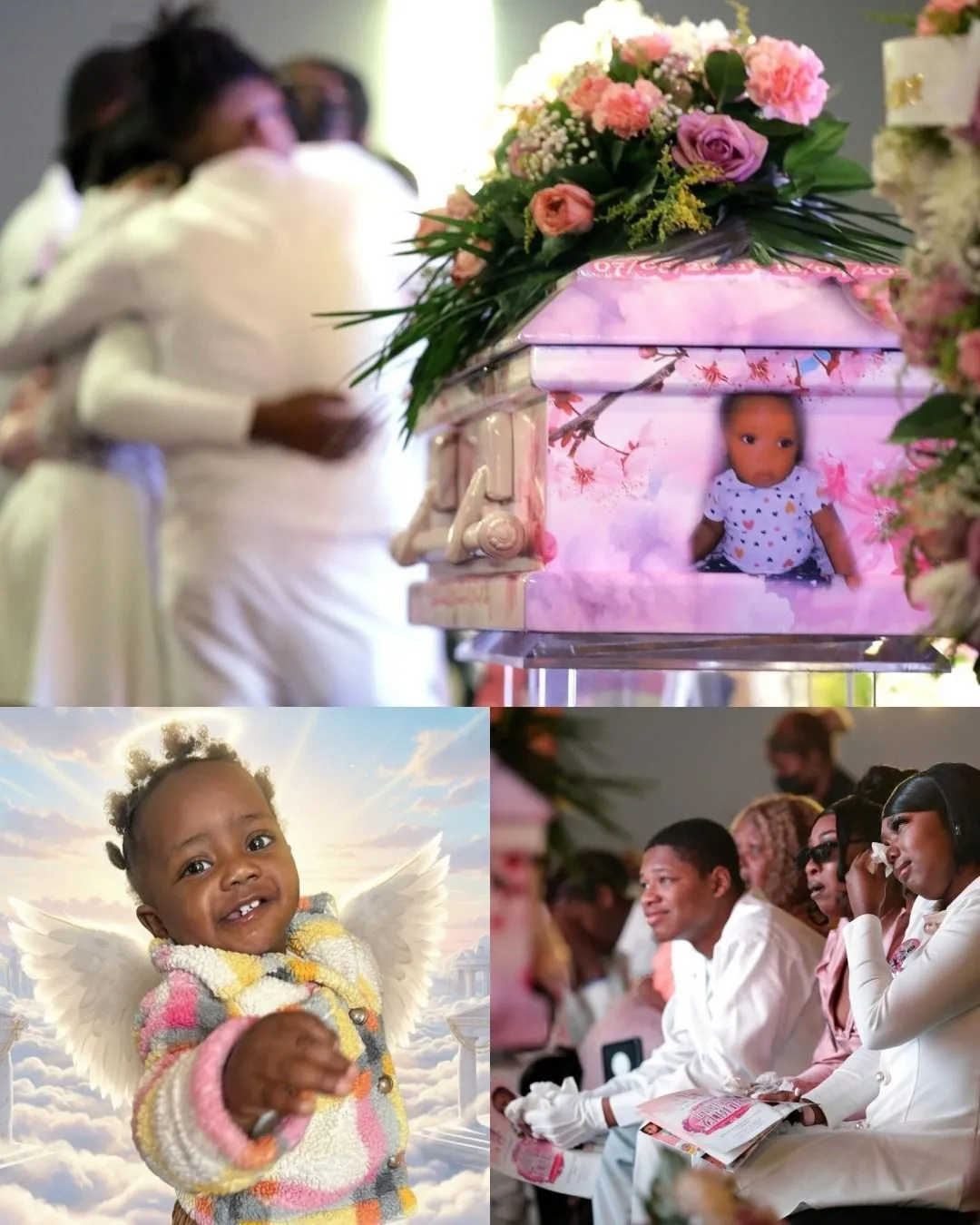
The morning in Inglewood began quietly, with the faint hum of traffic and the sun casting a pale light over the familiar streets.
But inside the small home of the Burley family, a storm had already begun.
Lynisha Hull, mother of one-year-old Leilani Dream Burley, woke with a familiar routine in mind.
Her heart felt light, as it always did when she thought of her children.
Little Leilani had been her spark, her tiny bundle of joy who could make anyone smile with her innocent giggles and wide, curious eyes.

Her three-year-old son, Zayveyon, was already up, dancing across the living room with the energy only a child that age could possess.
For Lynisha, life was a delicate balance of love and responsibility, of joy and vigilance.
But that Sunday would shatter that fragile sense of security.
Earlier that morning, Jayveyon Burley, Leilani’s father, had arrived at Lynisha’s Long Beach home.
He was to pick up both children for his scheduled visit, a routine that had become part of the rhythm of co-parenting after their split.

Lynisha noticed a slight tension in his expression, a shadow of frustration she had seen before but never associated with danger.
She handed over the children, trusting that he would return them safely, as he always had.
Hours passed, and the sun began its descent, painting the sky with hues of orange and pink.
When Jayveyon returned to his Inglewood home, something was immediately wrong.
He was alone with Zayveyon.
Leilani was not with him.

Alarm bells rang in Lynisha’s heart, sharp and insistent.
She tried calling him, her voice trembling, each unanswered ring amplifying the dread building inside her.
By the time the police were on the line, fear had turned into an unbearable certainty.
Leilani, her precious little girl, was missing.
Her grandmother, a steady presence in the family, had joined in the frantic search, contacting authorities in a state of panic.
Inglewood police responded swiftly, treating each passing hour as critical, the tension rising with every unanswered call and empty room.
The next day, the unimaginable happened.

Authorities recovered Leilani’s tiny body from the Los Angeles River in Long Beach, near where the river met the bay.
The city’s rhythm seemed to pause, as if the world itself mourned the loss of such a small, bright life.
Jayveyon Burley, 22, was taken into custody, charged with murder and child endangerment.
His bail was set at $215,000, a number that could never measure the weight of a life lost or the grief of a family shattered.
At the arraignment, questions loomed larger than answers.
Why had this happened?
How could a father, entrusted with the care of a child, allegedly commit such a crime?

Lynisha’s grief was raw, spilling over into the streets of Long Beach and the hearts of all who heard her words.
“Leilani, Leilani, I’m so sorry, baby,” she said, tears streaming down her face.
“She was so full of life. She loved music, books, she loved to dance, she loved giving high fives.”
Her voice broke with each memory, each image of Leilani’s laughter and innocent curiosity.
Her father, Tarethe Hull, could barely speak without choking on the sorrow that had settled in his chest.
“We didn’t deserve to lose a precious angel like this,” he said, his voice heavy with grief.
“I’m just trying to tell each and every family out there, hold on to your child. Watch for your children and the lovers they try to keep.”

The motive remained a mystery, a dark question that the police continued to investigate.
But for the family, answers were only part of the need.
Justice was paramount.
Jayveyon, the man who was supposed to protect and cherish Leilani, was now accused of taking her life.
Lynisha pleaded with the world to understand her pain, to help make sense of the senseless.
“Please help me understand. Why did he do this to my baby?” she asked.

The streets of Inglewood, the riverbanks of Long Beach, the echoing halls of the police station—all held pieces of the tragedy, fragments of a story no parent ever wants to live.
Leilani had been described as a child who could light up any room.
Even in her brief life of just one year, she had left indelible marks on the hearts of those who loved her.
She was curious, playful, and full of a vibrancy that made her presence unforgettable.
Her brother, Zayveyon, though unharmed physically, felt the absence of his sister in ways words could never fully capture.

Jayveyon’s demeanor, described as overprotective but without previous violent tendencies, only deepened the sense of shock and disbelief.
The family grappled with questions they could not answer and a pain that refused to diminish.
As the days passed, funeral arrangements were made, and neighbors, friends, and even strangers gathered to mourn a child who had touched their hearts in fleeting moments.
Candles flickered in the evening breeze, a silent tribute to a life so short yet so profoundly loved.
Lynisha clutched onto memories, to photographs, to the lingering scent of baby lotion and the warmth of Leilani’s tiny hand in hers.

She imagined the giggles, the dances, the high fives that would never come again.
And yet, she spoke of justice, of holding on to the hope that the system could honor her daughter’s memory.
“You’re going to reap what you sow,” she said, a quiet but firm promise directed at Jayveyon.
Tarethe echoed the sentiment, focusing on what could be done, on what could be fought for.
“I just want justice,” he said.
“That’s all I want. Justice for her and my family.”

The arraignment hearing was scheduled for the following month, a date that felt simultaneously distant and urgent.
The city continued its rhythm, but for the Burley family, time had fractured.
Each day was a reminder of what had been lost, each night a confrontation with grief.
Leilani’s story, though tragically brief, had ignited a call to vigilance, a plea to cherish the small moments with children, and a reminder that life, even in its fragility, deserves protection.

Her memory would live on, etched into the hearts of those who loved her, in whispers of her laughter, in the stories told to keep her spirit alive.
And though questions remained, the family’s pursuit of justice, their remembrance of Leilani, and their call for awareness would become a beacon for others, a plea to never let innocence be threatened.
Even as the city’s sun rose and fell, the light of Leilani’s brief life would continue to shine in the hearts of those left behind.
The Night Sinéad O’Connor Stood Alone—and the Words That Refused to Let Her Fall 330
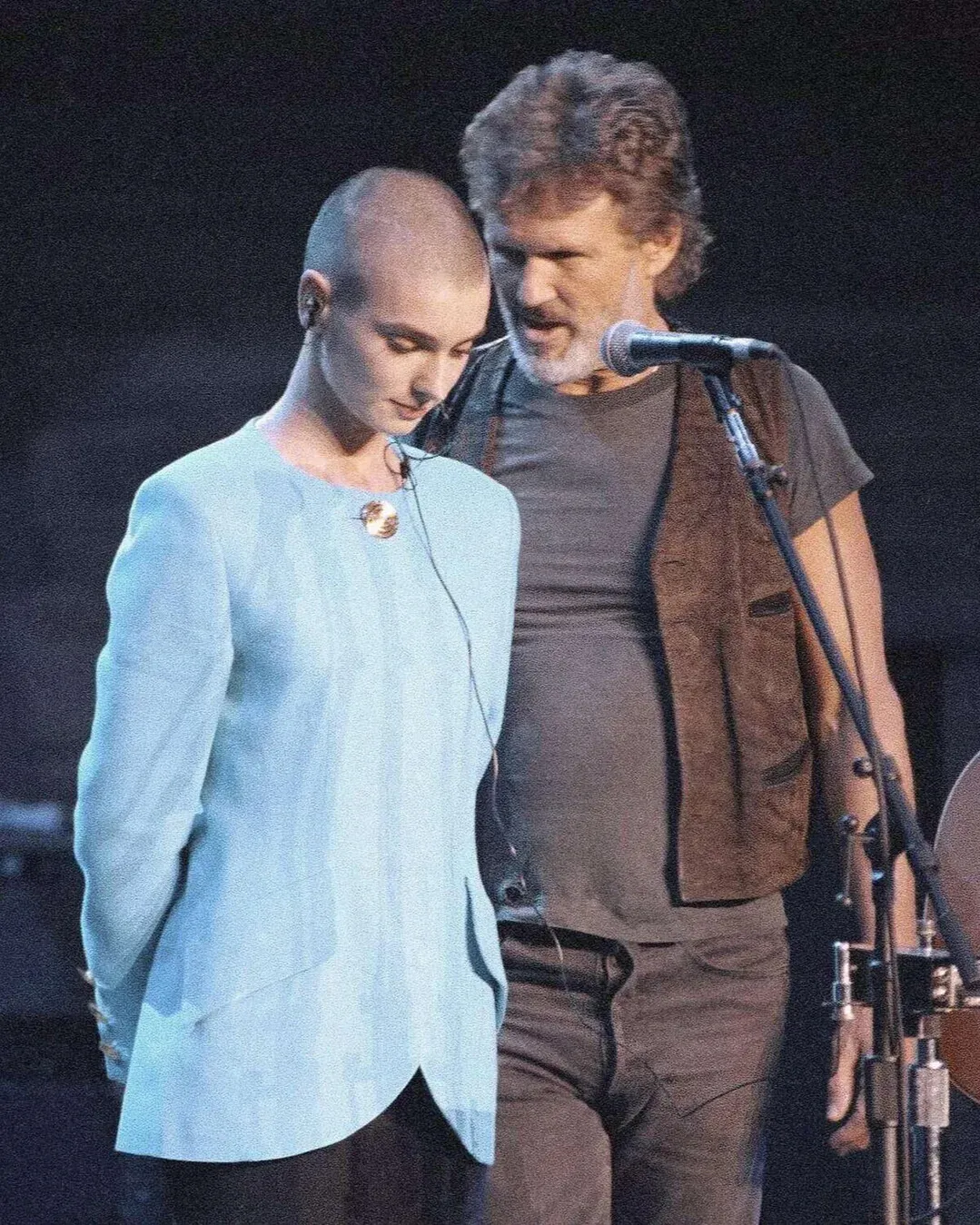

It was meant to be a night of celebration. In 1992, the stage at Madison Square Garden glowed under the weight of history, marking Bob Dylan’s anniversary with an all-star lineup. The audience, buzzing with nostalgia and reverence, came expecting music, memory, and safe celebration.
What they didn’t expect was Sinéad O’Connor.
Only 25 at the time, O’Connor walked onto that stage carrying not just her voice, but the weight of her convictions. In the weeks before, she had sparked global outrage for tearing up a photograph of the Pope on live television—a protest against abuse and corruption in the Catholic Church. The act had been deliberate, but the message was lost in the noise of scandal. She wasn’t merely challenging authority; she was demanding that silence be broken for the sake of truth.
That night, the crowd made their judgment known. Before she could finish, a wave of jeers rolled over her, sharp and unrelenting. It wasn’t a disagreement—it was an exile, the sound of thousands telling her she was unwelcome.
Standing just offstage was Kris Kristofferson, the country music icon tasked with introducing her. Watching the scene unfold, he didn’t step aside. He stepped closer.
As she walked toward him, shaken but unbowed, he pulled her into an embrace and whispered the kind of words you only give someone who’s walking through fire: “Don’t let the bastards get you down.”
The moment passed, the show went on, but Kristofferson didn’t forget. Years later, he put his feelings into verse—a tribute to O’Connor’s defiance, her vulnerability, and the rare courage it takes to stand in your truth when the world wants you silent.
“Maybe she’s crazy and maybe she ain’t,
But so was Picasso and so were the saints.
She’s never been partial to shackles or chains,
She’s too old for breaking and too young to tame.”
In those lines, Kristofferson captured something far larger than a single performance. He named the paradox of the truth-teller: revered in history, reviled in the moment. The artist willing to risk comfort, reputation, even safety, for the sake of honesty. The saint who accepts exile because the alternative is silence.
O’Connor’s stand—misunderstood then, vindicated by history—remains a reminder of how costly it is to be authentic. Speaking truth to power often means speaking into a storm, knowing that the first response will be anger, not applause.
But the beauty of that night isn’t only in her endurance—it’s in the way another human being chose to stand beside her. Kristofferson didn’t erase the boos or change the crowd’s mind. He simply refused to let her face them alone. And sometimes, that is enough.
The world often celebrates courage in hindsight, when the controversy has cooled and the truth is easier to swallow. But real courage happens in real time—in the moment when you’re still being shouted down, and you decide to keep standing anyway.
That night in 1992, Sinéad O’Connor stood alone before thousands who wanted her gone. But in the shadows, Kris Kristofferson stood with her. And in his words, he gave her—and all of us—a map for how to face the world when it turns against you:
Don’t break. Don’t tame.
And never let the bastards get you down.