A Deputy’s Kindness: Helping a Veteran Reach Care. – Daily News

The wind cut through the morning air, sharp and unrelenting, as a lone pickup truck rolled to a stop along the roadside. The driver, an aging U.S. military veteran, sat behind the wheel staring at the empty fuel gauge. He had been on his way to a VA hospital appointment, one that mattered not only for his health but for his peace of mind. But now, he was stranded.
The veteran had no family nearby to call, no friends in town who could bring gas, and no way to walk the distance in the bitter cold. The realization weighed heavily on him—just miles from the care he needed, yet unable to get there.
That’s when help arrived, not in the form of an official tow truck or roadside assistance, but in the quiet compassion of a local law enforcement officer.
Deputy J. Stephenson spotted the truck and, like so many times before, pulled over to check on a motorist in distress. At first glance, it might have looked like an ordinary breakdown, the kind of thing deputies come across daily. But a short conversation revealed the deeper truth: the man was a veteran, already fighting the battles of age and health, now facing the cold reality of being stuck with no fuel and no way forward.
Stephenson could have simply radioed in the situation, called for roadside assistance, and moved on with his shift. But he didn’t. Instead, he did something far more meaningful.
He drove the veteran to a nearby gas station, where he quietly pulled out his own wallet and purchased fuel. No paperwork. No hesitation. No expectation of repayment. Just an act of service, one man choosing to shoulder the burden for another.
The two then returned to the stranded truck. Deputy Stephenson helped fill the tank, making sure the engine started up and the vehicle was running properly. He didn’t leave until he was certain the veteran was back on the road and able to complete the journey to the hospital.
For the deputy, it was a small gesture—a tank of gas, a bit of time. But for the veteran, it was far more. It was dignity restored. It was compassion shown. It was the difference between missing vital medical care and being able to keep an appointment that could impact his health for years to come.
In a world where people often rush past each other, too busy to stop, this moment stands out. It reminds us that kindness doesn’t have to be grand or orchestrated. It can be as simple as one person recognizing another’s struggle and deciding to step in.
For veterans, such acts hold special meaning. Many return from service to find the world has moved on, their sacrifices remembered in ceremony but sometimes overlooked in daily life. To be seen, to be helped without judgment or hesitation, is a gift that carries weight beyond words.
Deputy Stephenson’s actions reflect the true spirit of service—the kind that doesn’t end when the uniform is put on in the morning or taken off at night. It is service rooted in humanity, in empathy, and in the understanding that our communities are only as strong as the care we show one another.
News of the deputy’s deed spread quickly, drawing admiration from those who heard about it. But perhaps the greatest impact was felt in the silence of that moment on the roadside: a veteran no longer stranded, a deputy standing guard until the truck roared to life, and the reassurance that even in hardship, no one is truly alone.
The world is full of challenges—big and small, personal and collective. But stories like this remind us that there is also goodness, waiting in unexpected places. A deputy on patrol. A veteran in need. A cold morning that could have ended in despair, transformed instead into a testament of compassion.
Thumbs up to Deputy J. Stephenson—not just for putting gas in a truck, but for putting hope back in motion.

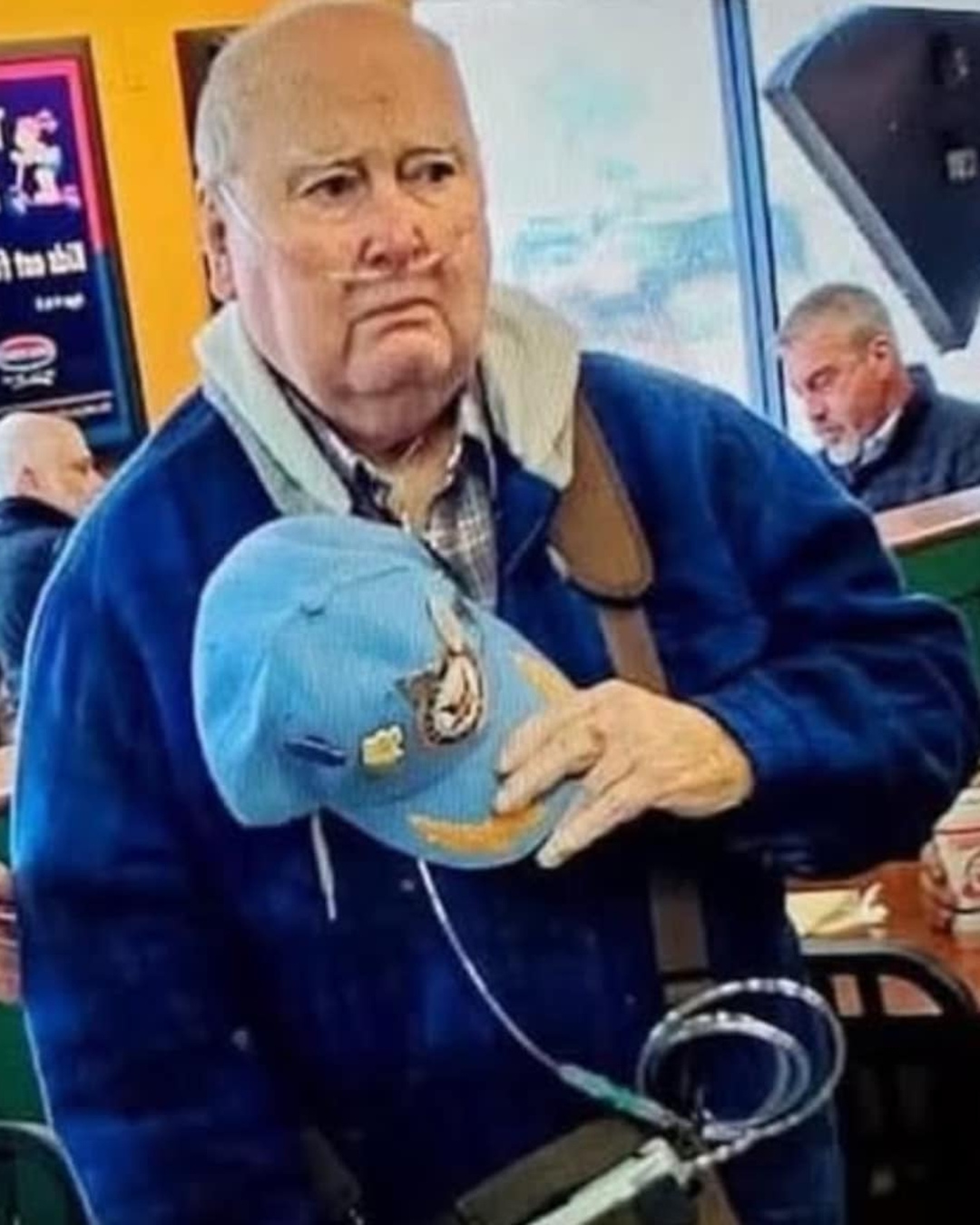
The scene was simple, yet unforgettable. An elderly veteran, frail and tethered to his oxygen tank, sat quietly in a corner booth of a small pizza restaurant. His wife was by his side, their meal before them, a rare outing granted by the fragile boundaries of his hospice care. Though age and illness had diminished his body, the cap on his head told another story—one of service, sacrifice, and a war fought long ago.
To the other diners, he might have appeared as just another aging man struggling against time. But for those who took the time to notice, the details spoke volumes: the cap bearing his branch of service, the careful way his wife helped him with his equipment, and the resolute dignity that still clung to him even as his body weakened.
On the other side of the restaurant, life carried on in contrast. A middle school choir was gathered for lunch, their chatter and laughter filling the air with the energy of youth. They were bright, hopeful, and full of the promise of lives not yet fully written.
But then something extraordinary happened.
A few students noticed the veteran. They saw the cap, the oxygen tank, the quiet dignity in his presence. Without prompting, a small group began to hum, then sing the opening lines of the national anthem. Their voices rose gently at first, clear and pure, drawing the attention of their peers.
One by one, the rest of the choir stood. Chairs pushed back, trays set aside. Soon, the entire group was on its feet, facing the elderly man, their voices joining together in harmony. The restaurant grew silent as the anthem filled the room.
The veteran, startled at first, tried to rise. His body protested, but his will did not. With trembling effort, he got to his feet, removed his cap, and placed it over his heart. Oxygen tubes trailed at his side as he stood in quiet reverence, tears welling in his eyes.
For those few moments, time seemed suspended. Customers set down their forks, parents hushed their children, and strangers became witnesses to a sacred exchange between generations.
The choir sang with conviction—not as a performance, but as a gift. And in return, the veteran gave them a glimpse of something rare: humility, gratitude, and the enduring spirit of a man who had once stood strong in defense of his country.
As the final notes faded, the veteran’s hand shook against his chest. Tears ran freely down his weathered face. His wife held his arm, her own eyes glistening. The look on his face—equal parts pride, grief, and overwhelming gratitude—said more than words ever could.
It was not just a song. It was recognition. It was honor. It was a reminder that though his body was failing, his service had not been forgotten.
In that small restaurant, a choir of children gave a final gift to a warrior at the end of his journey. And in doing so, they gave everyone present a reason to believe in goodness still alive in the world.
The veteran’s heroism was not in his tears, nor in his attempt to stand—it was in his life, lived decades earlier, when he chose to serve his country. But the children’s heroism was in their choice to notice, to care, and to act.
There are moments that shape us, that linger in memory long after the ordinary details fade. For that choir, and for every diner who witnessed it, this was one of those moments.
And for the veteran, it was something deeper still. It was a farewell, wrapped in the voices of the young, a reminder that the torch he once carried had not been dropped, but passed on.
In a world often clouded by division and noise, that day proved something simple yet profound: goodness is everywhere, if we choose to see it.
And sometimes, goodness sounds like a song.