A Child’s Cry, An Officer’s Instinct. – Daily News

The boy was tiny. His arms barely wrapped around the blanket, his voice high and breaking as sobs filled the hospital room. He was scared — scared of the bright lights, the strangers in scrubs, the unfamiliar beeping of machines that seemed to surround him on every side. At that age, everything feels larger than life, and in that moment, the world must have felt impossibly big and terribly cold.
“The boy, obviously, being so small, became very upset,” the officer later explained. “He was crying. He was sobbing.”
Doctors and nurses worked steadily, doing what they could to ensure the child received the medical care he needed. They were attentive, professional, compassionate. But still — the boy could not stop crying. His little chest heaved with each sob, and his tears came faster than anyone could wipe away.
Watching from the side, the officer felt something stir inside him. His training had prepared him for danger, for emergencies, for protecting the public from threats. But nothing in a manual tells you what to do when a child’s cries pierce through all the noise and land straight in your heart.
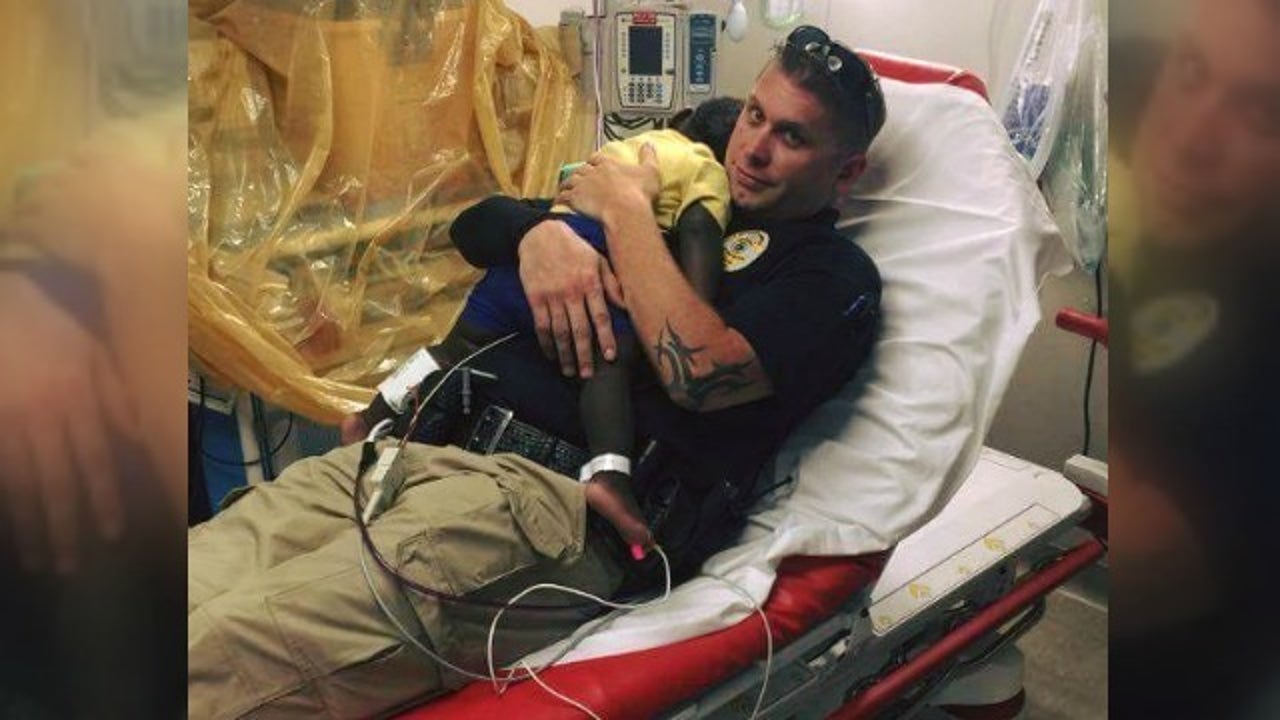
He stepped forward and asked the simplest of questions: “Can I hold him?”
The hospital staff, recognizing both the child’s distress and the officer’s sincerity, agreed. And with that, the uniform — the badge, the belt, the layers of gear — faded into the background. He was no longer an officer enforcing order. He was just a human being responding to another human being’s need.
“I picked him up,” he said. “Minutes later, I was standing and he was asleep on my chest.”
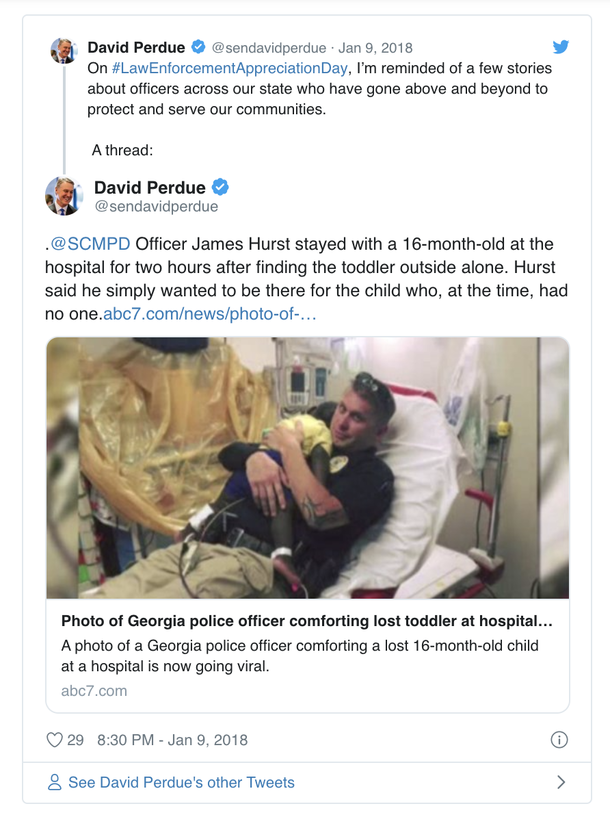
It was almost immediate. The boy, who moments before had been inconsolable, began to calm in the safety of someone’s arms. His sobs slowed. His breathing softened. His head tucked against the officer’s chest, and within minutes, he drifted into sleep.
But as the child relaxed, the officer realized something practical: his own body armor and gun belt made it difficult to hold the boy for long. “With all my body armor and my gun belt, it became very heavy holding this small child,” he admitted. “So that’s when I decided to sit down on the bed and make it easier for him and me.”
So there he sat, on the edge of a hospital bed, a grown man in uniform cradling a child small enough to disappear against him. He stayed there quietly, careful not to wake him, letting the boy’s exhaustion finally give way to rest.
“I just knew this child needed somebody to be there for him,” the officer said later. “It was just human instinct; humanity. The hospital staff was taking great care of him, but he was sobbing and crying. I picked him up and within minutes, he was asleep on my chest.”
Those who witnessed it would not forget the image. The badge and the gun were still there, but so was something deeper — compassion, tenderness, humanity. In a world where headlines often highlight conflict, this was a reminder that at the heart of service is the willingness to care.
In that hospital room, the boy’s fear dissolved, replaced by the steady rhythm of a heartbeat he could trust. And in that same room, an officer showed that sometimes the greatest act of protection is not stopping danger, but simply being a safe place for someone too small to carry their own fear.
It was not dramatic. It was not loud. It was quiet, ordinary even — a man holding a child until the child felt safe enough to sleep. But sometimes, those are the moments that matter most.
And in this case, those were the moments that reminded everyone watching that kindness can be the strongest part of the uniform.

On an ordinary day in Green Bay, Wisconsin, a passerby noticed something that would soon touch thousands of hearts. Sitting quietly by a fire hydrant was a mixed-breed dog, nearly six years old. Beside her sat a large backpack, neatly packed and zipped. The dog’s eyes watched the street with patient hope, as though waiting for someone who wasn’t coming back.
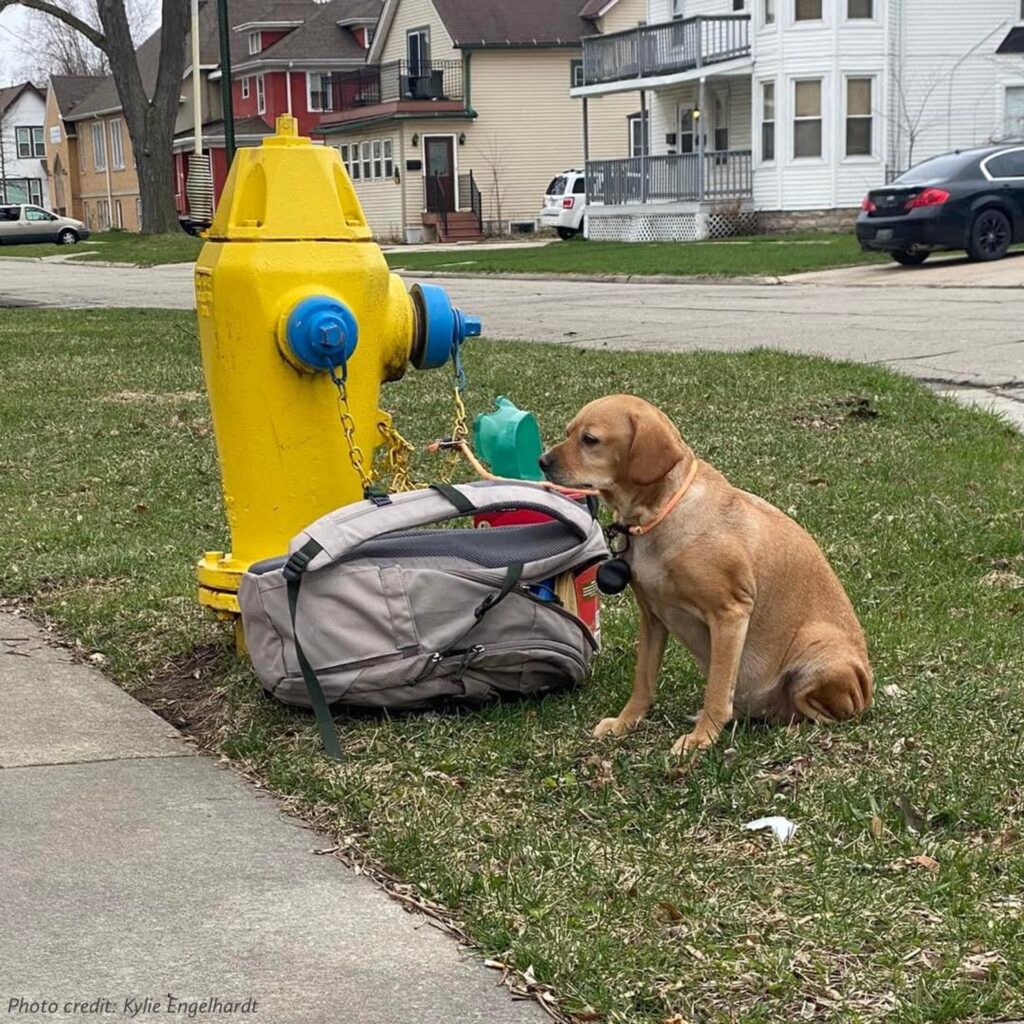
The woman who spotted her waited too, standing nearby for nearly an hour. Perhaps, she thought, the owner had simply stepped away. Perhaps they would return and explain. But as the minutes stretched and no one appeared, reality settled in. The dog had been left behind.
Not wanting to abandon her further, the woman reached out to the Wisconsin Humane Society’s Green Bay Campus. Within hours, photos of the scene began circulating online: the loyal dog tied to the hydrant, the backpack at her side, her calm but lonely gaze.
The reaction was immediate. Outrage filled the comments. People condemned the unknown owner with sharp words, assuming neglect, cruelty, or selfishness. To many, the image was the embodiment of abandonment.
But then came the note.

Inside the backpack, among food, treats, and toys, was a handwritten message. It explained that the owner was struggling with severe health issues and life challenges that left them unable to care for the dog. The note didn’t excuse; it pleaded. It asked for kindness. It begged that someone take care of the dog they loved but could no longer keep.
Suddenly, the story changed.
The dog, it turned out, had not been discarded carelessly. She had been loved — deeply enough that her owner ensured she had food, her favorite belongings, and was left in a visible spot where she would be quickly found. It wasn’t the act of someone who didn’t care. It was the act of someone out of options, making a painful decision with as much love as they had left to give.

The Wisconsin Humane Society confirmed the dog was healthy, well-fed, and clearly well cared for. They took her in, promising to find her a new, loving home. And as the shelter shared the full story, public sentiment shifted. The anger that had burned in so many softened into compassion.
“Sometimes life leaves people with impossible choices,” one commenter wrote. “This was an act of love, not cruelty.”
Others echoed the same, urging understanding over judgment. Many admitted they were moved not just by the dog’s patience, but by the visible effort of an owner who had tried to give her the best possible chance at a safe future.

The shelter was clear: while they do not condone anonymous abandonment, they recognize the heartbreak behind this particular case. Their focus now is on ensuring the dog — who has already shown resilience and sweetness — finds a family who can give her stability and love.
For those who followed the story online, the dog at the fire hydrant became more than a headline. She became a symbol of how complex human struggles can be, and how quick we often are to judge without knowing the full story.
And as she waits for her forever home, she carries with her not just a backpack of toys and food, but a reminder: sometimes love doesn’t look like keeping. Sometimes, love is letting go.