JOHN DENVER MADE THE WORLD FEEL AT HOME — EVEN WHEN HE WAS STILL TRYING TO FIND HIS OWN. John Denver had a rare gift. He could sing about a road, a mountain, a morning, or a patch of sunlight and make millions of people feel like they had been there before. “Take Me Home, Country Roads” didn’t just sound like West Virginia. It sounded like every place someone missed but couldn’t quite return to. “Rocky Mountain High” felt like breathing after years indoors. “Annie’s Song” turned love into open air. But behind that gentle voice was a man still searching for peace himself. Fame gave him stages, applause, and songs the world carried like memories, but it didn’t make life simple. There were broken marriages, lonely stretches, and the quiet ache of a man who could describe home better than almost anyone — while still trying to hold onto it in his own life. That is what made his music last. John Denver didn’t just sing pretty songs about beautiful places. He gave people a place to rest, even when his own heart was still looking for one. – Country Music
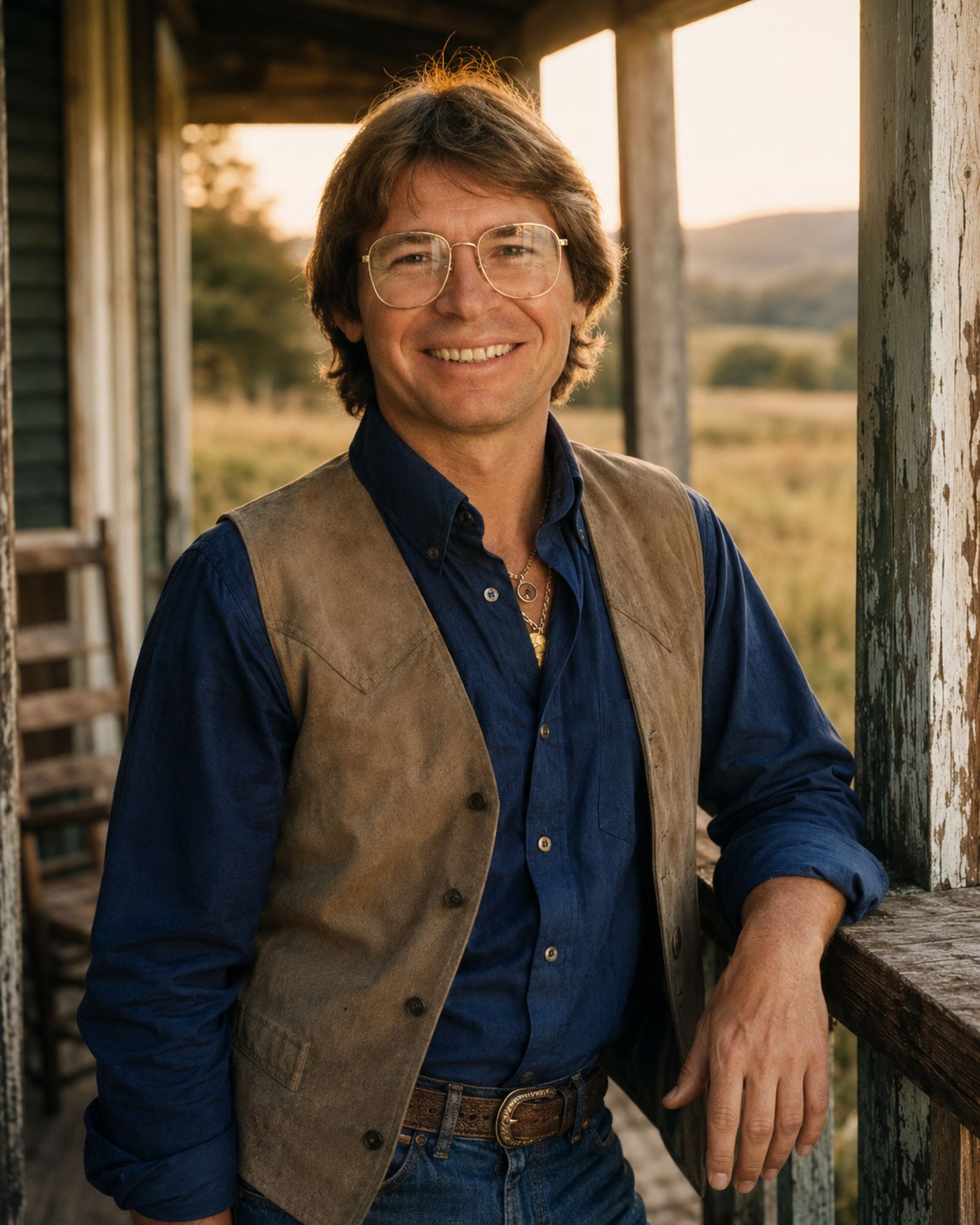
John Denver had a rare gift. He could sing about a road, a mountain, a morning, or a patch of sunlight and make millions of people feel like they had already lived there. His songs did not just describe places. They created a feeling of belonging. They reminded people of something warm, familiar, and quietly hopeful.
“Take Me Home, Country Roads” did more than name a state. It sounded like every place a person had ever missed. “Rocky Mountain High” felt like fresh air after a long, difficult stretch. “Annie’s Song” turned love into something open and simple, like nature itself. John Denver had a way of making the ordinary feel sacred.
A Voice That Opened Doors
John Denver was born Henry John Deutschendorf Jr., and like many artists who become unforgettable, he did not arrive fully formed. He worked, he struggled, and he searched for his place in the world. Music became the place where everything finally made sense. It gave him a language for the things he felt most deeply: love, wonder, loneliness, and the wish to belong somewhere real.
When John Denver sang, he sounded honest. That honesty mattered. His voice was gentle, but it was never empty. It carried trust. People did not just hear a singer; they heard someone who seemed to understand what it meant to miss home, to hope for peace, and to keep going anyway.
The Songs People Carried With Them
Some artists are known for noise, shock, or power. John Denver became beloved for something quieter. His songs moved through kitchens, car radios, family gatherings, school events, and late-night moments when a person needed comfort. They became part of daily life.
“Country roads, take me home, to the place I belong”
That lyric worked because it felt bigger than geography. It spoke to the human need for shelter, memory, and return. People sang it with friends, strangers, and entire crowds, and for a few minutes, everyone seemed to share the same feeling.
His music had that effect again and again. John Denver knew how to write about nature without making it feel distant. Mountains were not just scenery. Sunshine was not just weather. A river, a road, or a breeze could become part of a person’s emotional life. That was his gift: he helped listeners see beauty in the world and in themselves.
The Private Search Behind the Public Smile
Behind the calm image was a man who was still trying to understand his own life. Fame gave John Denver success, but it did not make him untouched by pain. There were broken marriages, complicated relationships, and periods of loneliness that sat quietly behind the music. The same person who could write so beautifully about home was also trying to keep his own life steady.
That tension gives his story its depth. It is easy to assume that artists who write comforting songs must live comfortably too. John Denver’s life showed something more human. He was not a finished answer. He was a person in motion, learning as he went, carrying both joy and uncertainty.
That may be why his songs still matter. They were not written from perfection. They were written from longing. And longing is something almost everyone understands.
Why His Music Still Feels Close
Even now, John Denver’s music still feels close enough to touch. It does not belong to one era only. It belongs to anyone who has looked out a window and wished for peace. It belongs to anyone who has loved a place, a person, or a memory so much that it felt like home.
His songs endure because they are sincere. They do not try to impress with distance. They invite listeners in. In a loud world, that kind of gentleness can feel revolutionary. John Denver reminded people that tenderness is not weakness. He showed that beauty can be direct, and that hope can be simple.
More Than a Singer
John Denver did not just sing pretty songs about beautiful places. He gave people a place to rest, even when his own heart was still looking for one. That is what makes his legacy so moving. He made the world feel softer, warmer, and less alone.
For many listeners, his music still feels like a familiar road home. And maybe that is the greatest sign of all. Long after the spotlight fades, the feeling remains. John Denver sang about home so well because he understood, deep down, how deeply people need it.
Post navigation
In 1959, Nashville was learning how to smooth its edges. Country music was leaning toward cleaner production, softer arrangements, and songs built to cross over into pop radio without causing too much friction. The business wanted polish. It wanted comfort. It wanted records that could travel anywhere without sounding too rough around the corners.
Marty Robbins took one look at that direction and quietly went another way.
He walked into the moment with gunfighter ballads, trail songs, Spanish guitars, desert heat, and men making hard choices under open skies. He brought the listener into a place that felt older than radio and larger than the studio walls. It should have sounded outdated. Instead, it sounded immediate, vivid, and strangely modern in the way a great story always is.
A Record That Opened a Door
Gunfighter Ballads and Trail Songs was not just an album title. It was a promise. From the first notes, Marty Robbins created a world where every road seemed to lead somewhere dangerous, beautiful, or both. The songs did not ask for your attention with force. They earned it with atmosphere.
Then came “El Paso,” the song that changed everything.
It was a country hit. It was a pop hit. It was a story so fully realized that listeners could almost feel the night air, the dust on boots, and the weight of the final ride. A song about a doomed love affair in a border town should not have had that kind of reach, but Marty Robbins made it universal. People did not just hear the story. They entered it.
Why It Worked
Marty Robbins understood something many artists never fully grasp: listeners do not always want realism. Sometimes they want belief. They want a song to open a hidden door and let them walk into a place they have never seen but somehow recognize.
His voice helped. It was smooth, controlled, and full of quiet authority. He could sound tender without becoming fragile and heroic without sounding inflated. When he sang about cowboys, outlaws, and lonely roads, he never sounded like a man dressing up in costume. He sounded like someone telling you the truth as he had lived it.
That is what made the songs breathe. Marty Robbins did not present the West as a museum piece. He gave it movement, danger, romance, and regret. The landscape was not background decoration. It was part of the emotion. Every canyon, cantina, and trail carried the same kind of weight as the characters themselves.
The Myth Felt Real
By the time the record reached listeners, the West was already changing in American memory. It existed in old photographs, movie reels, and fading legends. Marty Robbins did not simply preserve that image. He restored its emotional force. He made people believe that somewhere beyond the edge of the ordinary world, there was still a place where honor, longing, and fate could collide under a wide sky.
That is why his songs lingered. He was not chasing novelty. He was building a myth sturdy enough to survive repeated listening. And he did it without irony. There was no wink, no self-conscious distance. He believed in the world he was creating, and that conviction invited everyone else to believe too.
Some artists record songs. Marty Robbins built a myth so convincing that the dust still hasn’t settled.
More Than Nostalgia
What Marty Robbins gave country music was not just nostalgia for a vanished frontier. He gave it scale. He reminded audiences that a song could be cinematic without losing its heart. It could be beautiful and tragic at the same time. It could carry a whole landscape inside a few verses and still feel personal.
That is why his influence has lasted. Long after the charts changed and the industry moved on to new sounds, the feeling remained. Marty Robbins did not sing about a museum version of the West. He made the West feel alive, breathing, and just out of reach.
And maybe that is the real magic. He did not ask listeners to remember a place they had known. He made them miss a place they had only imagined. In doing so, he gave country music one of its most enduring gifts: the sense that a song can be more than entertainment. It can be a world.
The Dust Still Settles Slowly
When people return to Marty Robbins today, they are not only hearing a classic voice or a famous hit. They are stepping back into a place where every note carries the weight of a story told with complete conviction. That is why the songs still work. They never depended on trends. They depended on belief.
Marty Robbins did not just revive the West. He made it feel present, personal, and impossible to forget.