“YOU NEVER KNOW WHEN THE LAST ONE IS GOING TO BE, SO CHERISH THEM ALL” — KYLE BUSCH SAID THAT. DAYS LATER, HE WAS GONE. Kyle Busch died Thursday at 41. A sudden, severe illness took NASCAR’s all-time winningest driver — 234 victories across three series, two Cup championships, 22 seasons of being the most fearless name on the track. But what happened next showed something no trophy ever could. Blake Shelton called him a legend. Dierks Bentley shared a photo from just two weeks ago — the two of them smiling, talking about their kids. Just a couple of dads. And Gavin Adcock? He performed at Kyle and Samantha’s charity event the night before Kyle passed. He said he’s truly at a loss for words. Brantley Gilbert posted a red carpet photo from the 2025 CMAs. Cole Swindell said he didn’t want to believe it. Gary LeVox told Kyle to drive on tracks of gold now. The man they called “Rowdy” wasn’t just NASCAR’s fiercest driver. He was the guy country music wanted at their table. And nobody had any idea that smile would be the last one they’d see. – Country Music
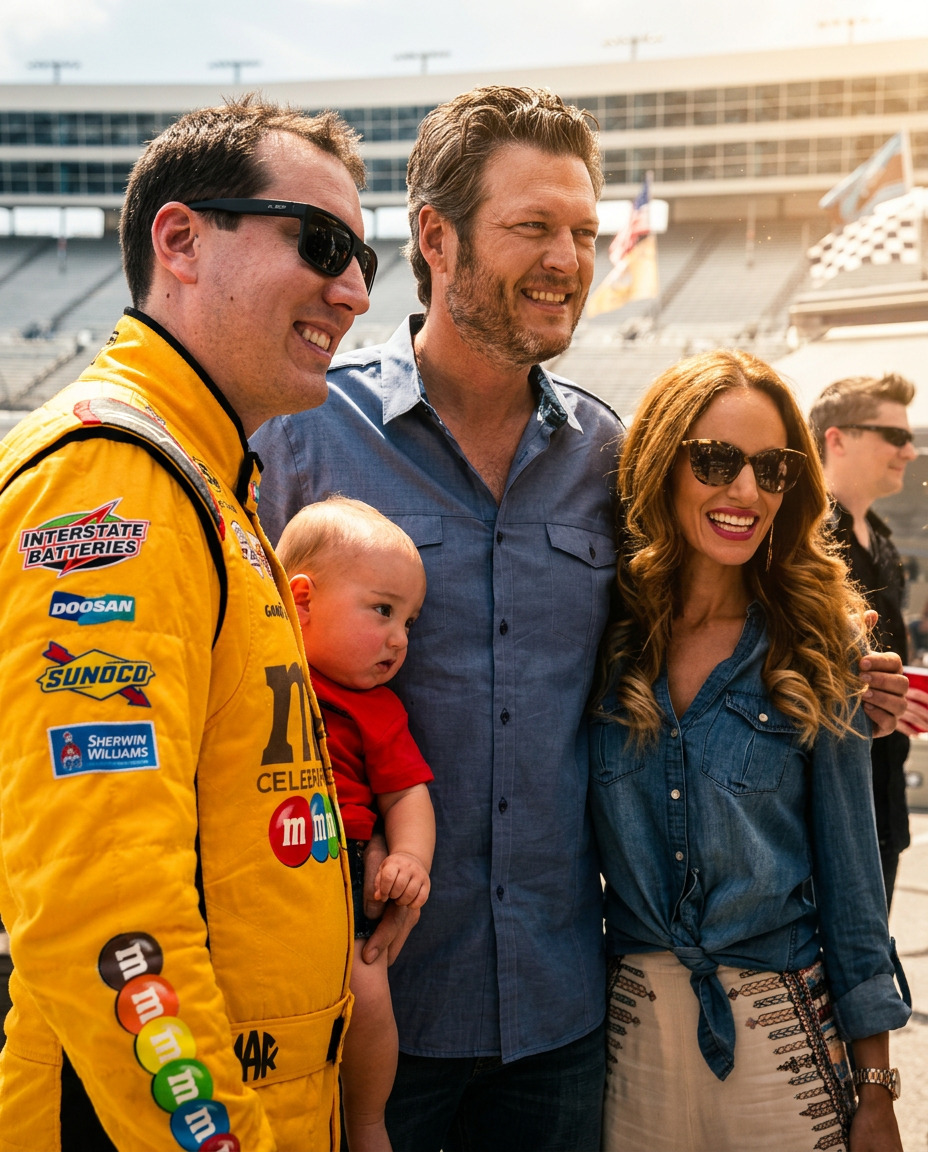
How Kyle Busch’s sudden death shocked NASCAR and the country music world
“You never know when the last one is going to be, so cherish them all.” Kyle Busch said that once, the kind of line people usually hear and move past without realizing how hard it can land later. Days afterward, the words took on a devastating meaning. Kyle Busch died Thursday at 41 after a sudden, severe illness, leaving behind a stunned racing community, grieving friends, and a long list of people who never expected a goodbye to come so soon.
For two decades, Kyle Busch was one of the most recognizable names in American motorsports. He was fearless, outspoken, and impossible to ignore. Fans knew him as “Rowdy,” a driver who gave everything on the track. His record spoke loudly: 234 victories across three series, two Cup championships, and 22 seasons at the center of NASCAR conversation. He was the all-time winningest driver in the sport, and he built that legacy with speed, grit, and a personality that made him unforgettable.
But what happened after his passing showed something even bigger than trophies, records, or victory laps.
A loss felt far beyond the racetrack
When the news broke, the reactions came quickly and from every direction. The messages were not polished statements from distant admirers. They were personal, emotional, and deeply human. Blake Shelton called Kyle Busch a legend. Dierks Bentley shared a photo from just two weeks earlier, showing the two of them smiling and talking about their kids like old friends who had simply stopped to catch up for a few minutes. That image hit hard because it looked so ordinary. Just a couple of dads talking. Just a casual moment. Just one of the last moments anyone would ever have with him.
Gavin Adcock, who had performed at Kyle and Samantha’s charity event the night before Kyle Busch passed, said he was truly at a loss for words. Brantley Gilbert posted a red carpet photo from the 2025 CMAs. Cole Swindell said he did not want to believe it. Gary LeVox told Kyle to drive on tracks of gold now. Each message carried the same thing underneath: disbelief, respect, and the sadness that comes when someone larger than life is gone in a way nobody saw coming.
That is what made the loss so difficult. Kyle Busch was not just a name on a leaderboard. He was a man with friends, a husband, a father, and a presence that reached far beyond the grandstands. Country music stars knew him. They laughed with him. They took photos with him. They saw the side of him that did not wear a helmet or take a green flag.
The man behind “Rowdy”
In racing, Kyle Busch earned a reputation for intensity. He was confident, competitive, and often unapologetic. That was part of the appeal. He did not just show up to compete; he came to win. For many fans, that fire is what made him special. For others, it was the edge that made every race feel more dramatic. Either way, he was never forgettable.
Yet the tributes that followed his death painted a fuller picture. He was more than the driver people argued about on Sundays. He was the person friends wanted at their table, the one who could talk about family, share a laugh, and make time for a charity event. He was a familiar face at country music events, someone who moved easily between two worlds that both understood loyalty, performance, and the emotional pull of a crowd.
“You never know when the last one is going to be, so cherish them all.”
That quote now feels like a warning and a reminder. One more photo. One more conversation. One more smile that, at the time, seemed ordinary. Nobody knew it would be the last one they would see.
What his story leaves behind
Kyle Busch’s death has left a void that cannot be filled by statistics, championships, or highlight reels. The numbers will remain in the record books, but the memories shared by friends and fans now matter even more. People will remember the wins, of course. They will remember the intensity, the rivalries, and the noise that followed him everywhere. But they will also remember the human moments: the father talking about his kids, the friend posing for a photo, the familiar smile at a charity event, the man who made time for people outside the spotlight.
That is the part that lingers. Not just that Kyle Busch was great, but that so many people felt lucky to know him even briefly. His death at 41 is a reminder that life can change without warning, and the moments we think are small may be the ones we carry forever.
In the end, the world lost a racing giant, but the people who knew Kyle Busch lost something more personal. They lost the last handshake, the last laugh, the last shared story. And now, the quote he once said feels bigger than ever: cherish them all.
Post navigation
When Scotty McCreery won American Idol, it looked like the start of a long, unstoppable career. He was young, talented, and instantly recognizable. Fans cheered, radio stations played his songs, and the future seemed wide open. But after the spotlight faded, the silence that followed was harder than anyone expected.
The phone stopped ringing as often. The industry moved quickly. New stars arrived. The excitement around the kid from North Carolina began to thin out, and Scotty McCreery found himself in a place many young artists fear most: a moment that felt like it might be over before it had truly begun.
For a while, he kept going, performing, writing, and trying to stay grounded. But beneath the surface, there was pressure. He had won a huge competition, yet he still had to prove himself all over again. That kind of pressure can change a person. It can also quiet them.
Then, in 2015, everything shifted.
Scotty McCreery’s grandfather, Bill, passed away. It was a personal loss, the kind that leaves a hole in ordinary life. Bill was not just family. He was one of the people who helped shape the way Scotty McCreery saw home, love, and time itself. And when he was gone, grief did what grief often does: it opened a door that had been closed.
Scotty McCreery sat down and wrote a song from a place he could not fake. He was not trying to create a hit. He was not chasing a trend. He was trying to capture a feeling almost everyone understands but rarely knows how to say out loud. If one more conversation were possible, what would it be worth? If one more hug could be earned, how much would someone give for it?
The answer became “Five More Minutes”.
The song is simple on the surface, but that is exactly why it hit so hard. It speaks to the universal ache of wanting just a little more time with someone who is gone. Not forever. Not some impossible miracle. Just five more minutes. Enough for one more laugh, one more story, one more goodbye that feels complete.
“Five more minutes” became more than a lyric. It became a feeling people carried with them after the song ended.
When Scotty McCreery performed the song for the first time, the moment carried a weight that few in the room could have predicted. The performance was emotional enough on its own, but there was something even more powerful happening in the audience. His grandfather Bill was sitting in the front row that night, and the meaning of that presence changed everything. It turned the song into a memory while it was still being made.
People in the room could feel it. The quiet before the first line. The way the room seemed to lean in. The way Scotty McCreery’s voice carried both sadness and gratitude at once. It was not just a song about loss. It was a song about love refusing to disappear.
After that night, the reaction was immediate. Listeners connected with it deeply. The song climbed the radio charts and spread far beyond country music fans. People heard it in cars, in kitchens, and through headphones during ordinary days that suddenly became emotional. It stopped people mid-drive. It made strangers cry in parking lots. It reminded listeners of grandparents, parents, friends, and moments they still replay in their minds.
What made “Five More Minutes” so powerful was not just the story behind it. It was the honesty. Scotty McCreery did not hide behind a polished image. He took a private pain and turned it into something people could hold onto. That takes courage. It also takes trust. He trusted that other people had felt the same kind of longing.
And they had.
In the years that followed, the song became a defining moment in Scotty McCreery’s career. It showed that the boy who once won a television competition had grown into an artist capable of writing from the heart, not just singing well. It was proof that sometimes the most lasting success comes after the silence, after the setbacks, after the world has nearly stopped watching.
Scotty McCreery lost his grandfather in 2015. From that loss came a song that touched millions. And for anyone who has ever wished for just a little more time, “Five More Minutes” did something rare: it made grief feel understood.