IT BECAME MERLE HAGGARD’S FIRST #1 HIT — A SONG ABOUT A MAN WHO CAN’T ESCAPE HIS CRIMINAL PAST. THE WRITERS WHO SENT IT TO HIM HAD NO CLUE THEY WERE DESCRIBING HIS ACTUAL LIFE. In 1967, songwriters Liz Anderson and Casey Anderson sent Merle a tune called “I’m a Lonesome Fugitive” — a story about a man branded by his past, forever running from who he used to be. They thought it was just a good country song for a rising singer. What they didn’t know was that Merle Haggard had been inmate #45200 at San Quentin. He’d done time for burglary and a failed jailbreak. He’d sat in the prison yard and watched Johnny Cash perform. When Merle recorded that song, he wasn’t acting — he was remembering. It went straight to #1 and launched one of the greatest careers country music has ever seen. The truth he carried in his voice was something no songwriter could have invented. – Country Music
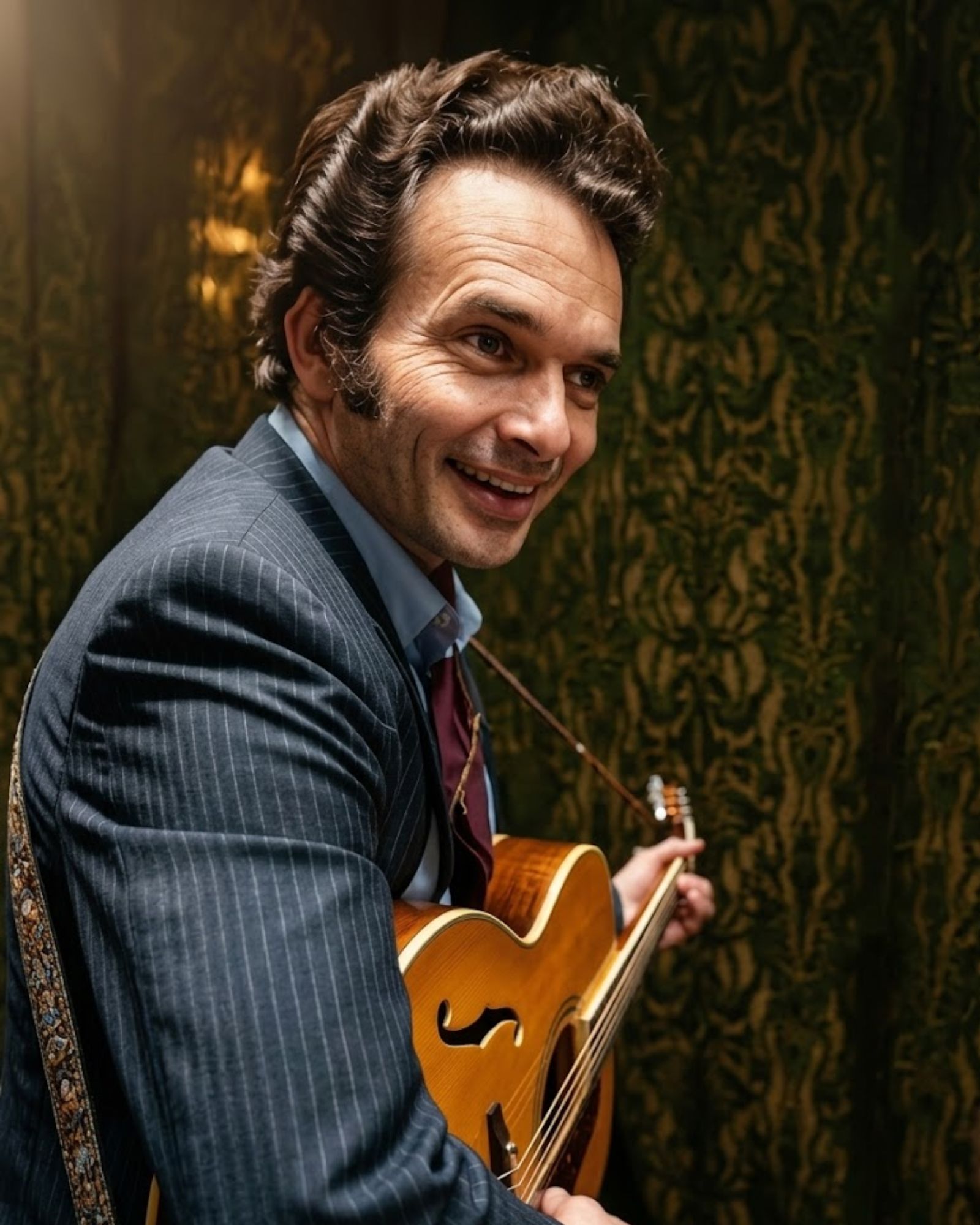
Some country songs sound honest because they are well written. Others feel honest because the singer knows every word in the bones. That is what made “I’m a Lonesome Fugitive” different for Merle Haggard.
By the time the song reached Merle Haggard in 1967, it already carried the shape of a strong country story. Liz Anderson and Casey Anderson had written about a man trapped by his own history, a man who could not outrun the shadow of what he had done. On paper, it was a vivid, believable portrait. But to Merle Haggard, it was not just a character sketch. It was memory.
That is the detail that still stops people. The writers who sent the song to Merle Haggard did not realize how closely it matched the life he had actually lived. They were sending a rising singer a powerful piece of material. They did not know they were handing Merle Haggard a mirror.
A Voice That Carried More Than Melody
Before Merle Haggard became one of country music’s defining voices, Merle Haggard had already seen the inside of places most artists only sang about. Merle Haggard had been in trouble, had served time, and had lived with the weight of choices that did not simply disappear once the prison gates were behind him. That kind of past does not leave neatly. It lingers in the way a person walks into a room, in the way silence feels, in the way a lyric lands.
So when Merle Haggard stepped up to record “I’m a Lonesome Fugitive”, there was no need to imagine the shame, the fear, or the stubborn ache of a man marked by his own mistakes. Merle Haggard understood the song from the inside out. The loneliness in it was not decoration. The regret was not theatrical. Even the title seemed to fit him with unsettling precision.
That is why the recording hit so hard. Listeners may not have known every chapter of Merle Haggard’s past, but they could hear something unmistakable in the performance. The voice was steady, but it carried a strain. The story sounded lived in. The emotion felt earned. Merle Haggard was not reaching for authenticity. Merle Haggard already had it.
The Song That Changed Everything
When “I’m a Lonesome Fugitive” climbed to the top and became Merle Haggard’s first number one hit, it did more than launch a successful single. It announced a new kind of country star. Merle Haggard was not polished in the way Nashville often preferred. Merle Haggard brought rough edges, hard memories, and a kind of plainspoken gravity that made every lyric feel heavier.
That first number one mattered because it gave Merle Haggard a doorway into something bigger. From there came a career filled with songs that spoke to working people, restless people, guilty people, and people trying to make peace with the roads they had already taken. Merle Haggard became more than a singer with a hit record. Merle Haggard became a voice people trusted.
Sometimes the power of a song comes from great writing. Sometimes it comes from the uncomfortable fact that the singer has already lived it.
A Truth No One Could Have Planned
There is something almost uncanny about the story. Two songwriters created a fictional man on the run from his past. Then that song found Merle Haggard, a man whose real life had already walked through that exact emotional landscape. It is the kind of coincidence that feels too perfect for fiction, yet that is exactly what gives the moment its lasting force.
Country music has always made room for heartbreak, pride, failure, and redemption. But every so often, a song arrives at exactly the right voice, at exactly the right moment, and becomes larger than anybody involved expected. That is what happened here.
“I’m a Lonesome Fugitive” did not just become a hit for Merle Haggard. It became the sound of a man facing himself, turning pain into music, and discovering that the truth he once might have wanted to hide was the very thing that made people believe him. The writers could not have known. Merle Haggard could not have planned it. But once the record started spinning, the honesty in it was impossible to miss.
And that may be why the song still matters. Not because it was clever. Not because it was timely. But because when Merle Haggard sang it, the line between story and life disappeared.
Post navigation
Some children grow up with bedtime stories and television jingles drifting through the house. Ronny Robbins grew up with something else entirely. Ronny Robbins grew up with the sound of a legend warming up before a show, the shuffle of boots behind the curtain, and the electric feeling that came when thousands of people leaned forward at the same time to hear one man sing.
That man was Marty Robbins.
To the world, Marty Robbins was already larger than life. Marty Robbins recorded more than 500 songs, built a career that stretched far beyond ordinary country fame, and turned storytelling into an art form. Marty Robbins could sing heartbreak, danger, regret, and wide-open freedom in a way that made listeners feel like they were living inside the song. Marty Robbins was not just admired. Marty Robbins was remembered.
But to Ronny Robbins, Marty Robbins was also simply Dad.
A Childhood Spent in the Shadow of a Giant
Ronny Robbins did not have a normal front-row seat to life. Ronny Robbins saw the country music world from backstage. Ronny Robbins watched Marty Robbins step into the spotlight and somehow make an arena feel intimate. Ronny Robbins saw the applause, the long nights, the travel, and the strange mix of glamour and exhaustion that comes with real success.
There is something unforgettable about watching your father become someone else the moment the lights hit. One second, Marty Robbins was a husband, a father, a man joking backstage. The next, Marty Robbins was the voice filling every corner of the room. For a boy, that kind of transformation must have felt almost impossible to understand.
And yet, that was normal life for Ronny Robbins.
The legend onstage was the same man he knew at home. The voice that could stop a crowd was the same voice that echoed through family moments. That is what made the loss so much heavier. When the world grieved Marty Robbins, Ronny Robbins was not grieving an icon first. Ronny Robbins was grieving his father.
The Day Everything Changed
On December 8, 1982, that world broke open.
Marty Robbins had already survived serious health scares before. There had been heart attacks. There had been warnings. There had been reasons to believe time might be shorter than anyone wanted to admit. But even when a family fears the worst, the final moment still lands like a shock. Marty Robbins died at 57 years old, and suddenly the man whose voice had filled stages and radios across America was gone.
For Ronny Robbins, the grief was not abstract. It was immediate, physical, and deeply personal. One part of his memory held the image of Marty Robbins commanding crowds of thousands. Another part had to accept the unbearable sight of saying goodbye at the graveside. That is the kind of moment that can divide a life into before and after.
Some sons lose a father. Ronny Robbins lost a father and a living piece of American music history at the same time.
A Legacy Too Heavy to Drop
Many people would have walked away from that kind of shadow. It would have been understandable. How do you follow a voice like Marty Robbins? How do you stand in front of an audience and sing songs that listeners already connect to a legend? How do you carry something so beloved without feeling crushed by it?
Ronny Robbins chose not to run.
Instead, Ronny Robbins spent the years that followed doing something both brave and deeply tender. Ronny Robbins kept Marty Robbins’ music alive. Ronny Robbins stepped onto stages and sang the songs that had once belonged to his father’s voice alone. Ronny Robbins did not do it to replace Marty Robbins. Ronny Robbins did it so the songs would keep breathing.
When Ronny Robbins sang classics like “El Paso” and “Big Iron,” it was more than performance. It was remembrance. It was duty. It was love shaped into sound. Each concert became a quiet answer to grief: I am still here, and so is the music.
More Than an Inheritance
Some people inherit property. Some inherit savings. Ronny Robbins inherited something far more difficult to hold. Ronny Robbins inherited more than 500 songs, decades of memory, and the emotional weight of a father whose work mattered to millions.
That kind of inheritance is not measured in dollars. It is measured in responsibility. It asks whether memory will be preserved or allowed to fade. It asks whether a son can bear the pain of singing what once belonged to the man he lost.
For more than four decades, Ronny Robbins has answered that question the same way. With respect. With courage. With music.
There is something profoundly human in that choice. Ronny Robbins could not keep Marty Robbins from dying. Ronny Robbins could not change the pain of being barely a man and already facing the loss of a father. But Ronny Robbins could refuse to let silence win.
And maybe that is what makes this story stay with people. It is not only about fame, history, or country music. It is about what a child does with love after loss. It is about what remains when applause is over. It is about a son standing in the echo of the greatest voice he ever knew and deciding that echo still matters.
If the greatest voice you ever heard belonged to your father, maybe you would do the same.