60 YEARS OF COUNTRY MUSIC. 12 MINUTES. ONE WOMAN OPENED IT ALL. When the lights went down at the Ford Center in Frisco, Texas, Reba McEntire walked out for her 18th time hosting the ACM Awards — more than any artist in history. But she didn’t start with something big or flashy. She picked “Okie From Muskogee.” Merle Haggard’s 1969 song that won ACM Song of the Year in 1970. And here’s what most people didn’t think about — Reba is from McAlester, Oklahoma. She wasn’t just singing a classic. She was paying tribute to a fellow Oklahoman who changed country music forever. That moment kicked off a 12-minute medley covering six decades of Song of the Year winners. Clint Black did “Rhinestone Cowboy.” Wynonna brought “Why Not Me.” LeAnn Rimes sang “Blue.” Dan + Shay closed with “Tequila.” But it was Reba’s quiet opening that people kept talking about. Sixty years of country music — and she chose to start right where it all began. – Country Music
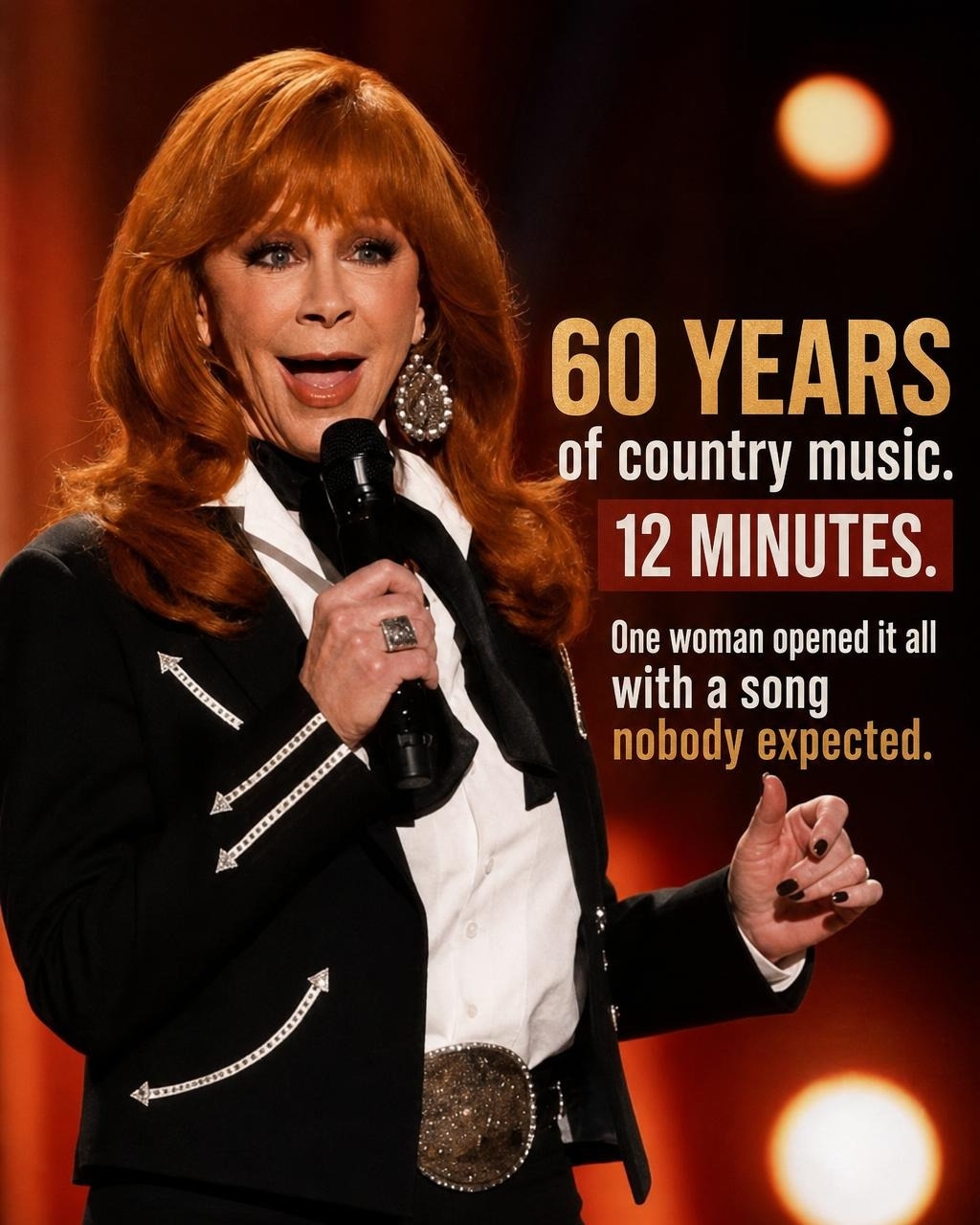
When the lights went down at the Ford Center in Frisco, Texas, the crowd expected a big opening. After all, the ACM Awards are built for moments that sparkle. But Reba McEntire, hosting the show for the 18th time, chose something more meaningful than spectacle. She walked out and began with “Okie From Muskogee” by Merle Haggard.
It was not the loudest choice, and that was exactly why it mattered.
A Song That Set the Tone
Merle Haggard’s 1969 classic won ACM Song of the Year in 1970, and Reba McEntire’s decision to open with it felt carefully chosen. Reba McEntire is from McAlester, Oklahoma, and that detail gave the performance an extra layer of heart. She was not simply revisiting a well-known country song. She was honoring a fellow Oklahoman who helped shape the sound and spirit of modern country music.
Sometimes the most powerful tribute is the quietest one.
From the first notes, the medley felt like a bridge between generations. The production did not rush to impress. Instead, it invited the audience to remember. That opening song became the emotional doorway to a 12-minute celebration of six decades of ACM Song of the Year winners.
Six Decades in One Medley
After Reba McEntire’s opening, the performance moved through a carefully built chain of country favorites. Clint Black delivered “Rhinestone Cowboy” with the kind of ease that reminded everyone why the song still resonates. Wynonna added warmth and power to “Why Not Me”. LeAnn Rimes brought a clear, tender sound to “Blue”. Then Dan + Shay closed the medley with “Tequila”, giving the tribute a modern finish that still felt connected to the past.
Each artist brought something distinct, but the performance never felt fragmented. It felt like a single story told by different voices. That is what made it memorable.
Why Reba McEntire’s Opening Stood Out
Big award-show moments often depend on volume, speed, or surprise. This one worked because it trusted memory, history, and emotion. Reba McEntire started at the beginning, with a song that many country fans recognized instantly. That choice gave the entire medley a sense of purpose. It said that country music does not begin with the newest hit or the biggest stage effect. It begins with songs that last.
For longtime fans, the opening felt like a salute. For younger viewers, it was a reminder that every era of country music stands on the one before it. In only 12 minutes, the show managed to cover more than a playlist of songs. It captured the feeling of a genre that keeps changing while still honoring where it came from.
A Small Opening With a Lasting Echo
By the end, the audience had seen a tribute, a reunion of voices, and a timeline of country music history. But people kept talking about the beginning. Reba McEntire’s quiet opening with “Okie From Muskogee” gave the whole moment its soul.
Sixty years of country music was a big story. Reba McEntire made it feel personal.
Post navigation
I Didn’t Want to Live: The Hidden Pain and Unexpected Healing in Shania Twain’s Story
At the height of fame, Shania Twain looked like a woman who had already won at life. She had sold more than 100 million records, changed the sound of country music, and become one of the most recognizable voices in the world. But long before the awards and record-breaking success, her life was shaped by loss, responsibility, and heartbreak.
A Life Changed in a Single Phone Call
Shania Twain was only 22 when her sister called with devastating news: both of their parents had died in a car crash. The shock was immediate and overwhelming. She later had to step into a role no young adult ever expects to take on. Three younger siblings were still at home, and the youngest was only 13.
Without hesitation, Shania Twain returned home and put her own dreams aside. She became a caregiver, a protector, and a steady presence for her family. That decision changed the direction of her life, and it revealed a strength that would carry her through some of her darkest years.
Success That Hid the Struggle
Years later, Shania Twain rose to global stardom. Her music crossed genres and generations, and her success made her a household name. From the outside, everything seemed polished and complete. But privately, the pressure was building.
Her husband of 14 years, Robert John “Mutt” Lange, had helped produce some of her biggest songs. Their partnership looked powerful and unshakable. Then came the betrayal that shattered that image: he had been having an affair with her best friend and personal assistant.
In a deeply painful moment that Shania Twain would later speak about on Oprah, she admitted how close she came to losing hope entirely. “I didn’t want to live” was not a dramatic line. It was a raw expression of emotional collapse after a life already marked by grief.
Sometimes the deepest wounds do not come from strangers. Sometimes they come from the people you trusted most.
The Unexpected Connection That Changed Everything
What happened next was something few people could have imagined. Frédéric Thiébaud, the ex-husband of the woman who had helped destroy Shania Twain’s marriage, reached out to her. Instead of resentment, they found understanding. Both had been hurt by the same affair. Both knew what it meant to have life split apart by betrayal.
That shared pain became the beginning of something real. They spoke, supported each other, and slowly built trust from the broken pieces. In a story that might have ended in bitterness, Shania Twain found a new path forward.
A New Beginning
Shania Twain and Frédéric Thiébaud married in 2011. They are still together today, proving that healing can come from the most unexpected places. Her life did not become easy, and the scars did not disappear overnight. But her story became something more than survival. It became a reminder that even after devastating loss, people can rebuild.
Shania Twain’s journey is not just about fame or music. It is about a young woman who raised her siblings, endured public success and private heartbreak, and somehow found the courage to begin again. That is what makes her story so powerful: not perfection, but endurance.
For millions of fans, Shania Twain will always be a star. But behind the spotlight is a woman who faced pain few people could imagine and still chose life, love, and another chance at happiness.