6 MONTHS IN JAIL, 19 YEARS OLD, AND A SONG WRITTEN FOR HIS WIFE — IT LATER BECAME A NO. 1 HIT IN AMERICA. In 1947, Lefty Frizzell was sitting in Chaves County jail in Roswell, New Mexico. No stage. No microphone. Just a cell, silence, and the weight of everything he’d done to his young wife Alice. So he started writing to her. Not letters — songs. One of them was called “I Love You a Thousand Ways.” It wasn’t polished. It wasn’t clever. It was just a man trying to sing his way back to the woman he’d hurt. Three years later, studio owner Jim Beck heard Lefty at the Ace of Clubs in Big Spring, Texas. Beck cut demos. Columbia Records signed him. That jail song was released alongside “If You’ve Got the Money (I’ve Got the Time).” Both sides hit No. 1. A song born in a county jail cell became part of country music history. And Lefty’s voice — that slow, bending way he held every word — went on to shape how George Jones, Merle Haggard, and Willie Nelson learned to sing. – Country Music
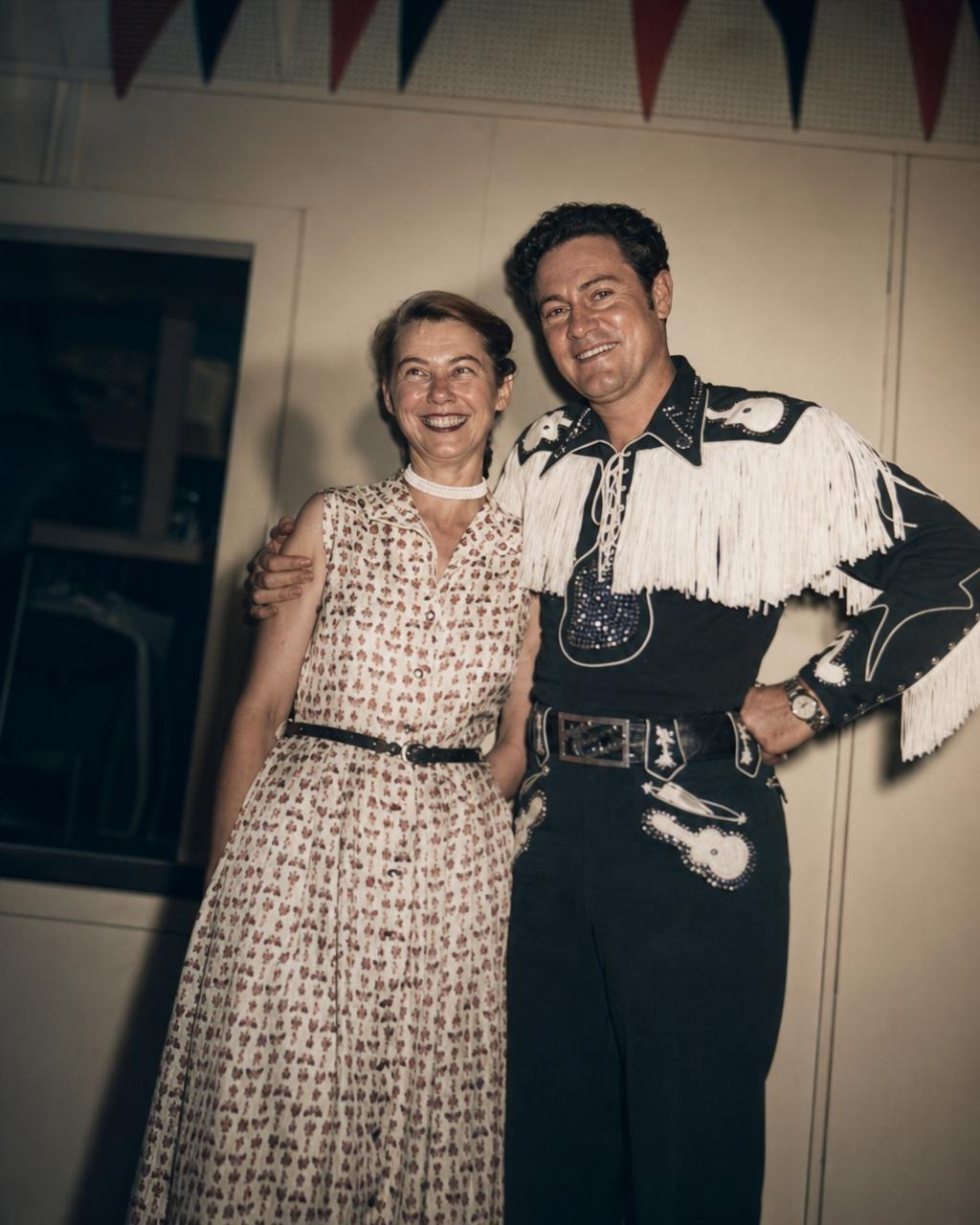
In 1947, Lefty Frizzell was 19 years old and sitting in Chaves County jail in Roswell, New Mexico. He had no stage, no microphone, and no audience waiting for him. All he had was time, silence, and the heavy reality of how far his life had drifted from the young wife he had left behind, Alice.
For many people, a jail cell would have meant the end of a dream. For Lefty Frizzell, it became the place where a different kind of music began. He did not write polished lyrics meant to impress anyone. He wrote the way a troubled young man speaks when he is trying to make things right. He wrote to Alice, not just in words, but in melody.
“I Love You a Thousand Ways” was not born in comfort. It was born in regret, loneliness, and the hope that love could still survive after mistakes.
The song was simple, direct, and deeply human. It carried the feeling of a man reaching out from behind bars, trying to tell the woman he hurt that his heart still belonged to her. That honesty is what made it powerful. It was not written to chase a trend. It was written because Lefty Frizzell had nowhere else to put his feelings.
Three years later, the story took a turn that could not have been planned. Jim Beck, a studio owner who understood raw talent when he heard it, caught Lefty Frizzell performing at the Ace of Clubs in Big Spring, Texas. Beck saw something unusual in the young singer’s voice. It was smooth, but not straight. It bent around notes in a way that felt emotional and alive, almost like he was talking and singing at the same time.
Beck cut demos with him, and Columbia Records eventually signed Lefty Frizzell. When the songs were released, the world heard a voice that sounded different from most of what was on the radio. One side was If You’ve Got the Money (I’ve Got the Time), and the other was I Love You a Thousand Ways. Both songs became No. 1 hits in America.
That is the part of the story that still feels almost impossible. A song written in a county jail cell became a national hit. A young man who had been sitting behind bars ended up shaping the future of country music.
A Voice That Changed Country Music
Lefty Frizzell did more than score hits. He changed the way country singers approached a line, a phrase, and a feeling. George Jones, Merle Haggard, and Willie Nelson all listened closely to what Lefty Frizzell did with his voice. They learned from the softness, the timing, and the honesty he brought to every word.
His story reminds us that great songs do not always begin in perfect places. Sometimes they begin in pain, in reflection, and in the hope that someone far away will still listen.
Lefty Frizzell turned a lonely moment in jail into a song that traveled across America. And from that cell in Roswell, New Mexico, he sang his way into music history.
Post navigation
How Montgomery Gentry Stayed True to a Promise After a Tragic Day in New Jersey
On September 8, 2017, Montgomery Gentry arrived at the Flying W Airport in Medford, New Jersey, ready for another night on the road. A concert was scheduled later that evening, and everything seemed routine. The band was there, the mood was calm, and nothing suggested that the day would end in heartbreak.
Before the show, Troy Gentry decided to take a sightseeing helicopter ride with a pilot nearby. It was meant to be a brief break, a way to pass the time before heading to the stage. Eddie Montgomery and the rest of the crew were still on the ground when something went terribly wrong. The pilot radioed that he was losing control of the engine RPM, and those watching could only look on as the helicopter struggled to stay in the air.
The aircraft came down hard, about 220 feet short of the runway. The pilot died at the scene. Troy Gentry was pulled from the wreckage and rushed to the hospital, but he did not survive. He was 50 years old.
Eddie Montgomery later said, “Our world was turned upside down in an instant.”
The loss was more than the end of a performance or a canceled show. It was the shattering of a bond built over more than 30 years. Eddie Montgomery and Troy Gentry were not just bandmates. They were brothers in the deepest sense, connected by years of writing, touring, laughing, arguing, and building Montgomery Gentry into one of country music’s most recognizable duos.
Long before that tragic afternoon, the two had made a promise to each other: if one of them passed away first, the other would keep Montgomery Gentry alive. It was the kind of agreement people make without expecting to face it so soon. But when grief becomes real, promises matter even more.
A Final Album and a Lasting Legacy
Just two days before the crash, Montgomery Gentry had finished recording Here’s to You. Eddie Montgomery chose to release the album, knowing it was what Troy Gentry would have wanted. In doing so, he gave fans one more way to hear the sound they had loved for years.
That decision carried a weight only Eddie Montgomery could understand. It was not simply about continuing a career. It was about honoring a friendship, protecting a shared history, and keeping a promise made in private long before the world knew how much it would matter.
More Than a Name on a Poster
For fans, Montgomery Gentry will always stand for strong harmonies, honest songs, and a style that felt grounded and real. But behind the music was something even more powerful: loyalty. Eddie Montgomery did not let the story end in the sky over New Jersey. He carried it forward, not to replace Troy Gentry, but to remember him.
In country music, people often talk about family, tradition, and truth. The story of Montgomery Gentry is all three. It is a story of success, loss, and a promise kept when keeping it was hardest.
And sometimes, that is what makes a legacy last.