45 MILLION RECORDS SOLD. BUT THE LAST SONG HE EVER MADE — HE WOULDN’T EVEN REMEMBER RECORDING IT. By 2011, Glen Campbell’s family already knew. Alzheimer’s had entered the house. Then came the farewell tour — Glen onstage, still smiling, still playing, still finding melodies even as the disease started stealing names and faces from him. The cameras followed everything. The documentary Glen Campbell: I’ll Be Me captured the road, the confusion, and those strange nights when music still came easier to him than ordinary conversation. Then in January 2013, he walked into Sunset Sound in Los Angeles. Members of the Wrecking Crew were waiting — the same legendary musicians he’d played with decades before he became a country-pop star. They cut the song in four takes. The title sounded almost cruel. “I’m Not Gonna Miss You.” But that was the whole truth — Alzheimer’s would hurt the people who loved him far more than it would ever let him understand the loss. The song was nominated for an Oscar. It won a Grammy. Glen Campbell never got a clean farewell — but what he left behind in that studio, his wife Kim still carries with her. – Country Music
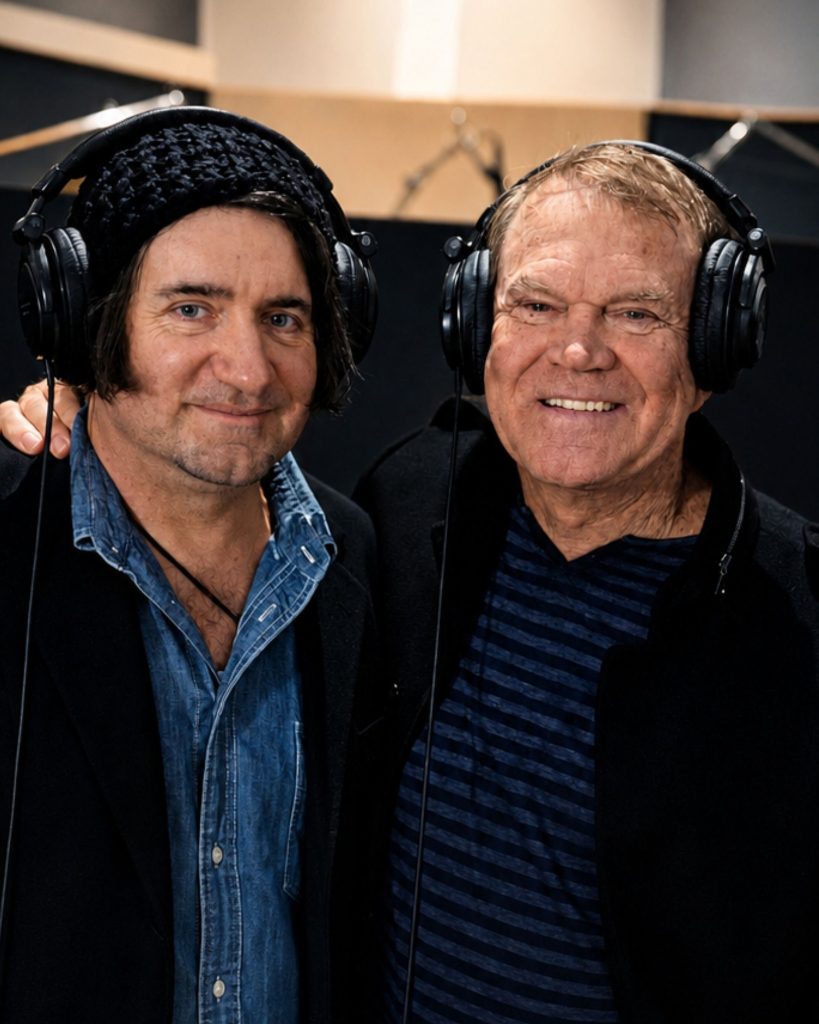
By the time the world fully understood what was happening, Glen Campbell’s life had already begun to change in quiet, heartbreaking ways. Millions knew him as the warm voice behind hit songs, the easy smile, and the guitarist who made everything look effortless. He had sold more than 45 million records, crossed from country into pop stardom, and built a career that seemed too bright to dim. But in 2011, his family was facing a private truth that no spotlight could soften: Alzheimer’s had entered the house.
At first, the changes were small enough that some people around him could miss them. A forgotten name here. A repeated question there. Then the pattern became impossible to ignore. For a man whose mind had once moved quickly across melodies, chords, and stage banter, ordinary life started to become harder to hold onto. Yet even then, Glen Campbell kept going. He stepped onto stages for a farewell tour, smiling at crowds who came to celebrate him without fully knowing how much courage it took to stand there night after night.
The Farewell Tour That Felt Like a Love Letter
The tour was not just a series of concerts. It was a witness. Cameras followed Glen Campbell and his family as they traveled, performed, struggled, laughed, and tried to stay steady in a life that was becoming less predictable by the day. The documentary Glen Campbell: I’ll Be Me captured more than music. It captured the strange space where devotion and loss live side by side.
There were nights when the songs arrived almost naturally, as if muscle memory could protect him from everything else. He could still find the notes. He could still charm a room. But between those moments came confusion, frustration, and the painful awareness that the disease was taking pieces of him that no encore could restore. The film did not hide that reality. It showed a family trying to keep pace with a man whose body was still on tour while parts of his mind were quietly slipping away.
“Music still came easier to Glen Campbell than ordinary conversation.”
That contrast made everything more emotional. He could step into a song and become fully alive again for three minutes, then struggle moments later to find the right word in a simple conversation. For fans, it was a reminder that talent and pain can exist in the same heartbeat.
January 2013: A Studio Session Becomes History
In January 2013, Glen Campbell walked into Sunset Sound in Los Angeles to record what would become one of the most haunting final chapters of his career. Waiting for him were members of the Wrecking Crew, the legendary musicians who had played on so many classic recordings and knew what kind of precision and feel Glen Campbell could bring to a session.
The song they recorded had a title that sounded almost impossible in the context of his illness: “I’m Not Gonna Miss You.” But the title was not cold. It was painfully honest. The song carried the kind of truth that only arrives when denial is gone. It spoke about a future where Alzheimer’s would take memory, but not necessarily protect the people left behind from the grief of watching it happen.
They cut the track in four takes. Four. For a song with that much emotional weight, the session was remarkably direct, almost startlingly efficient. Glen Campbell had always been a musician who understood timing, feel, and restraint, and somehow that knowledge remained even as the disease advanced. The recording became less of a performance and more of a final statement.
A Goodbye He Could Not Fully Hold
What makes the story so devastating is that Glen Campbell would not later remember recording the song in the way most artists remember a defining moment. The memory itself was slipping away even as the music stayed behind. That is part of what makes “I’m Not Gonna Miss You” so powerful. It was not written to dramatize tragedy. It was written because the truth needed a voice.
The song later received major recognition, including an Academy Award nomination and a Grammy win. Yet the awards did not change the deeper meaning. The real significance was in the studio itself, in the presence of a man doing the one thing he had always done best while a disease tried to erase the rest.
For Kim Campbell, the song became something more personal than any trophy. It became a final trace of who Glen Campbell was, preserved in sound. She still carries that moment with her, not as a neat ending, but as a lasting reminder of love, talent, and the stubborn beauty of creating something honest in the middle of loss.
What Glen Campbell Left Behind
Glen Campbell never got the kind of farewell most people imagine. There was no perfect last bow, no clean ending, no final night where everything made sense. Instead, there was a road, a camera, a family under pressure, and a song recorded in four takes that told the truth better than any speech could.
That may be why his final work continues to matter. It reminds us that memory is fragile, but music can endure. It reminds us that even when a person cannot fully hold onto their own story, the people who love them can still keep part of it alive.
And in Glen Campbell’s case, what survived was not just a final song. It was a final act of honesty from an artist who had spent a lifetime giving audiences something unforgettable, even as he himself was being forced to let go.
Post navigation
Vern Gosdin did not write Chiseled in Stone to comfort anyone. He wrote it to stop a person in the middle of a self-made storm and force a hard truth into the room. The song begins with a man who storms out after a fight, drives to a bar, and settles into his own version of heartbreak. He is angry, wounded, and convinced that nobody understands what he is going through.
That is where the song gets dangerous in the best way. Because just when the listener thinks this is a story about being wronged, an old man sits down beside him and changes the entire meaning of pain.
A Bar, a Bottle, and a Broken Perspective
The man at the center of the song is not unusual. He is the kind of person many people have been at least once: hurt, defensive, and ready to run. He wants space. He wants sympathy. He wants to believe his pain is the biggest pain in the world. He sits there feeling sorry for himself, and in that moment, he is completely lost inside his own emotions.
Then the old man starts talking.
He is not dramatic. He is not trying to win an argument. He simply tells the truth, and the truth lands harder than any shouting ever could. His wife is gone. Not gone from the house, not gone after a fight, but gone forever. She is buried in the ground. That one detail strips the first man’s outrage down to size.
Sometimes life does not shout its lessons. Sometimes it whispers them from the next barstool.
That is the power of Chiseled in Stone. It does not ask the listener to pity the characters. It asks the listener to compare losses honestly. The song becomes a mirror, and most people do not like what they see at first.
Why Vern Gosdin Hit So Hard
Vern Gosdin earned the nickname The Voice because he had a rare gift. He did not need to force emotion. He could sing a line softly and still make it feel like a verdict. His delivery carried weight because it sounded lived-in, not performed. You believed every word because he sang like someone who had already survived the story.
That is why this song hits so deeply. Chiseled in Stone is not built on volume. It is built on restraint. It lets the sadness breathe. It lets the silence do some of the talking. And when the lesson finally arrives, it does not feel manufactured. It feels earned.
The old man’s pain is not decorative. It is real. It is permanent. He is not teaching a lesson from a place of superiority. He is speaking from loss, and that makes every word heavier. The younger man thought he had reached the bottom of sorrow, but he had not even come close.
What the Song Really Says
At its core, the song is about perspective. It reminds us how quickly anger can make us forget what truly matters. A fight can feel massive in the moment. Pride can make a small problem feel like the end of the world. But Chiseled in Stone asks a painful question: what if the thing you are walking away from is something you will later wish you could face again?
That is why the song still resonates. It is not just about marriage, or grief, or regret. It is about the human habit of reacting first and appreciating later. It is about the dangerous comfort of self-pity, and how quickly it disappears when real loss steps into the room.
The title itself feels unforgettable because it suggests permanence. Stone lasts. Words can be carved into it and never fade easily. That image fits the song’s message perfectly: some moments cut so deeply that they become part of who you are.
A Story That Follows You Home
There are songs that entertain, and there are songs that linger long after the last note. Chiseled in Stone belongs to the second group. It leaves the listener quieter than before. Maybe even a little humbled.
That is the genius of Vern Gosdin. He did not just sing about heartbreak. He made heartbreak speak plainly. He took a barroom conversation and turned it into a warning, a confession, and a wake-up call all at once.
So the next time someone walks away angry, maybe the real question is not who is right. Maybe the question is whether they understand what they are risking. Because sometimes what feels unbearable in the moment is nothing compared to what cannot be replaced.
And that is the lesson Chiseled in Stone leaves behind: before you slam the door, before you choose pride over peace, ask yourself whether you are walking away from a problem or from something you would give anything to have back.