HIS THIRD MARRIAGE WAS CRUMBLING, HIS LABEL HAD GONE BANKRUPT, AND HE WAS READY TO QUIT MUSIC FOREVER — THEN HE WROTE A SONG THAT HIT #1 AND SAVED HIS CAREER. By 1987, Vern Gosdin was done. Three decades of playing honky-tonks on tiny labels, three failed marriages, and an empty bank account had crushed the man they called “The Voice.” He was seriously considering walking away from Nashville for good. Then songwriter Hank Cochran dragged him to Columbia Records for one last desperate shot. While his third marriage was falling apart around him, Gosdin sat by a fireplace with Dean Dillon, Buddy Cannon, and Cochran — and they wrote a heartbroken man’s love letter to the only friends who never betrayed him: the old troubadours living inside a jukebox. With his rich, wounded baritone, Gosdin poured every ounce of shattered dignity into a country shuffle about a man who plays the same record every single night until the needle wears straight through the vinyl — because those old masters understood his pain better than any living soul ever could. It hit #1 on July 23, 1988. The man who almost quit forever had just recorded one of the most beautiful tributes to country music’s golden legends ever made. Sometimes, the only thing standing between a broken man and total darkness is a barstool, a bartender, and the right song on B-24. – Country Music
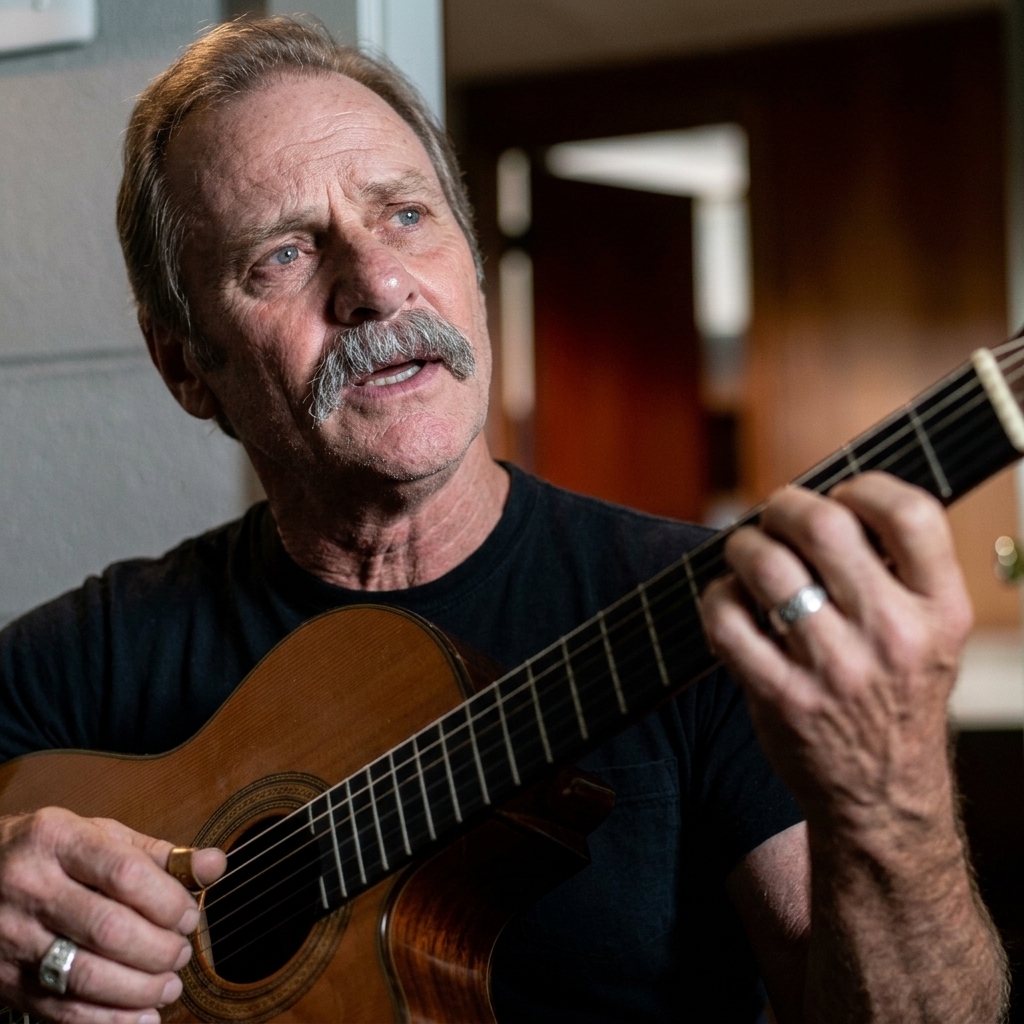
How “Set ’Em Up Joe” Saved Vern Gosdin When He Was Ready to Walk Away
By the spring of 1987, Vern Gosdin had reached the point every struggling artist fears.
The money was gone. His record label had collapsed. His third marriage was coming apart. After more than thirty years of singing in honky-tonks, driving from one tiny show to the next, and watching other men become stars, Vern Gosdin was exhausted.
Nashville had almost beaten him.
For years, Vern Gosdin had been respected by nearly everyone in country music. Musicians called Vern Gosdin “The Voice” because nobody could sing heartbreak the way Vern Gosdin could. There was something in that deep, wounded baritone that sounded completely real. Vern Gosdin did not sing about pain like he had read it in a book. Vern Gosdin sounded like a man who had lived through every word.
But respect does not always pay the bills.
By 1987, Vern Gosdin had already survived three failed marriages and years of disappointment. He had spent decades on small labels that never seemed to know what to do with him. Just when it looked like things might finally change, his label went bankrupt. Suddenly, Vern Gosdin found himself broke, heartbroken, and wondering if it was finally time to leave music behind forever.
One Last Chance
That was when songwriter Hank Cochran stepped in.
Hank Cochran had seen too much talent disappear too early, and he refused to let Vern Gosdin become another forgotten voice. Hank Cochran convinced Vern Gosdin to make one more trip to Columbia Records. Just one more session. One more chance.
It was not a glamorous moment. There were no headlines. No promises. Just a few songwriters sitting together, trying to find one song strong enough to keep a career alive.
One night, Vern Gosdin sat near a fireplace with Hank Cochran, Dean Dillon, and Buddy Cannon. Outside, his personal life was still falling apart. Inside, the four men began talking about the records they grew up with. The old singers. The old jukeboxes. The songs that stayed with you long after everyone else had left.
Out of that conversation came “Set ’Em Up Joe.”
On the surface, “Set ’Em Up Joe” is simple. A lonely man walks into a bar and asks the bartender to play an old record. Then he asks for another drink. And another song.
But underneath, it is about something much deeper.
The man in the song is not really asking for whiskey. He is asking for comfort. He is asking to hear voices that understand him. He wants to spend one more night with the singers who never judged him, never lied to him, and never walked away.
He calls for Ernest Tubb. He remembers Lefty Frizzell. He wants those old records because they know exactly what heartbreak sounds like.
“Set ’em up Joe and play ‘Walking the Floor’
Set ’em up Joe and play ‘Standing on the Corner’”
For Vern Gosdin, those words were more than lyrics. They were the truth.
At a time when his marriage was ending and his future looked empty, the old songs were the only thing that still made sense. Country music had been there before the fame, before the disappointments, and before the heartbreak. In his darkest moment, it was still there.
The Performance That Changed Everything
When Vern Gosdin recorded “Set ’Em Up Joe,” he did not sing it like a man hoping for a hit. He sang it like a man with nothing left to lose.
Every line sounded worn down, honest, and strangely proud. There was sadness in the performance, but there was dignity too. Vern Gosdin did not beg for sympathy. Instead, Vern Gosdin sounded like a man sitting alone at the end of a long night, quietly admitting that music had saved him one more time.
The record connected immediately.
Country fans heard something rare in “Set ’Em Up Joe.” They heard real life. They heard a man who had nearly disappeared, singing directly to everyone who had ever sat alone with an old record and wondered how they were going to make it through the night.
On July 23, 1988, “Set ’Em Up Joe” reached #1.
The man who had almost quit music forever suddenly had his biggest hit.
More than that, Vern Gosdin had finally found the perfect song for his voice and his story. “Set ’Em Up Joe” was not just a comeback single. It became one of the greatest tributes ever written to the legends of classic country music and to the strange way a song can keep a broken heart alive.
Sometimes the difference between giving up and hanging on is smaller than anyone realizes.
Sometimes it is just a barstool, a bartender, and the right song waiting on B-24.
Post navigation
Marty Robbins Drove No. 777 at Daytona — But Ronny Robbins Took on the Harder Race
Marty Robbins spent much of his life moving faster than most people thought possible.
On one weekend, Marty Robbins could be standing beneath bright stage lights singing “El Paso” to thousands of fans. A few days later, Marty Robbins could be behind the wheel of NASCAR No. 777, pushing nearly 200 miles per hour down the straightaway at Daytona.
For Marty Robbins, music and racing were never separate dreams. They were part of the same restless spirit.
Marty Robbins loved the sound of engines almost as much as the sound of applause. By the 1970s, Marty Robbins had become a regular presence at NASCAR events. Marty Robbins raced alongside some of the biggest names in the sport and earned respect because Marty Robbins did not treat racing like a celebrity hobby. Marty Robbins took it seriously.
Friends remembered Marty Robbins talking about cars with the same excitement that Marty Robbins talked about songs. Marty Robbins wanted to know every detail. Every part. Every lap. Every chance to go faster.
The most famous of those cars was the No. 777.
Painted in bright colors and carrying Marty Robbins around some of the most dangerous tracks in America, No. 777 became more than a race car. It became part of the Marty Robbins legend. Fans who knew Marty Robbins from country radio suddenly saw Marty Robbins flying around Daytona and Talladega, fearless and smiling.
But while Marty Robbins was chasing speed, another story was quietly beginning in the background.
Ronny Robbins, Marty Robbins’ son, grew up around all of it. The music. The tours. The race cars. The noise. The excitement.
Many people assumed Ronny Robbins would eventually follow his father into the driver’s seat of No. 777.
But Ronny Robbins never did.
Ronny Robbins loved music more than racing. For a time, Ronny Robbins even tried building a career of his own. Ronny Robbins played shows and stepped onto stages, hoping to find a path that belonged only to Ronny Robbins.
Then everything changed.
In December 1982, Marty Robbins suffered another heart attack after years of heart problems. Marty Robbins died at only 57 years old.
The country music world stopped. Fans lost a legend. NASCAR lost one of its most unusual and beloved competitors. And Ronny Robbins lost his father.
In the days that followed, Ronny Robbins faced a decision that few people ever saw.
Ronny Robbins could keep chasing a career in music. Or Ronny Robbins could step away and protect the name that Marty Robbins had spent a lifetime building.
Ronny Robbins chose the second path.
Ronny Robbins walked away from performing and went to work at Marty Robbins Enterprises. It was not glamorous. There were no standing ovations. No race crowds. No spotlight.
Instead, there were contracts, phone calls, licensing deals, and endless questions about how Marty Robbins’ music and image would be used.
For more than forty years, Ronny Robbins reviewed every product connected to Marty Robbins. Ronny Robbins looked at every request, every advertisement, every project that wanted to use Marty Robbins’ songs or name.
Ronny Robbins turned down opportunities that did not feel right. Ronny Robbins protected songs that mattered. Ronny Robbins made sure Marty Robbins was remembered as a real person, not just a logo or a business.
It was a slower race than the one Marty Robbins ran at Daytona. But it lasted much longer.
“His father raced at 200 miles an hour. Ronny Robbins ran the race that never really ends.”
Years later, Ronny Robbins spoke quietly about Marty Robbins’ final days. What stayed with Ronny Robbins was not the famous songs or the race cars. It was something much smaller.
Ronny Robbins said Marty Robbins knew time was running out.
Even while Marty Robbins was sick, Marty Robbins kept talking about family. Marty Robbins wanted everyone close. Marty Robbins wanted peace more than anything else.
Ronny Robbins remembered that Marty Robbins was not afraid in those final days. Marty Robbins was tired, but calm.
According to Ronny Robbins, one of the last things Marty Robbins wanted was simply to know that the people Marty Robbins loved would stay together after Marty Robbins was gone.
That may be why Ronny Robbins gave up so much.
Ronny Robbins never drove No. 777 around Daytona. Ronny Robbins never crossed a finish line with thousands of people cheering.
Instead, Ronny Robbins spent four decades protecting Marty Robbins’ songs, memories, and name.
Marty Robbins raced a few laps at 200 miles an hour.
Ronny Robbins has been running ever since.