Months After Her Death, He Asked for Bond.6579
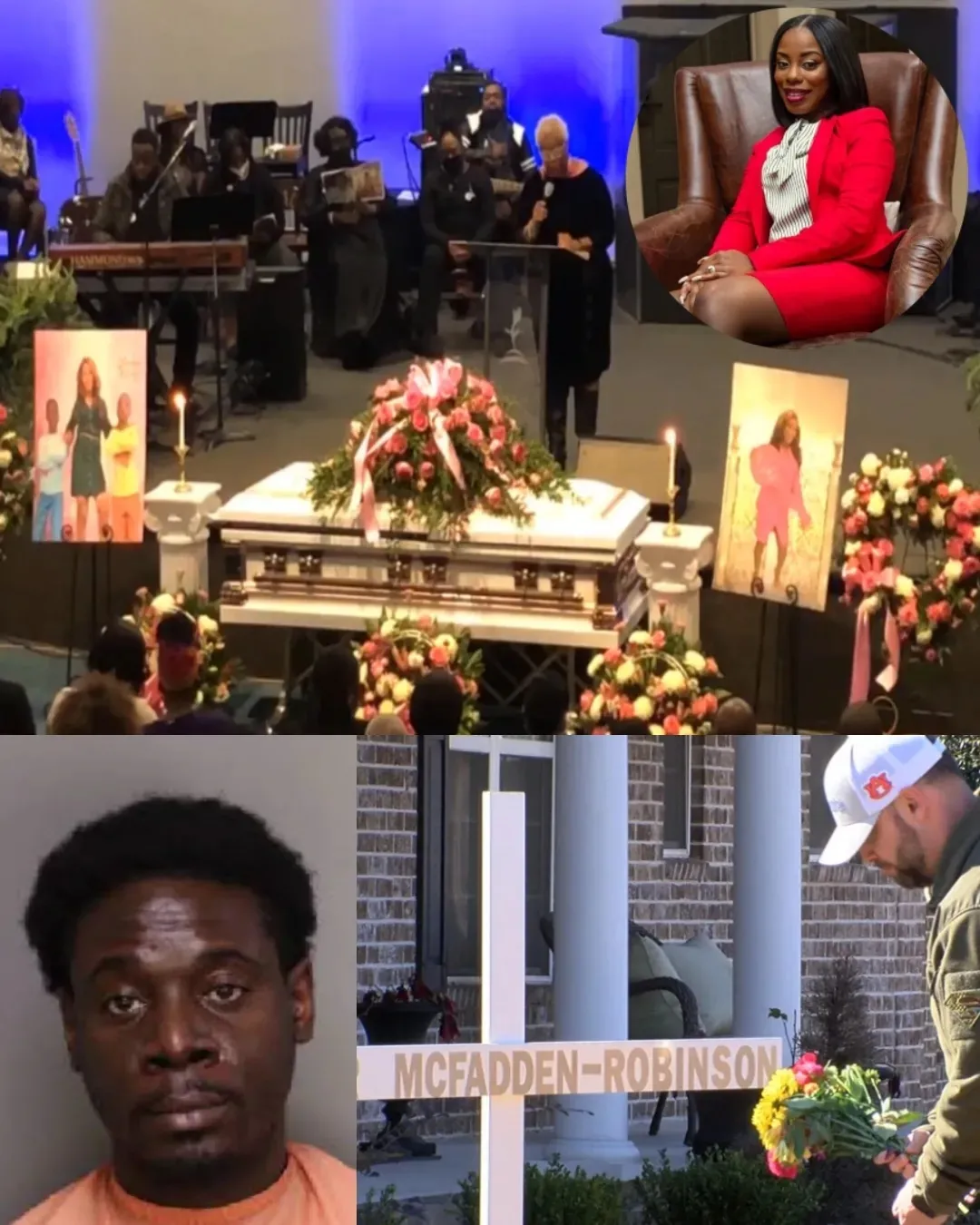
In the quiet paper trail of online court records, a single motion filed on March 31 reopened a wound that never had the chance to heal.
Duncan Robinson Jr. formally asked the court for bond, months after police say he killed his wife, a request that now forces a community to look again at what happened, what was ignored, and what can never be undone.

According to court documents, the motion does not indicate whether a hearing has been scheduled, or when a judge might decide whether Robinson could be released while awaiting trial.
For the family of the woman at the center of this case, the request is not a routine legal step, but another chapter in a story that already carries unbearable weight.
Police say Robinson was arrested in January and charged with the murder of his wife, Taylor McFadden Robinson, at her home on Rice Planters Lane in West Florence.
Along with the murder charge, Robinson also faces charges of burglary and possession of a weapon during the commission of a violent crime, a combination that underscores the severity of the allegations against him.
Since that January arrest, Robinson has remained behind bars, while the legal system moves forward at a pace that often feels detached from the speed at which lives are destroyed.

Court records show that just one month after Taylor was killed, she and Robinson were scheduled to appear before a judge for a final divorce hearing.
That hearing was set for February 7, a date that now reads like a cruel footnote in a life that was trying to move on.
Taylor McFadden Robinson was not an unknown name in Florence.
She was a popular realtor, described by many as a rising star in her field, a woman building both a career and a future for her children.
Friends and colleagues remember her as driven, warm, and deeply committed to providing stability for her family during a time of personal upheaval.
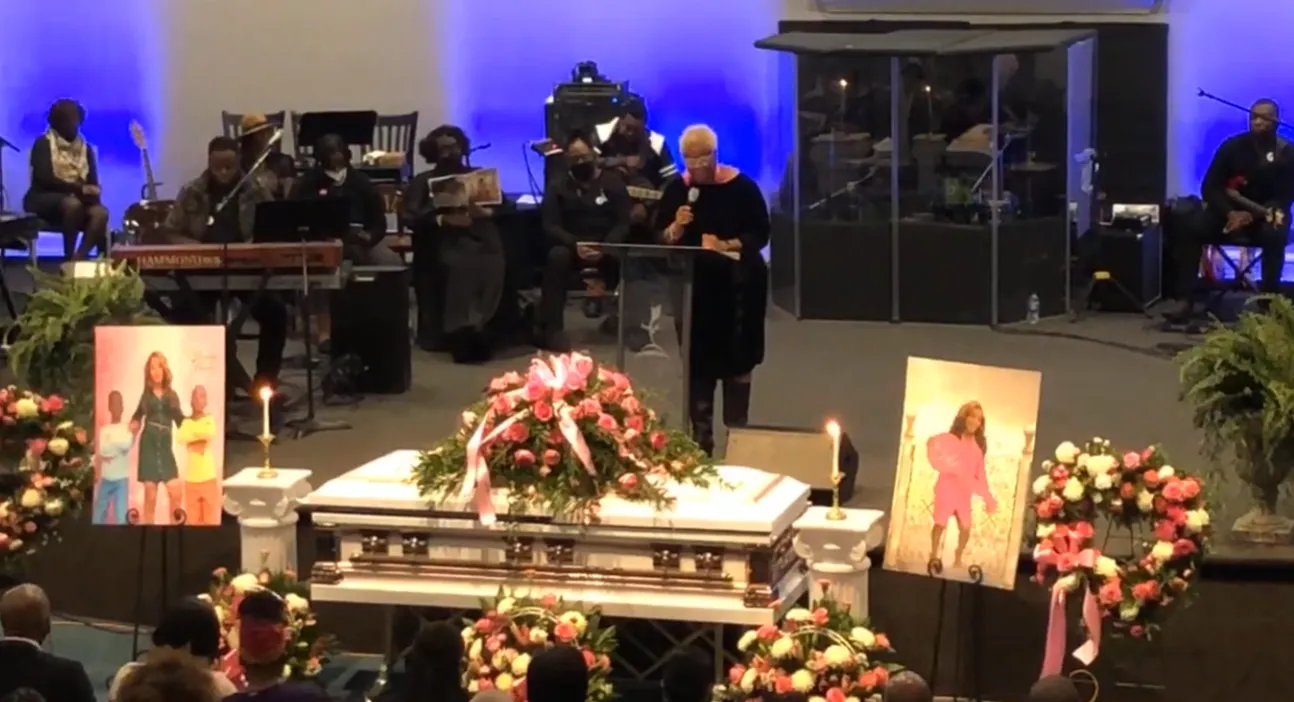
Behind that public success, however, court records reveal a private struggle marked by fear, conflict, and repeated calls for help.
Family Court documents show that Taylor had petitioned for an order of protection against her husband, detailing a series of alleged incidents that painted a disturbing picture.
In her sworn statement, Taylor described events that spanned multiple dates, each one escalating in intensity and danger.
She wrote that on March 23, 2021, Duncan came to her home demanding the children, following her even after she repeatedly told him to leave the property.
She stated that she had called police days earlier, on March 21, after Duncan arrived to drop off the children and blocked her car in, then entered her home without permission.
According to the petition, on March 12, Duncan allegedly broke her back door after repeatedly kicking it in an attempt to gain entry.
She also claimed that on March 9, he tried to fight a contractor who was on her property, an incident that added to a growing sense of instability.
Perhaps most alarming, Taylor wrote that on March 15, Duncan attempted to run her over with his car.
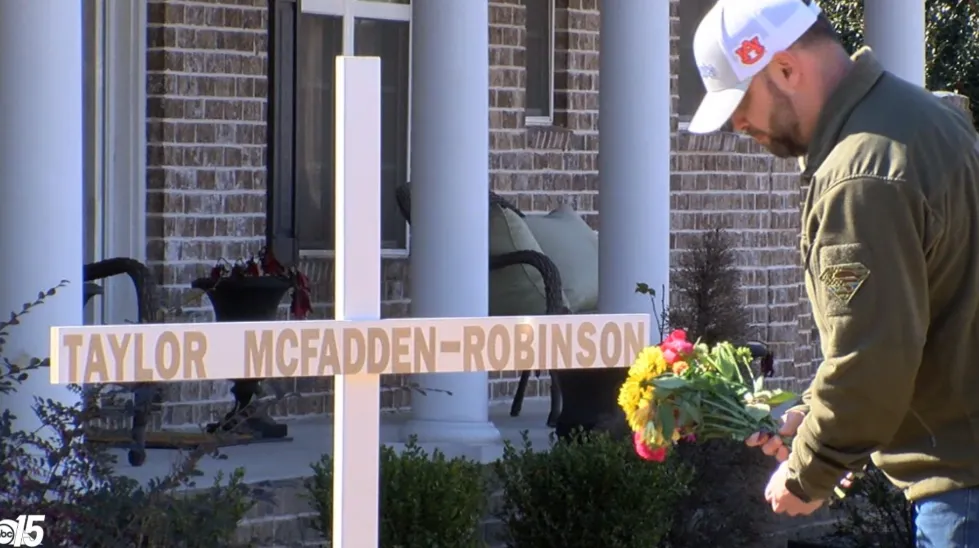
These were not vague fears or abstract concerns, but specific dates, actions, and moments that Taylor said left her feeling unsafe in her own home.
Despite those allegations, the judge denied the request for an order of protection.
In the written denial, the judge noted that the parties were advised to obtain attorneys and file for divorce, stating that the differences appeared to be over the children.
The legal language was brief, procedural, and final, offering no protection at a moment when Taylor had explicitly asked for it.
Court records indicate that Taylor’s petition was denied due to a “failure to prove facts of alleged abuse,” a phrase that now carries heavy consequences.
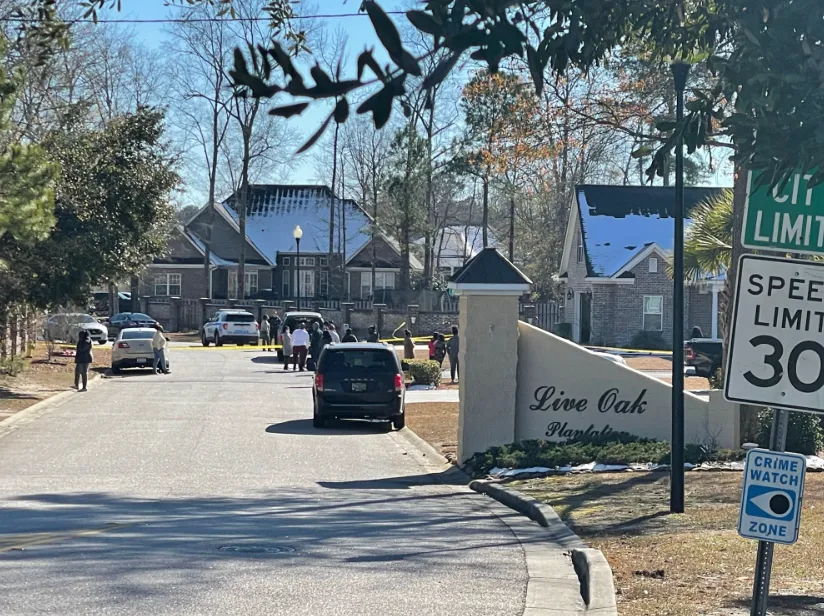
The couple shared two young children, whose lives have now been irrevocably altered by violence, loss, and a justice system struggling to respond after the fact.
Those children were central to the divorce proceedings, which were already in motion at the time of Taylor’s death.
A final divorce hearing was scheduled, documents show, signaling that Taylor was actively working toward a legal separation and a new chapter.
That chapter never came.
Instead, Florence was left grappling with the death of a woman many believed was on the verge of reclaiming her life.

The case has drawn renewed attention to how allegations of domestic abuse are handled, particularly when they fail to meet legal thresholds despite detailed claims.
Advocates point out that protective orders are often denied not because abuse did not occur, but because it cannot be proven to the court’s satisfaction in that moment.
For families like Taylor’s, the distinction feels hollow, especially when warning signs appear so clearly in hindsight.
Now, with Robinson’s bond request filed, the legal process moves into another phase that is both expected and deeply painful.
A bond hearing, if granted, would determine whether Robinson could be released while awaiting trial, a prospect that alarms many who have followed the case.

Prosecutors have not publicly commented on the motion, and court records do not yet show whether a judge has set a date to consider it.
The uncertainty adds to the emotional toll on those still mourning Taylor’s death.
Her name continues to circulate in news reports, court documents, and public discussions, often reduced to legal terminology that cannot capture who she was.
She was more than a victim, more than a case file, more than a denied petition.
She was a mother navigating divorce, a professional building her career, and a woman who repeatedly sought help through the proper channels.

The fact that her final court appearance was scheduled after her death stands as a stark reminder of how timing can mean everything.
As Robinson remains in jail, the community watches closely, waiting for updates that bring little comfort.
WPDE and other outlets have stated they will continue to report on the outcome of the bond motion and any future hearings.
For now, the motion itself is just paper and ink, but the story behind it is anything but abstract.

It is a story of warnings that did not translate into protection, of a system that acted too slowly, and of a life that ended while trying to begin again.
Whether bond is granted or denied, the deeper questions raised by Taylor McFadden Robinson’s death will linger far beyond the courtroom.
They live in the spaces where help was requested, where fear was documented, and where a final chance at safety was never realized.
She Went Searching for Beauty — The Forest Never Let Her Return.6593
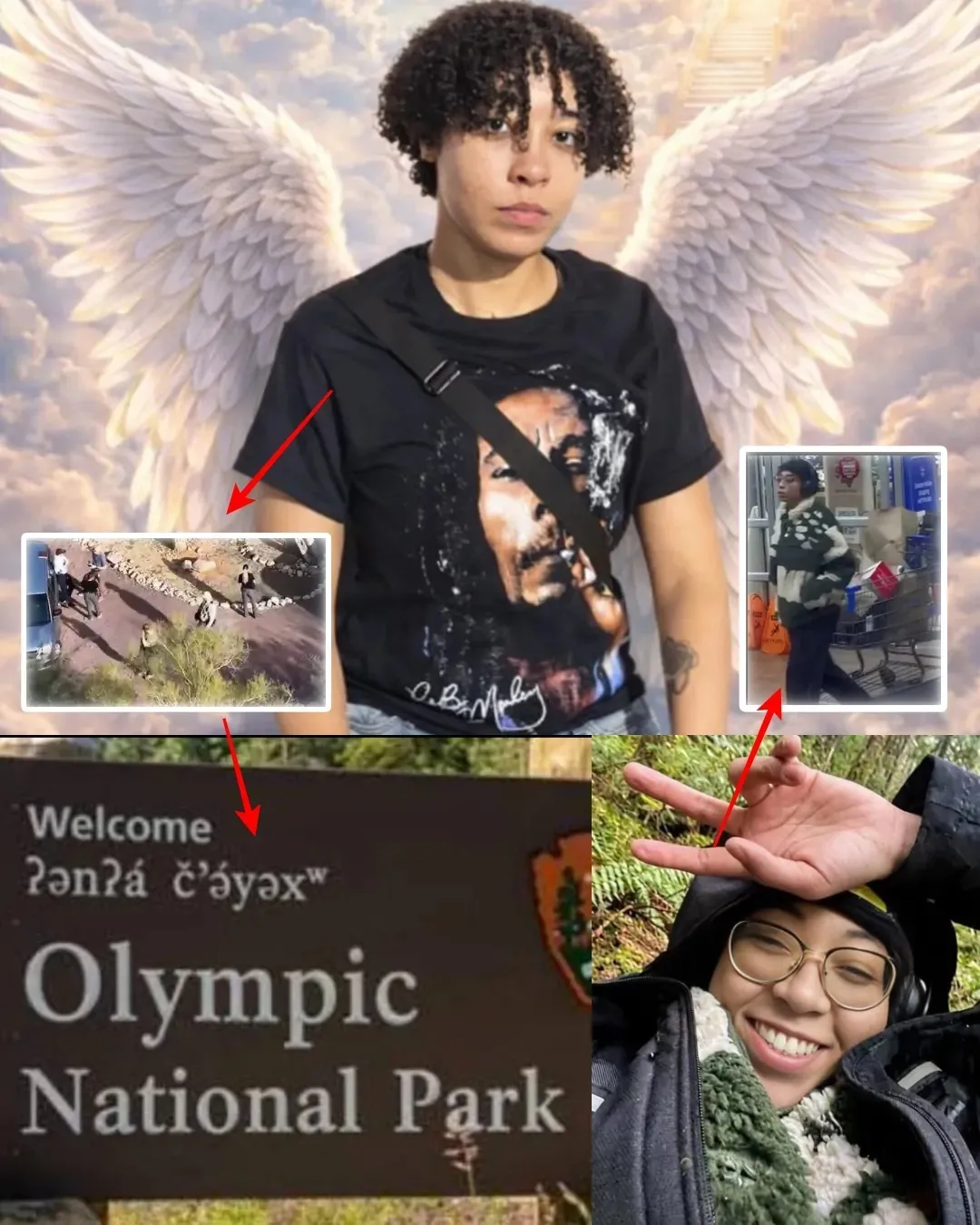
The forest in Olympic National Park does not announce its dangers.
It stands quiet and ancient, draped in moss and mist, its rivers carving steady paths through rock and root.
To those who visit, it feels like escape, like something untouched and almost sacred.
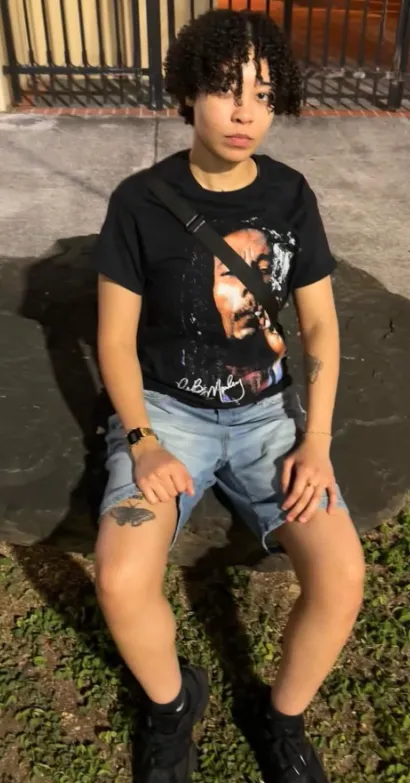
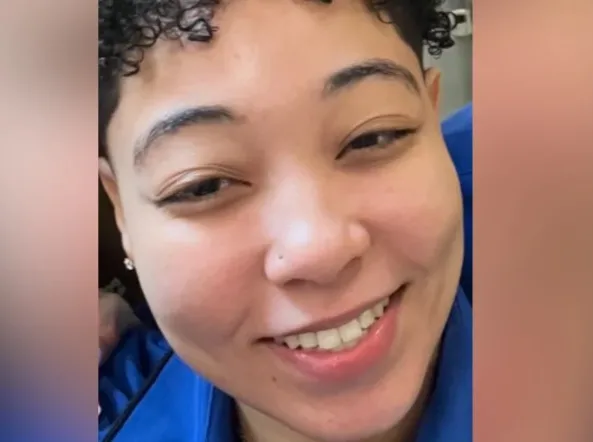
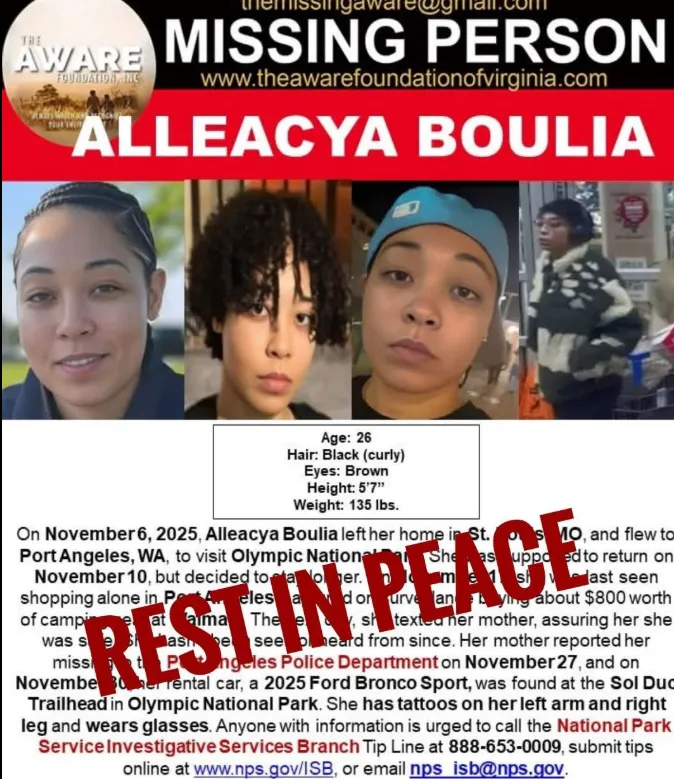
In mid-November, 26-year-old Alleacya Boulia traveled west from St. Louis, leaving behind the familiar rhythms of home.
The Olympic Peninsula had likely called to her the way it calls to so many—through photographs of waterfalls, towering evergreens, and quiet trails.
It was a journey that began with possibility.
Travel often carries a sense of renewal.
A change of landscape can feel like a reset button, a widening of perspective.
Mountains and forests offer space to breathe differently.
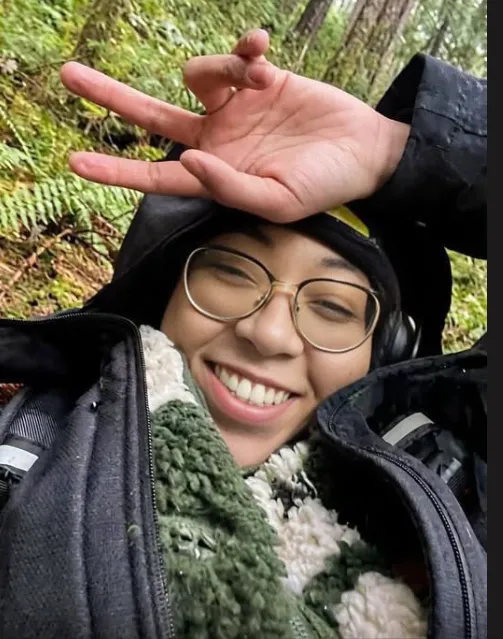
Alleacya arrived in Washington with plans, a rental vehicle, and the freedom of open days.
Somewhere along that journey, she made her way toward the Sol Duc Trailhead.
It is a place known for lush greenery, rushing rivers, and trails that weave into the heart of the wilderness.
The Sol Duc area is beautiful in a way that feels almost unreal.

Tall trees filter the light into soft green hues.
The river moves swiftly, especially in late autumn when rain and melting snow feed its currents.
Mid-November on the Olympic Peninsula is not gentle.
Rain falls in long stretches, soaking the forest floor until it turns slick and uncertain.

Water levels rise, trails blur, and footing becomes unpredictable.
It was during this season that Alleacya was last heard from.
Family and friends back in Missouri began to notice the silence.
Messages went unanswered.
At first, the concern may have been small.

Travel can disrupt routines.
Phones lose signal in remote areas.
But as days stretched into longer silence, worry deepened.
Her rental vehicle was eventually located near the Sol Duc Trailhead.
Park officials and law enforcement quickly understood what that meant.

Someone had gone into the wilderness and had not returned.
The search began with urgency.
More than 40 search-and-rescue personnel gathered, coordinating efforts across dense forest and rugged terrain.
K-9 teams were deployed, noses low to the ground, scanning for scent.
Helicopters and drones assisted when weather allowed.
But the terrain in Sol Duc Valley does not yield easily.
Steep inclines, fallen trees, swollen streams, and thick undergrowth complicate even the most organized search.
The forest can swallow sound and direction alike.
Weather added another layer of difficulty.
Heavy rains saturated the ground, making every step uncertain.
High water levels turned creeks into dangerous crossings.

Searchers pressed on despite it.
Each morning began with planning.
Maps were marked, sectors assigned, and radios checked.
Hope traveled with every team that stepped onto the trail.
For families of missing persons, hope becomes both lifeline and torment.
It fuels the belief that someone will be found alive.
It also stretches thin with each passing day.
Back in St. Louis, Alleacya’s loved ones waited.
Time moved differently for them.
Every update from Washington carried the weight of possibility.
Days turned into weeks.
Search areas expanded outward from where the vehicle was found.
Personnel combed riverbanks and ravines.
The Sol Duc Valley is vast, and even experienced hikers can underestimate it.
Trail markers can disappear beneath debris.
Footing can fail near river edges where soil softens without warning.
Autumn light fades early in the Pacific Northwest.
Afternoons slip quickly into darkness beneath heavy cloud cover.
Search teams often worked within narrow windows of visibility.
Despite the challenges, the effort never stopped.

Volunteers joined professionals.
Strangers offered time and strength for someone they had never met.
That is one quiet truth of search-and-rescue missions.
Communities gather in crisis.
They move through mud and rain because someone’s child has not come home.
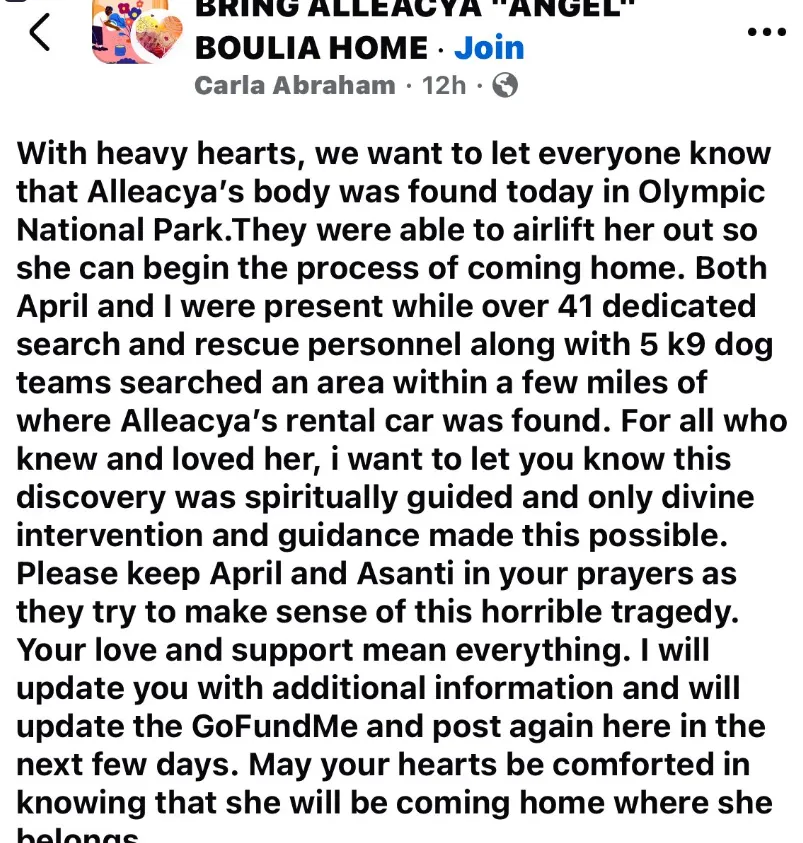
Eventually, authorities located Alleacya’s body in the Sol Duc Valley area.
It was found relatively close to where her rental vehicle had been discovered.
The distance between hope and heartbreak narrowed to a single location.
The announcement came with the restraint officials must maintain.
Her name was confirmed.
The search had ended.
For her family, the news brought a devastating clarity.
The waiting was over.
The pain, however, had only begun a new chapter.
Officials have not released details regarding the cause of death.
Investigations continue, methodical and careful.
Autopsies and evidence reviews move at their own pace.

Speculation often rushes ahead of facts.
But facts matter.
They will be determined in time.
What remains undeniable is the human cost.
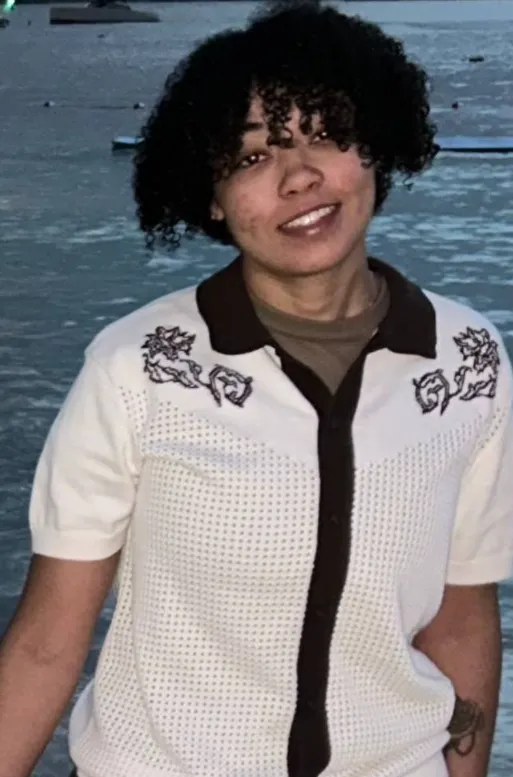
Alleacya was 26 years old.
Old enough to have built memories across states.
Young enough to have many plans still unfolding.
She was more than a missing person report.

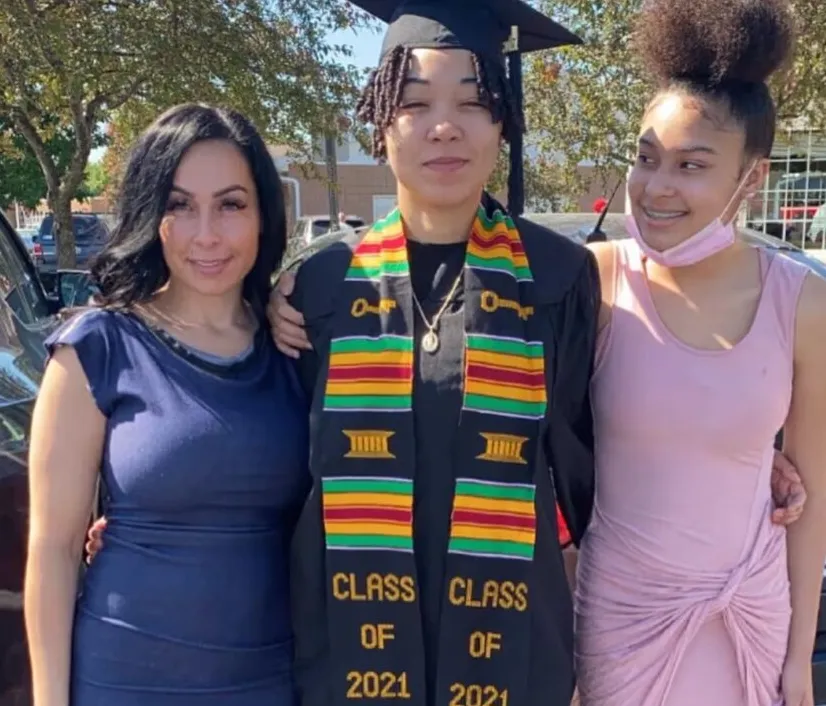
She was a daughter, perhaps a sister, a friend, someone who once laughed in familiar rooms back home.
Her journey west carried intention.
No one travels across the country expecting to disappear.
Adventure does not come with a warning label.
Olympic National Park remains one of the most breathtaking landscapes in the country.
Its waterfalls draw thousands each year.
Its trails offer both serenity and challenge.
But beauty and danger often coexist in wilderness spaces.
Rivers in late fall move with force.
Loose ground near cliffs can give way without notice.
Rain transforms manageable terrain into hazard.
Park officials routinely remind visitors of preparation and caution.
Check weather conditions.
Tell someone your route.
Carry proper gear.
Yet even prepared hikers can encounter the unexpected.
Nature does not negotiate.
It does not slow its currents for inexperience or miscalculation.
The Sol Duc River flows steadily, indifferent to human timelines.
It has carved the valley for centuries.
It will continue long after headlines fade.
But for Alleacya’s loved ones, that landscape is now tied to memory.
The trailhead, the valley, the forest—all hold a weight that cannot be erased.
Communities process loss in layers.

First comes shock.
Then grief settles in, heavier and more personal.
Friends share photographs.
Stories emerge about who she was before the trip.
Perhaps she loved travel.
Perhaps she sought quiet places.
Perhaps the Pacific Northwest had been on her list for years.
Those details matter because they return humanity to a headline.
They remind the world that a life existed beyond the circumstances of death.

Search-and-rescue personnel often carry these missions long after they conclude.
They replay terrain in their minds.
They wonder whether anything could have been done differently.
But sometimes, despite best efforts, outcomes cannot be changed.
The wilderness demands respect.

It rewards preparation.
It also punishes small missteps.
As the investigation continues, official answers will eventually be given.
But answers rarely heal completely.
They simply close certain questions.
Back in Missouri, routines must resume.
Work, school, errands—the world does not pause indefinitely.
Yet for Alleacya’s family, everything feels different.

Holidays will arrive with an empty place.
Conversations will circle back to memories.
Grief becomes part of daily life.
The search in Sol Duc Valley lasted weeks.
It required manpower, technology, endurance, and faith.
It also revealed the quiet solidarity of strangers.
More than 40 personnel moved through rain and brush because one life mattered.
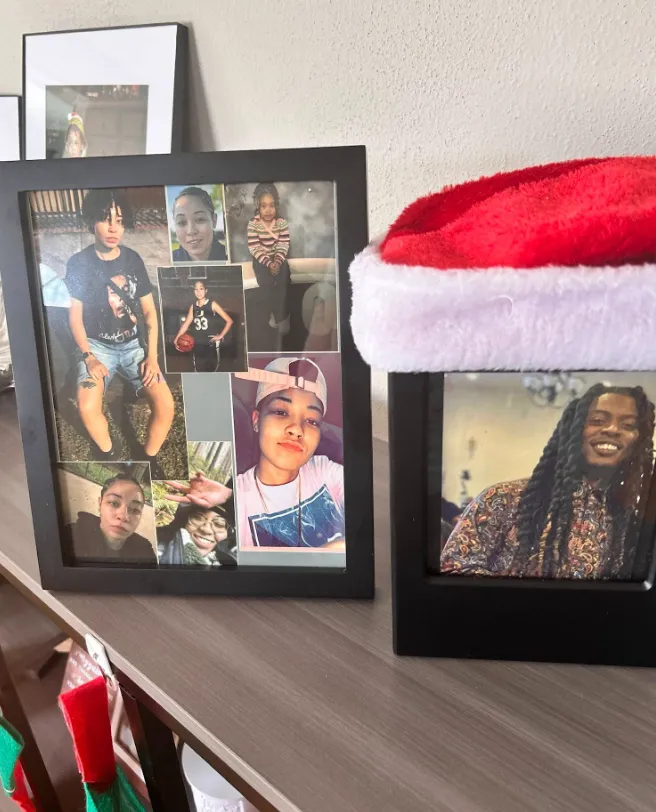
That effort is not small.
It is a testament to collective compassion.
Alleacya’s name will now be linked to Olympic National Park.
Not as a tourist.
But as a reminder of how quickly adventure can turn.
The forest continues to breathe in mist and wind.
Trails will open again to hikers.
Water will rush over rocks.
But somewhere in that valley, a story ended.
And somewhere far from Washington’s evergreen canopy, a family carries her memory forward.
She traveled seeking something—perhaps beauty, perhaps peace.
Her journey ended in the wilderness.
But her story remains with those who loved her.