Three Little Girls, One Bed, One Unthinkable Night. – Daily News
Nadira Withers was six years old, small and bright and always in motion.
Her cousins, six-year-old Ajayah DeCree and nine-year-old Ariana DeCree, had come down from Newark, New Jersey, to spend a piece of their summer with her.
In that little Maryland home, three girls turned an ordinary August into a world of giggles, cartoons, and whispered secrets.
They were family in the truest sense—sisters by heart, if not by birth.
They shared hair beads and bedtime stories, trading stuffed animals the way adults trade business cards.
In the quiet hours before everything changed, they believed the world was as safe as the walls that surrounded them.
Nadira loved to show off her room, pointing out drawings taped crookedly to the wall.
She would climb onto the edge of her bed and say, “This is my castle,” and her cousins would play along without hesitation.
Ajayah would clap and laugh, while Ariana, older and a little more serious, would roll her eyes but still smile.
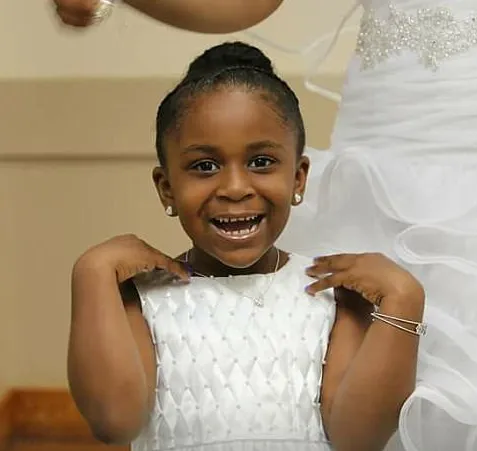
Ariana had begun to grow into that in-between space where childhood meets the first hint of adolescence.
She liked reading more than cartoons, but she still joined in when her cousins started silly dances in the living room.
She was the one who helped tie shoes, who remembered where the crayons were, who said, “Let’s clean up before Aunt Andrena gets home.”
Ajayah was pure sunshine, the kind of child who could turn a bad day around just by walking into a room.
She had a laugh that bubbled up from somewhere deep, surprising even herself.
When she and Nadira were together, it felt like two little comets passing through the house, leaving a trail of energy behind them.
Antonio Williams was twenty-five years old.
He was Nadira’s older brother, and to the outside world he was just another young man trying to find his way.
On the night that would redraw the lines of everyone’s life, he was the one left in charge.
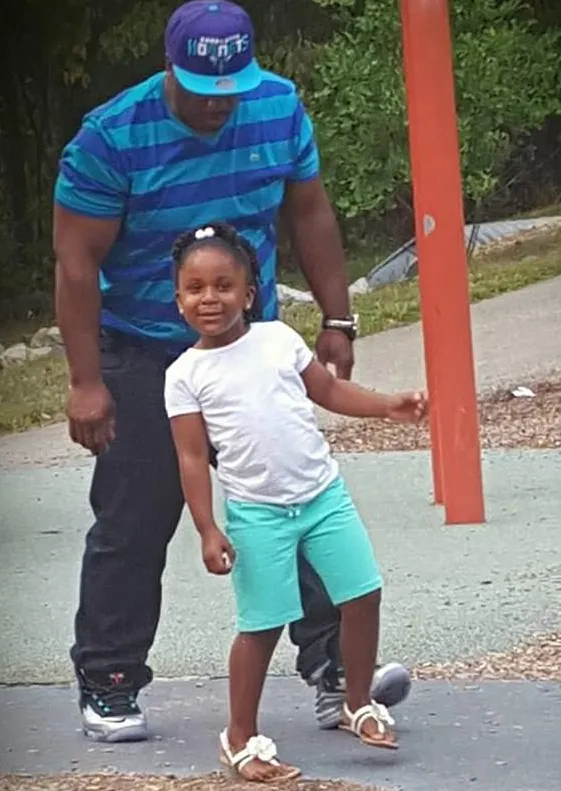
Their mother had an overnight shift as a nurse.
Work meant steady income, steady hope, and the belief that she was building something better for her children.
She hugged her daughters and nieces, left instructions, and stepped out into the night, trusting that home was the safest place she could leave them.
There is a kind of faith a mother must have when she locks the door behind her.
Faith that the walls will hold, that the people inside will love and not harm, that morning will come without disaster.
On August 18, 2017, that faith was broken in a way that can never fully be put into words.
The house settled into nighttime rhythm.
Somewhere, a television hummed low, throwing soft light on familiar furniture.
The girls moved through their bedtime routine, reluctant but obedient, tired in the way only children are after a day of play.
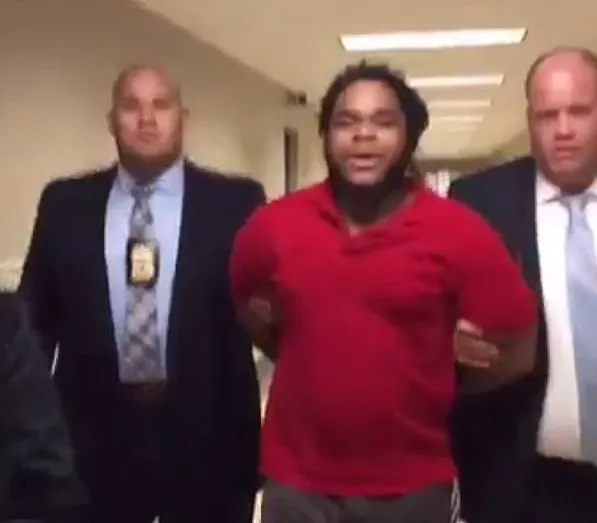
They crawled into one bed in the basement, not because they had to, but because that is what cousins do when sleepovers feel like an adventure.
They whispered about future birthdays and first days of school.
They did not talk about danger, because in their world danger belonged to news stories and grown-ups’ conversations, not to the space under their blankets.
Upstairs, Antonio moved through the house.
We do not know what thoughts crossed his mind, what shadows settled in the corners of his heart.
We only know that at some point during that long, dark stretch of hours, something inside him turned toward violence.
What happened next has been recorded in police reports and courtroom transcripts.
Words like “stab wounds” and “multiple counts of murder” sit cold on paper, too clinical to capture the horror.
Three little girls, all in one bed, were attacked in a place that should have held only safety and sleep.
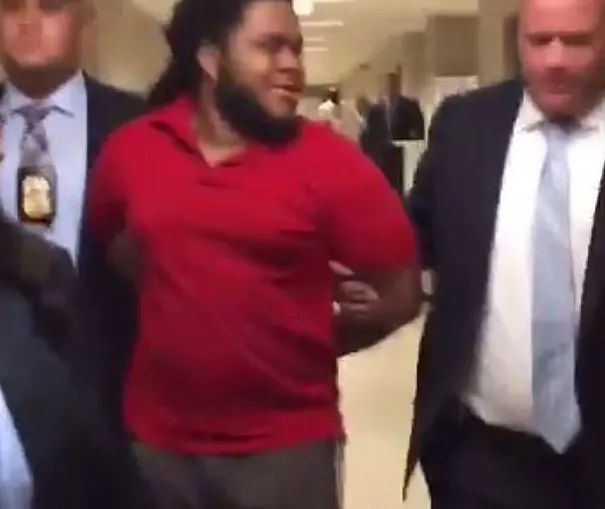
In another part of the house, a two-year-old sister remained untouched.
She was nearby, small and unaware, her life preserved in the middle of unimaginable destruction.
Later, people would wonder why he stopped where he did, why one child was spared while three others were not.
Antonio did not flee when the violence was over.
He did not vanish into the night or try to cross state lines or disappear into another city.
When officers arrived, he was still there, and eventually he would confess to what he had done.
It was Andrena Kelley who walked into the nightmare first.
She descended to the basement expecting the ordinary chaos of children—blankets everywhere, a toy on the floor, maybe soft snoring.
Instead, she found silence, stillness, and the sight that would split the rest of her life into before and after.
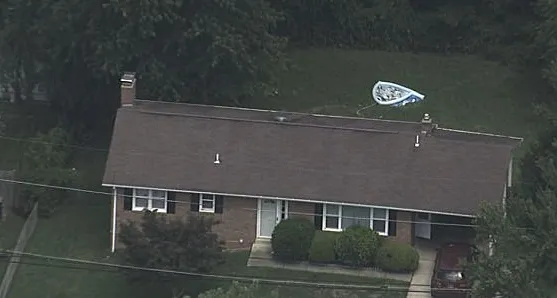
She called 911 with hands that did not feel like her own.
Her voice carried shock, disbelief, a desperate need for someone else to come and take control of a reality that no one should have to face alone.
In those minutes, the world outside continued on, clocks ticking, traffic passing, unaware that three young lives had already been taken.
When police and paramedics arrived, they did what they could.
They moved with the practiced urgency of people who have seen too much, but still hope that this time, this time, someone might be saved.
Yet even their training and speed could not undo what had been done in those hidden hours.
The girls were pronounced dead.
Their names were recorded formally—Nadira Withers, six; Ajayah DeCree, six; Ariana DeCree, nine.
Three names that once belonged to school rosters and family group chats now belonged to headlines and memorial programs.
In the following days, neighbors brought flowers and stuffed animals, setting them carefully outside the home like offerings.
Candles pooled wax on sidewalks, flickering against the darkness that seemed to hang over the entire street.
People gathered, some who knew the family, some who did not, all trying to answer a question for which there was no answer: why.

The motive was described as unknown.
Investigators pieced together timelines and statements, but the core reason—the quiet moment when intention turned toward murder—remained a void.
How do you explain an act that makes no sense, even to the man who committed it.
Antonio Williams was charged with three counts of first-degree murder and three counts of second-degree murder.
The law wrapped itself around the facts as best it could, layering charges the way doctors layer treatments when the wound is too deep to see clearly.
But no sentence, no courtroom procedure, could bring the girls back to their families.
In Newark, the DeCree family received the kind of phone call every parent fears but pretends not to imagine.
On the other end of the line were words that did not fit into a single breath.
Your daughters are gone.
For a moment, the world must have gone silent.
Sound pulls away when grief hits that hard, leaving people suspended in a space where they cannot quite believe what they have heard.
Then comes the rush—the screams, the sobs, the scrambling for answers that do not exist.
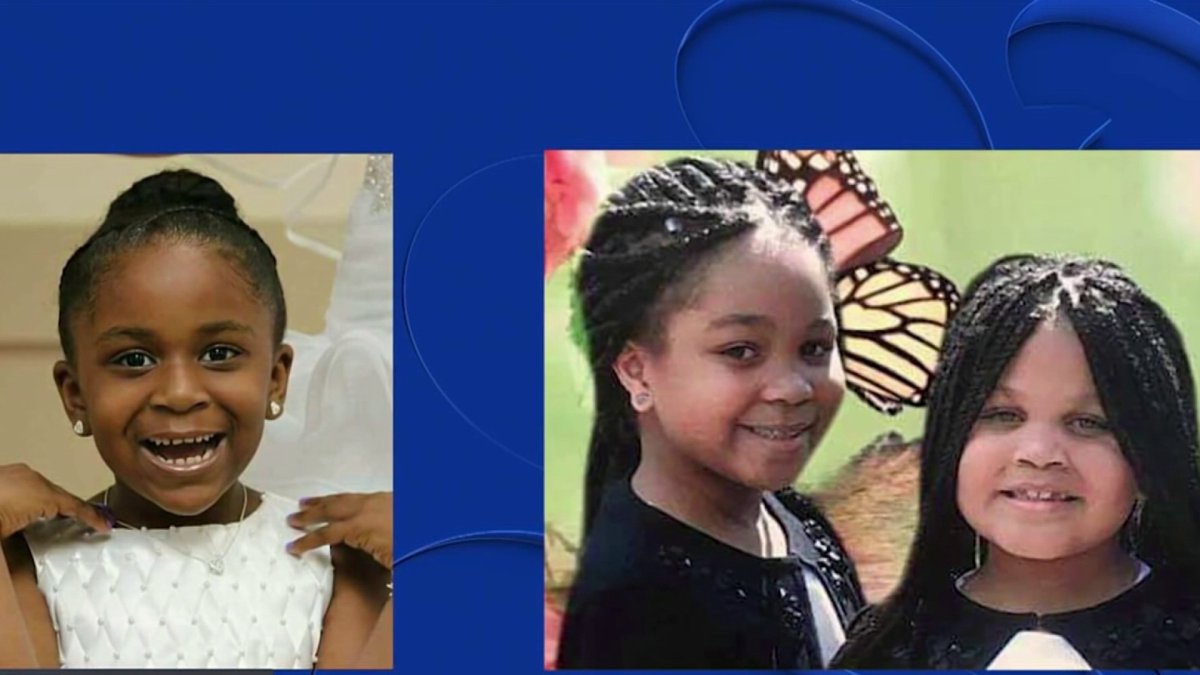
They had sent their girls to visit family.
They had packed little suitcases and reminded them to say thank you, to listen, to be good guests.
They had expected photos and stories when the trip was over, not funeral arrangements.
Back in Maryland, Nadira’s mother stood in the center of a reality that defied reason.
She had left for work to help strangers, knowing that her children were at home with someone she trusted.
When she returned, the foundation of her entire life had been destroyed.
There are no words big enough to hold the grief of a mother who must choose three tiny caskets.
No language can accurately describe the way it feels to stand in a funeral home and realize that you are picking out colors for a service instead of dresses for a first day of school.
Yet somehow, families in these moments still breathe, still stand, still find a way to move through the impossible.
At the memorial, photos of the girls were arranged in frames decorated with hearts and glitter.
There were pictures of them grinning with missing teeth, holding balloons, and leaning into one another as if they knew their lives would always be intertwined.
Flowers surrounded the images—soft colors trying to soften an unsoft reality.
People stood at the podium and tried to talk about who the girls had been, not just how they had died.
They spoke of Nadira’s curiosity, how she liked to ask “why” until adults ran out of answers.
They remembered Ariana’s protectiveness, how she watched over her younger cousins like a little guardian.
They told stories about Ajayah’s laughter, how it would erupt unexpectedly and make everyone else laugh, even when they didn’t know the joke.
They recalled the way the three cousins danced in the living room, spinning until they were dizzy.
They remembered the way they held hands crossing parking lots, a tiny chain of trust.
Outside the church, balloons were released into the sky.
They rose slowly at first, caught in the push and pull of the wind, then lifted higher until they were only small dots against blue.
People watched until the balloons vanished, their eyes straining as if they might catch one last glimpse.
In the weeks that followed, the story traveled far beyond Maryland.
News outlets summarized it in paragraphs, reducing the complexity to timelines and charges.
But in living rooms scattered across states, families heard the details and pulled their children closer.

Parents found themselves checking on sleeping kids more often at night.
They looked a little longer at the people they trusted with their children.
They understood, in a way they wished they did not, that safety is fragile.
The surviving two-year-old, Nadira’s little sister, would grow up with a story surrounding her that she did not create.
One day, someone would have to tell her that she was in the house the night her siblings and cousins were killed, and that for reasons no one fully understood, she had been spared.
Her life, like all lives touched by that night, would be shaped by questions with no easy answers.
Antonio Williams sat in jail, the system moving methodically around him.
Lawyers filed motions, judges set dates, and prosecutors prepared to present the facts.
On paper, he became “the defendant,” but he was also a son, a brother, a cousin—the same roles that had once tied him to the children whose lives he took.
People argued about mental health, about stress, about what signs might have been missed.
They wondered if something could have been done earlier, some intervention that might have changed the ending.
These conversations mattered, but they could not reverse what had already been written in blood and grief.

For the families, days became a series of firsts without the girls.
First holidays, first report cards, first warm weekend of summer—each one a reminder of the empty chairs, the unused toys, the birthdays that would never be celebrated.
Grief did not leave; it simply changed shape over time.
Sometimes it looked like tears on a quiet night when everyone else was asleep.
Sometimes it sounded like anger, a voice rising in frustration at a world that had allowed such horror.
Sometimes it felt like a soft ache, appearing without warning at the sight of a dress in the wrong size or a little girl on a playground.
Yet within the devastation, there was also a stubborn kind of love.
Family members spoke the girls’ names out loud, refusing to let them be reduced to victims in a headline.
They remembered who they were—the way Nadira hugged with her whole body, the way Ariana read stories to the younger children, the way Ajayah danced whenever music played.
Online, people who had never met the girls left messages of sympathy.
They wrote prayers, sent virtual candles, and typed out thoughts that felt small compared to the loss.
Still, each message was a tiny act of witness, a promise that these children had lived and mattered.
Community members organized vigils, calling for better support systems, for more attention to mental health, for stronger networks of care.
They spoke about how no one should carry silent rage or pain until it spills into violence.
They called for a world where asking for help is seen as strength, not weakness.
Years later, the events of August 18, 2017, would still echo.
School staff who once saw the girls in hallways would remember their faces.
Neighbors who heard the sirens that night would think of it whenever emergency lights flashed on their street.
But in quieter ways, the girls’ lives continued to ripple outward.
A cousin might choose a career in nursing or social work, inspired by the memory of what was lost and the desire to keep others safe.
A teacher, once shaken by the news, might be a little more patient with a struggling student.
Their story became a cautionary tale, yes, but also a call to cherish.
To cherish bedtime kisses and silly dances, phone calls answered, and “I love you” said out loud instead of assumed.
To cherish the fragile, beautiful normalcy of a night when children climb into bed believing that morning will come.
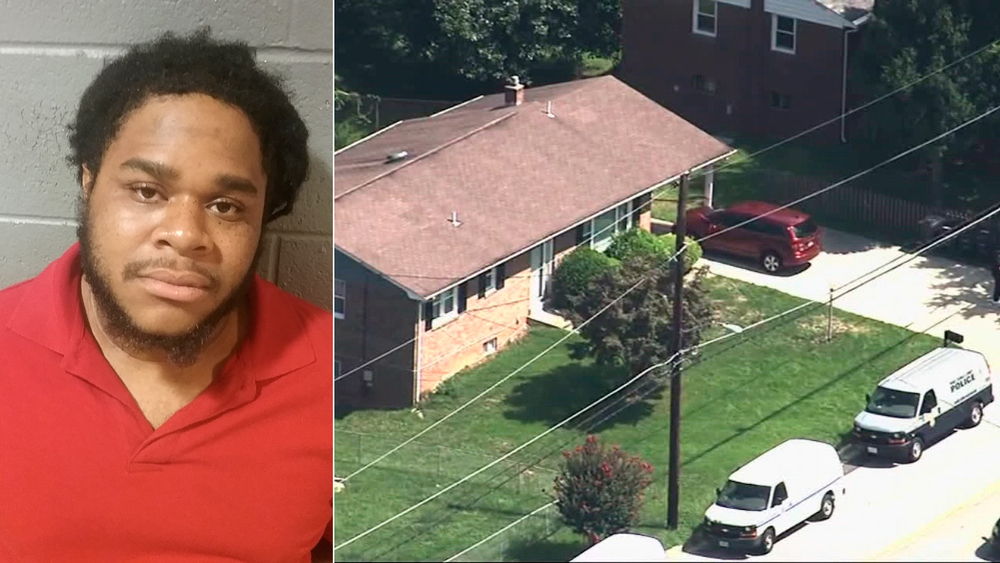
Nadira Withers, Ajayah DeCree, and Ariana DeCree were more than the way they died.
They were cousins who turned basements into fortresses and couches into playgrounds.
They were daughters, granddaughters, students, friends—tiny constellations of joy in the lives that surrounded them.
We may never understand what dark current pulled Antonio Williams toward that unspeakable act.
We may never find a motive that feels satisfying or logical or complete.
But we can understand this: three lives, small and sacred, were taken, and the world is lesser without them.
So we speak their names.
We remember their laughter and their light, even if we only know them through photos and stories.
And we hold their families in our hearts, hoping that somewhere beyond what we can see, Nadira, Ariana, and Ajayah are together again—safe, unafraid, and wrapped in a peace that can never be broken.
The shelter always smelled faintly of bleach and old rain.
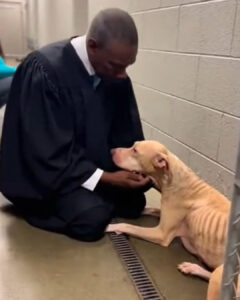
It was the kind of place people walked through quickly—heads down, voices soft—because staying too long meant seeing too much.
Metal doors.
Concrete floors.
Fluorescent lights that hummed like tired bees overhead.
Judge Marcus Wallace had walked into courtrooms his entire adult life without flinching. Murder trials. Custody battles. Sentencing hearings that hollowed out families.
He had learned how to keep his face still.
But the shelter was different.
There was no bench here.
No gavel.
No polished wood to separate him from the hurt.
Just cages.
And breathing.
And waiting.
A volunteer led him down the narrow corridor. “He’s at the end,” she said quietly. “He hasn’t responded to anyone.”
Wallace nodded once.
He had seen the case file that morning.
Animal cruelty.
Weeks chained outside.
No food.
Almost no water.
Neighbors reported the barking had stopped days before anyone came.
By the time officers found the dog, he was still alive—but barely.
Evidence photos had been clipped to the report.
Wallace had thought he was prepared.
He wasn’t.
The kennel door came into view.
And there he was.
A tan pit bull pressed against the cinderblock wall like he was trying to disappear into it.
Too thin to look real.
His ribs pushed through his skin in sharp lines, like fingers trying to escape from inside his body. Hips jutting. Neck hollow. Eyes dull and unfocused.
Not sleeping.
Not awake.
Just… gone somewhere far away.
The tech whispered, “He doesn’t move. Doesn’t react. We tried treats. Toys. Nothing.”
Wallace didn’t answer.
He removed his suit jacket.
Then, without ceremony, lowered himself to the concrete.
His black judicial robe pooled around his knees like spilled ink.
Cold seeped through the fabric.
He didn’t care.
For years, people had stood when he entered a room.
Today, he chose to kneel.
Slowly, carefully, he slid closer to the kennel gate.
The dog didn’t look up.
Didn’t blink.
Didn’t even twitch.
Wallace swallowed.
In court, his voice carried authority without effort. It filled rooms. Silenced arguments.
Now it came out soft.
Almost unsure.
“Hey… buddy.”
Nothing.
He tried again, quieter.
“Hey there.”
The fluorescent light buzzed overhead.
Somewhere down the hall, another dog barked.
Still nothing.
Wallace rested his hand flat on the concrete floor, palm open, not reaching—just there.
An invitation.
Not a demand.
“I read your story,” he murmured. “I heard what happened to you.”
His throat tightened around the words.
“I’m sorry nobody came sooner.”
The tech behind him shifted.
No one spoke.
Then—
The smallest movement.
An ear twitch.
Barely noticeable.
But there.
Wallace saw it.
His chest hitched.
“That’s it,” he whispered. “Yeah… I’m talking to you, pal.”
Slowly, the dog’s head lifted.
Not fully.
Just enough to show cloudy brown eyes.
Suspicious.
Tired.
Eyes that had learned people meant pain.
Wallace stayed still.
Didn’t reach.
Didn’t rush.
He just talked.
“I’m Martin,” he said quietly, using the name from the intake sheet. “You’ve been through enough, huh?”
The dog stared.
Then blinked.
A long, heavy blink.
Like it took effort.
Minutes passed.
The kind of minutes that feel bigger than hours.
Finally, something shifted.
The dog moved one paw forward.
Then stopped.
Breathing hard.
Another inch.
A wobble.
Like his legs weren’t sure how to hold him anymore.
The tech covered her mouth.
“Oh my God,” she breathed.
Wallace’s eyes burned.
“Take your time,” he whispered. “I’m not going anywhere.”
Step.
Drag.
Step.
Each movement shaky, uncertain.
Like walking through water.
Then suddenly—
Collapse.
Not away from him.
Toward him.
The dog’s thin body folded against Wallace’s knees, head sliding into his lap like it had always belonged there.
The judge inhaled sharply.
Carefully, gently, he lifted trembling hands and rested them against the dog’s sides.
He could feel every rib.
Every bone.
Too light.
Far too light.
“Hey… hey…” his voice cracked. “You’re safe now. You hear me? Safe.”
The dog’s muzzle nudged his chest.
Then—
A small lick.
Warm.
Careful.
Right across Wallace’s cheek.
Like a thank you.
Or maybe a question.
Are you real?
Wallace laughed and cried at the same time.
Tears slipped down without permission.
In court, he had watched men twice his size break down.
He had never allowed himself to.
Not until now.
“Yeah,” he whispered. “It’s over. Nobody’s hurting you again. I promise.”
The dog’s breathing slowed.
He pressed closer.
Trusting.
Just like that.
After everything.
Trust.
The tech turned away, wiping her eyes.
“I’ve never seen him move,” she said. “Not for anyone.”
Wallace wrapped his arms gently around the fragile body, careful not to squeeze too tight.
Concrete cold beneath them.
Fluorescent light harsh overhead.
But inside that small kennel, something warm bloomed.
Something quiet and stubborn and alive.
Hope.
He thought about the courtroom waiting for him tomorrow.
About the man who had done this.
About sentencing guidelines and legal language and years behind bars.
Justice had always meant punishment.
Consequences.
Numbers.
Today, justice felt different.
Today, justice looked like holding something broken and saying, you’re safe now.
Martin’s tail thumped once.
Weak.
But there.
Wallace smiled through tears.
“Yeah,” he whispered. “We’re gonna get you better. Food. A bed. Maybe a yard. Maybe kids who throw tennis balls until you’re tired.”
The dog’s eyes closed.
For the first time, not from fear.
From peace.
They stayed like that a long time.
Judge and dog.
Breathing together.
Two hearts slowing to the same rhythm.
Outside the kennel, the world kept moving.
Phones rang.
Doors opened.
Cases waited.
But in that small, cold space, something sacred happened.
A creature who had every reason to hate humans chose, instead, to lean into one.
And a man trained to measure justice in years and statutes learned that sometimes justice is quieter.
Sometimes it’s just kneeling down.
Opening your hands.
And whispering—
“You’re safe now, pal.”
Because sometimes the strongest thing you can do…
is let something fragile trust you.
And hold it like it matters.
Like it always should have.