A Mother’s Birthday Became Her Worst Nightmare. – Daily News
The highway that afternoon looked endless.
Just a long stretch of I-10 cutting through West Texas, sky spilling wide in every direction.
From a distance, it was the kind of day that didn’t look dangerous at all.
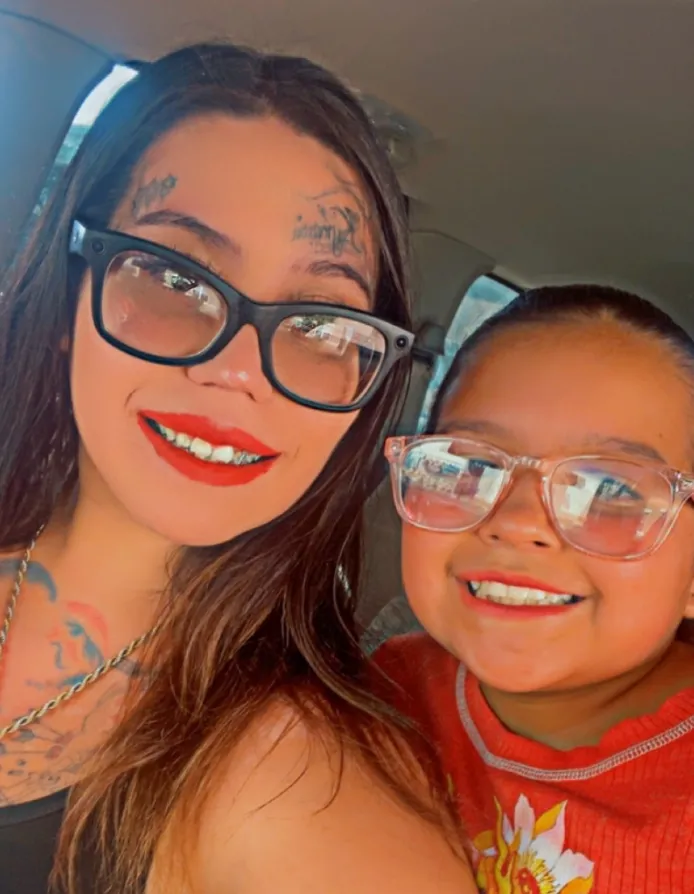
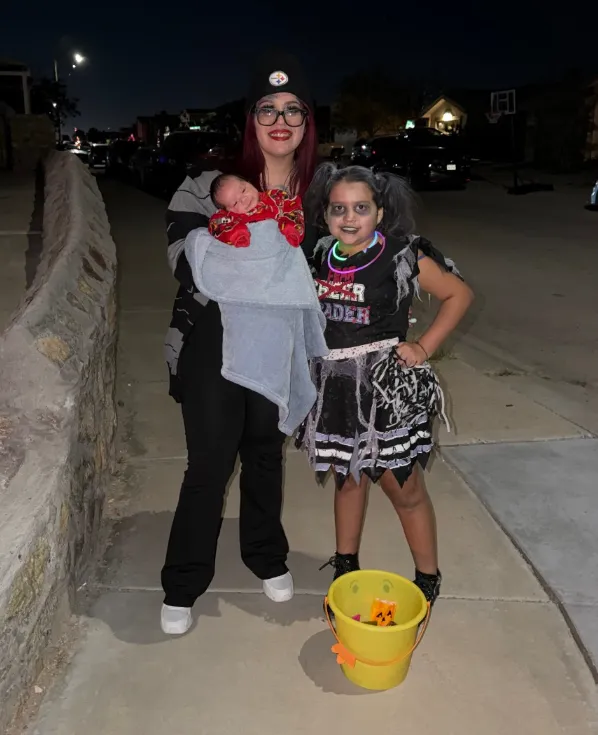
Inside the SUV, it was just a mother and her children.
A 29-year-old woman trying to make it from one point on the map to another, carrying her whole world in the seats behind her.
To anyone passing by, they were just another family on the road.
Her hands rested on the steering wheel, steady but tired.
The miles had stacked up behind them, and the familiar ache of a long drive was starting to settle into her shoulders.
Fatigue, when it arrives, doesn’t always announce itself loudly.
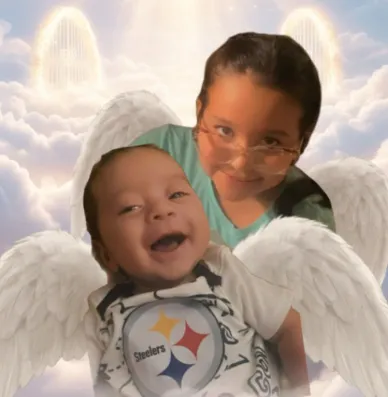
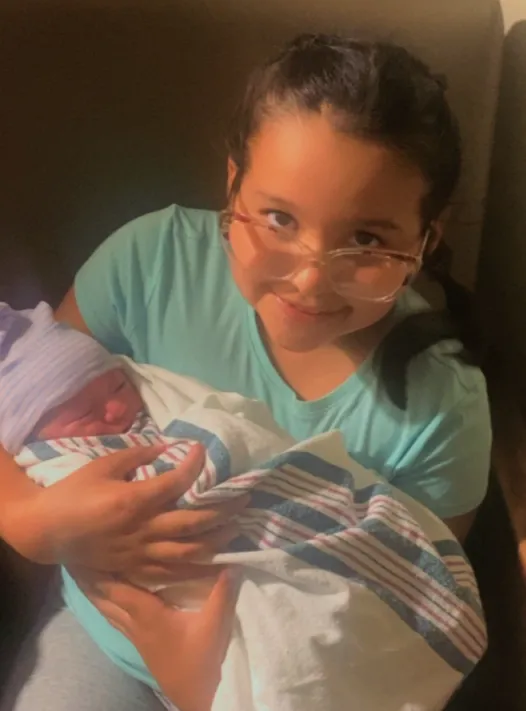
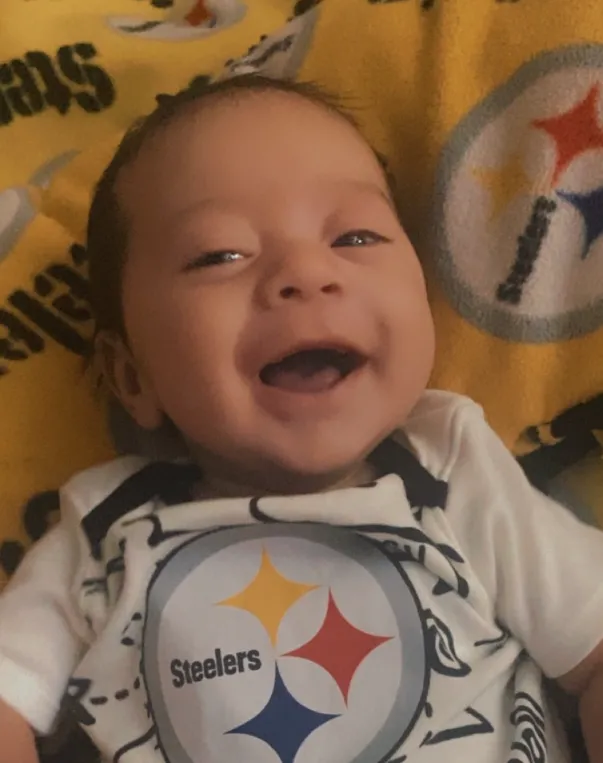
In the back, a 3-month-old baby boy slept in his car seat.
His tiny chest rose and fell in soft, almost invisible waves, his world still small and contained.
Every sound, every motion of the car, folded into the rhythm of his sleep.
Beside him, his 10-year-old sister watched the landscape slide past her window.
She was old enough to ask questions, old enough to be bored, old enough to daydream about everything she would do when they finally got where they were going.
Sometimes she talked, sometimes she sang to her baby brother, sometimes she just held his little hand when he fussed.
Their mother glanced at them in the rearview mirror whenever she could.
It was a habit now—eyes to the road, eyes to the mirror, eyes back to the road.
Each glance was a silent inventory: still breathing, still okay, still mine.
The hum of the highway had a way of lulling the world into a strange quiet.
The white lines blurred into a steady, hypnotic pattern, and the monotony of the drive pressed in on her.
She blinked a little longer than usual, shifted her hands, adjusted her grip.
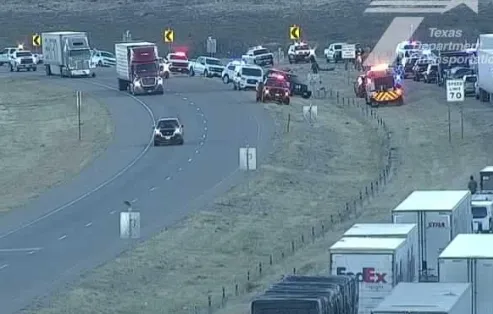
The stretch near mile markers 101–102 in Hudspeth County looked like so many other stretches of I-10.
Open, exposed, guarded by cable barriers and wide shoulders meant to keep disaster at bay.
But metal and concrete are only one kind of protection.
Somewhere in those moments, something went wrong.
Maybe it was a mechanical failure, a hidden problem in the vehicle that chose that stretch of road to reveal itself.
Maybe it was driver fatigue finally catching up, the weight of the miles tilting reaction time by just enough.
The SUV veered.
It left the lane it was meant to stay in and drifted toward the median.
The mother’s hands jerked instinctively, a snap decision made in a fraction of a second.
The vehicle struck the cable barrier.
That barrier was meant to catch, to redirect, to save—but the laws of physics had already been set in motion.
The impact sent the SUV into a violent roll.
It flipped once.
Then again.
And again.
Inside, there was no time to understand.
No time to process that the world had turned upside down, literally and irreversibly.
Gravity, glass, metal, and momentum did not care that there were children in the back.
The baby boy had no words for fear.
He didn’t know what a rollover crash was, didn’t know what it meant to be in danger.
His small body was simply at the mercy of forces far too big for him.
His sister knew enough to be terrified.
She would have felt the sudden loss of control, heard the horrific sounds of tearing metal and shattering glass.
She may have reached for him, may have called out for her mother, may have screamed, or maybe the terror stole even that.
When the SUV finally came to rest, the highway was no longer just a road.
It had become a scene—one of those places drivers pass and look away from because it feels like staring at something sacred and terrible.
Twisted metal, shattered glass, stillness where there should have been movement.
Other drivers saw the wreckage and called for help.
Voices hit 911 lines with shock and urgency, trying to give directions through trembling breaths.
“Single-vehicle rollover,” they said. “An SUV. It looks bad.”
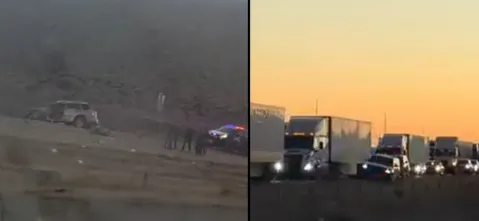
Emergency responders headed toward mile marker 101–102 with sirens cutting through the quiet.
The desert air, indifferent and dry, carried the sound without comment.
For the people in those vehicles, every second felt like it mattered.
When they arrived, they saw the truth laid out on the side of I-10.
The SUV was no longer a family car—it was wreckage.
The force of the rollover had done its work.
They found the mother alive, but seriously injured.
Her body bore the marks of the violence she’d just endured, and pain radiated through her in waves.
Somewhere inside that pain was another terror forming: Where are my babies?
The responders moved quickly, trained hands doing what they were supposed to do.
They checked pulses, opened airways, assessed injuries in those brutal first moments.
They did what they could, as fast as they could.
But there are some injuries that speed cannot fix.
Some blows the human body simply cannot come back from, no matter who is on scene or how quickly they arrive.
For a 3-month-old baby boy and a 10-year-old girl, the damage was already irreversible.
On that roadside, two young lives ended.
The baby who never got the chance to say his first word.
The girl who never got the chance to grow into the teenager she was on the edge of becoming.
The mother was rushed to a hospital in El Paso.
Her body was broken, but it still had a chance, and so they did what humans do—they fought for that chance.
She left the scene not knowing the full cost of what had happened.
In the hours that followed, the highway transformed into something else.
Portions of I-10 were temporarily closed, traffic stacked up, long lines of vehicles forced to slow down and wait.
Most drivers didn’t know exactly what had happened, only that something terrible had closed the road.
Some people in those cars checked the news on their phones.
They read about a single-vehicle rollover, a baby and a child dead, a mother hospitalized.
They drove on later with a little more caution, a little more awareness that everything can change in a second.
Back at the crash scene, investigators from the Texas Department of Public Safety began their work.
They measured skid marks, studied the angle of the barrier, examined the damage to the SUV.
They tried to reconstruct the final seconds before control was lost.
Was it mechanical failure?
A tire that blew, a steering issue, a hidden flaw in the vehicle’s structure?
Or was it driver fatigue, the kind that creeps in slowly and steals reaction time before anyone notices?
They would run tests, examine data, talk to the mother when she was able.
They would build a report, assign causes, use careful language to describe something that felt anything but clinical.
They would write down terms like “single-vehicle crash” and “rollover event” while knowing there was nothing simple about any of it.
Meanwhile, in a hospital room in El Paso, a woman would wake up into a different world.
The first awareness would likely be pain—sharp, deep, impossible to ignore.
The second awareness would be confusion.
What happened?
Where am I?
Where are my children?
Someone would have to answer those questions.
Someone would have to say the words that no mother should ever hear, least of all about two children in the same breath.
Two gone.
How do you tell a mother that her 3-month-old baby didn’t make it?
That the son she carried, fed, soothed, and kissed goodnight simply cannot be brought back?
How do you tell her that her 10-year-old daughter, the one who might have helped with bottles, whispered secrets, and made the baby smile, is gone too?
There is no gentle way.
No sentence soft enough to wrap that reality.
It arrives like another collision.
Her heart would try to reject it.
Her mind would scramble for alternatives—maybe it’s a misunderstanding, maybe they’re wrong, maybe there’s been a mistake.
But reality does not bend for hope.
For the rest of her life, that stretch of I-10 will not just be a place on a map.
It will be the spot where her world split open.
Mile markers 101–102 will hold more weight than any number should.
Families on roads like that rarely think about cable barriers or rollover physics.
They think about arrival times, snack breaks, playlists, the way the sunlight hits the dashboard.
They assume, quietly and deeply, that if they do their best, they will get where they’re going.

This mother was doing what parents all over the world do every day.
Driving her children.
Trusting that the car, the road, and her own body would be enough.
There will be people who try to find someone to blame.
They will ask if she should have stopped to rest, if the car had been properly checked, if anything could have been done differently.
These questions come easy when you’re standing far from the wreckage.
But the truth is sometimes more brutal and simple.
Sometimes, a single moment of fatigue meets a long road and a small mistake, and the cost is beyond anything anyone imagined.
Sometimes, something in the vehicle fails without warning, and the driver is just the first person betrayed.
None of those explanations, if they come, will bring the children back.
No investigative finding will soften the sound of a mother crying when she finally understands what happened.
No mechanical report will erase the image of two small bodies being gently covered at the side of I-10.

In the weeks to come, there will be funerals.
Tiny clothes laid out one last time.
A small casket and a larger one, both far too small for the amount of love people will try to pour into them.
There will be photos on slideshows—baby smiles, birthday candles, first days of school, silly faces caught on phones.
There will be songs chosen not because anyone wants to hear them, but because it feels like they fit the pieces of lives cut short.
There will be hands held, shoulders leaned on, words spoken through tears that feel like they’ll never fully stop.
The mother, when she is strong enough to attend, will sit in a wheelchair or walk slowly on unsteady legs.
Her body will still be healing, but the deeper wounds will be the ones no scan can capture.
She will look at those caskets and know that part of her will forever be buried with them.
People will tell her it wasn’t her fault.
They will say she did the best she could, that accidents happen, that she is lucky to be alive.
She may nod, thank them, whisper “I know,” even if she doesn’t feel it.
Because surviving what your children did not is its own kind of sentence.
Every breath, every step, every sunrise becomes something complicated—both a gift and a reminder.
She will wake up each day and carry what happened on that road, whether she wants to or not.
The official reports will eventually be filed.
The Texas Department of Public Safety will reach its conclusions.
The news will move on to other stories, other tragedies, other headlines.
But for one mother, I-10 near Sierra Blanca will always be a scar.
A section of highway where time stopped for two children who never got to grow up.
A place where a family’s future rolled over and never landed upright again.
Somewhere, years from now, she may drive past that mile marker again.
Maybe on purpose, maybe by accident, maybe on a day when life has demanded she return to that route.
Her hands will tighten on the steering wheel, and her breath will catch.
She will remember the baby boy who only knew her arms and her voice and the steady beat of her heart.
She will remember the 10-year-old girl who might have complained about being stuck in the car, who might have made up songs to pass the time.
She will remember that for a little while, they were all together, just a mother and her children on a Texas highway.
And then she will remember how quickly “together” can become “before.”
How one moment of veering can turn into multiple rolls and a lifetime of grief.
How a single afternoon on I-10 became the day everything changed.
Two children lost their lives near mile markers 101–102.
Their mother lost more than anyone can ever fully measure.
And a stretch of road in Hudspeth County became another reminder that behind every crash report is a story of love, plans, and a future that never got the chance to arrive.
A’miyah Wise was five years old.
She was small enough to still lose shoes, still need help tying bows, still believe adults would keep her safe.
She should have been worrying about nothing more serious than bedtime stories and morning cartoons.
She was from Philadelphia.
A city loud with buses, corner stores, and neighborhoods full of children just like her.
She had a mother who loved her and fought for her, even when that fight became unbearable.
A’miyah died in Wilmington.
She died while in the care of her father and his girlfriend.
The people who were supposed to protect her were the ones present when her life ended.
For two long years, there were no answers.
No arrests.
No clear explanations offered to the public.
What existed instead was silence.
A silence broken only by a grieving mother posting online, begging for attention, begging for accountability.
A silence that felt like neglect layered on top of loss.
Some reports say A’miyah’s mother was not even notified of her daughter’s death until four days later.
Four days is an eternity when your child is gone.
Four days is time that can never be forgiven or explained away.
Imagine learning that your child died days ago.
Imagine realizing the world kept turning while you were living a lie.
That kind of knowledge shatters something inside a person forever.
The details that eventually emerged were horrifying.
According to the medical examiner’s report, A’miyah had internal bleeding.
There was blood on her brain.
She had second-degree burns.
She had bruises in multiple places.
Patches of her hair had been ripped from her scalp.
These were not injuries from an accident.
They were signs of repeated trauma.
They told a story her body should never have had to tell.
A five-year-old does not carry injuries like that by chance.
A five-year-old does not bleed internally without violence.
A five-year-old does not lose patches of hair without suffering.
For two years, the state said very little.
Officials released almost no information.
There were no detailed press conferences explaining delays.
There was no transparency that could ease a mother’s grief.
There was no public urgency that matched the brutality of what happened to A’miyah.
There was only waiting.
Waiting became its own form of cruelty.
Every day without answers reopened the wound.
Every day without accountability felt like permission.
During those two years, A’miyah’s mother refused to be quiet.
She posted photos of her daughter.
She shared memories and begged people not to forget her name.
She reminded the world that her child existed.
That her child mattered.
That her child deserved justice.
It should never take a mother’s relentless pain to move a system.
Justice should not depend on who can scream the loudest online.
A five-year-old’s death should have been enough.
Eventually, the arrests came.
After two years of silence, A’miyah’s father and his girlfriend were charged with murder.
The words finally arrived, but far too late.
No charge can undo what was done.
No court document can return a child to her mother’s arms.
But accountability matters.
It matters because it tells the world this life was not disposable.
It matters because it sends a message that violence against children will not be buried quietly.
It matters because without it, the pain never stops echoing.
The delays raised painful questions.
Why did it take so long?
Why was there so little communication?
Why was a mother left in the dark about her own child’s death?
Why did information trickle out instead of being addressed directly?
Why did the burden of awareness fall on social media posts instead of official action?
These questions do not accuse lightly.
They demand reflection.
They demand change.
Systems are measured not by how they function when things go right.
They are measured by how they respond when a child is harmed.
By how quickly they act.
By how clearly they communicate.
By how much dignity they give to victims and families.
In this case, the system failed for far too long.
A’miyah Wise should be remembered for more than how she died.
She was a little girl who liked to smile.
A little girl who had favorite colors, favorite snacks, favorite songs.
She was someone’s baby.
She was someone’s whole world.
She was not evidence.
Her body told investigators what words could not.
But her life deserves to be remembered beyond injuries listed in a report.
She deserved laughter, safety, and time.
Her mother deserved honesty.
She deserved urgency.
She deserved compassion instead of delay.
Two years is a lifetime when your child is gone.
Two years is too long for a system to move this slowly.
Two years is time stolen not just from A’miyah, but from justice itself.
Now the case will move through the courts.
There will be hearings, motions, and legal arguments.
There will be dates written on calendars that once held birthdays.
None of that will erase what happened.
But it can acknowledge it.
It can say, out loud, that this child’s life mattered.
A’miyah Wise’s name should not fade into obscurity.
Her story should not be remembered only through her mother’s posts.
It should stand as a warning and a call for accountability.
Children depend entirely on adults to protect them.
When that protection fails, the consequences are irreversible.
That is why every delay matters.
That is why silence is dangerous.
That is why justice must be loud when harm is this severe.
Anything less is unacceptable.
A’miyah did not get to grow up.
She did not get to start school properly.
She did not get to learn who she would become.
What she got instead was pain she never deserved.
And a system that took far too long to respond.
Her mother’s fight ensured she was not forgotten.
Now it is up to everyone else to remember her too.
Not just as a case.
But as a child.
A child whose life mattered.
A child whose suffering should never be repeated.
A child who deserves to be honored.
Everyone drop purple hearts in honor of A’miyah Wise.