The Heartbreaking Story of Concetta Morton: A Life Stolen by Abuse 4406

In a New York courtroom, the tragic and disturbing death of 27-year-old Concetta “Chetta” Morton is now being examined by jurors, revealing a story of vulnerability, betrayal, and unimaginable suffering.

Concetta’s life, filled with hopes of independence, companionship, and love, was tragically stolen from her after months of brutal abuse by a man who was supposed to be her partner.
Instead, she found herself trapped in a relationship marked by control, humiliation, and violence, leading to a horrific end that authorities are calling a premeditated murder.
Concetta, described by prosecutors as a young woman who simply wanted companionship and a normal life, had been living with developmental disabilities linked to her premature birth and prenatal drug exposure.

Despite the challenges she faced, Concetta was determined to live independently. She yearned for love, and like many young women, she sought the comfort and connection of a relationship. Unfortunately, this innocent desire became her undoing.
In the fall of 2023, Concetta moved into an apartment in New Rochelle with 41-year-old Kenya Tilford, a man who, prosecutors argue, took advantage of her vulnerability.
What she thought would be the beginning of a new chapter in her life turned into months of horrific abuse, culminating in her brutal death.

Prosecutors claim that Concetta endured this abuse for four long months before Tilford strangled her to death, leaving her body hidden in a plastic container, abandoned and bound, for days after her death.
This case is not just a tragic tale of one woman’s life taken too soon—it is a story of how a predator exploited Concetta’s weaknesses, preying on her innocence and trust.
Prosecutors argue that this was not a crime of passion or a one-time incident. Rather, the abuse was systematic, escalating over time as Concetta’s physical and emotional state deteriorated.
By the time she was killed, Concetta had lost approximately 50 pounds, a dramatic change that painted a chilling picture of the extent of her suffering.
The relationship, prosecutors say, had evolved into one of control, manipulation, and violence. Tilford reportedly subjected Concetta to frequent humiliation and isolation, cutting her off from any support networks that could have helped her.
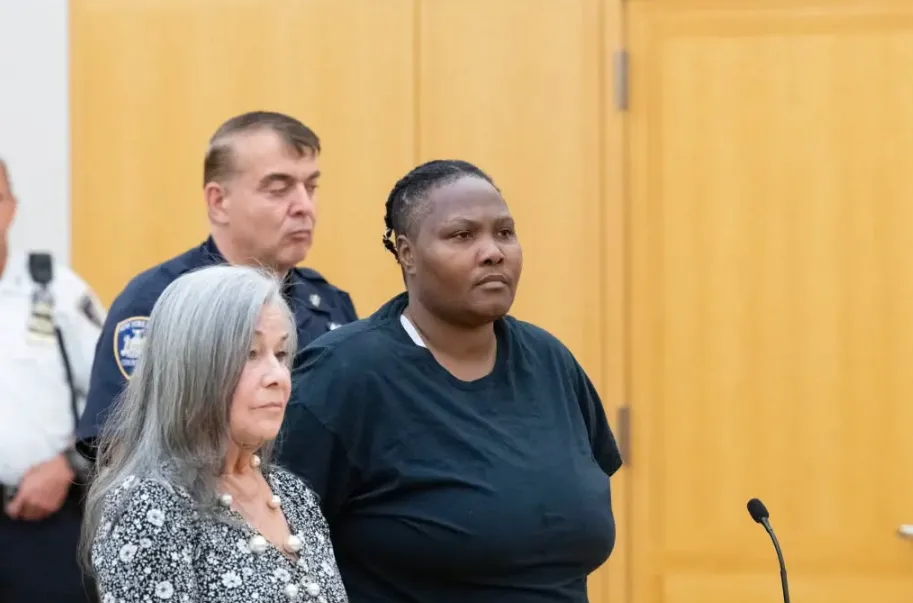
The torment, they argue, was deliberate and cruel, designed to strip her of her self-worth and autonomy. This was not the loving relationship Concetta had hoped for—it was an abusive and toxic dynamic that slowly destroyed her body and spirit.
The discovery of Concetta’s body was as horrifying as it was heartbreaking. Police were alerted after Tilford’s cousin contacted authorities.
The cousin, who was reportedly asked by Tilford for help in disposing of a body, grew frightened by her words and instead checked her into a motel before going directly to the police.
The police response was swift. Upon entering the apartment, they were greeted by a strong, overpowering odor. Inside, they discovered Concetta’s lifeless body concealed in a plastic container, bound and left there for days.
The circumstances surrounding her death were as disturbing as they were tragic, with evidence of the prolonged suffering she had endured.

The investigators’ search uncovered several pieces of incriminating evidence. They found gloves, masks, bleach, a protective suit, and even a chainsaw still in its box—all items that suggested an attempt to cover up the crime.
This chilling evidence pointed to the premeditated nature of Concetta’s murder. Even more harrowing, authorities discovered a video recorded shortly before her death, showing Concetta injured and disoriented, further confirming the physical abuse she had been subjected to.
As the trial continues, the prosecution has raised the possibility that Concetta’s murder was not an isolated incident. They allege that Tilford had previously abused other women, including incidents of choking, threats, and sexual assault.
This adds another layer of terror to the case, highlighting the pattern of violence and manipulation that Tilford had allegedly perpetuated.

The gravity of the charges against Tilford is underscored by the unique approach taken by prosecutors in this case. They have filed charges of first-degree murder under a “torture theory”—a legal argument that the Westchester County District Attorney’s Office has never used before in this type of case.
The theory posits that the prolonged suffering Concetta endured before her death warrants the harshest possible charges, emphasizing the cruelty and intentionality of the act.
Tilford’s defense attorney, however, urges the jury to disregard the graphic and disturbing details of the case, reminding them to base their decision solely on the evidence presented in court. He contends that the prosecution is attempting to sway the jury by invoking the emotional aspects of the case, rather than focusing on the facts.
Despite the defense’s claims, the evidence presented by the prosecution paints a clear and heartbreaking picture of a young woman’s life tragically cut short.
Concetta Morton wanted nothing more than to live independently, to be loved, and to have a relationship that brought her happiness and fulfillment. Instead, she found herself in the clutches of a man who saw her as nothing more than a tool for his own control and abuse.
The prosecutors argue that Concetta’s vulnerability, her trust in others, and her desire for a normal relationship made her an easy target for someone like Tilford.
They assert that the evidence will show that, rather than finding love, Concetta encountered a man who exploited her weaknesses and subjected her to unthinkable abuse.
As the trial progresses, it is clear that this case is about more than just one woman’s tragic death—it is about the systemic nature of abuse and the ways in which predators prey on the vulnerable.
Concetta Morton’s story serves as a reminder of the importance of protecting those who may be more susceptible to manipulation and violence. It also serves as a cautionary tale about the danger of trusting someone who does not have your best interests at heart.
Concetta’s death is a loss that will be felt by her family, friends, and all who knew her. It is a loss that underscores the need for greater awareness of abuse and the importance of offering support to those who are most vulnerable.

In the face of such profound pain, the family and loved ones of Concetta Morton are left grappling with the question: How could someone so full of potential, someone who only wanted companionship and love, be so brutally taken from this world?
As the trial continues, the fight for justice for Concetta Morton has only just begun. It is a fight that will continue long after the trial’s conclusion, as the story of her life and death continues to resonate, demanding that we remember her and stand up against the forces that allowed her to be exploited and abused for so long.
Concetta Morton may no longer be with us, but her story—her life—will not be forgotten. Her legacy is one of vulnerability turned into strength, and her memory will live on as a symbol of the importance of compassion, justice, and the protection of those who need it most.
The trial may eventually come to an end, but Concetta’s story is just beginning to inspire change. Her death, as painful as it is, will hopefully push for more awareness, more protection, and more action against those who seek to harm the vulnerable. In her name, we fight for justice.