IN 1965, FOUR VOICES MADE A CHOICE THAT ENDED SECURITY — AND CREATED A LEGACY. Night after night, The Statler Brothers stood just beyond the spotlight while Johnny Cash owned the stage. Their harmonies were flawless, but that was the problem. They blended in too well. Applause came. Respect came. But identity didn’t. Fame felt close enough to brush against — never close enough to claim. Then came a quiet moment backstage. A joke. A crumpled tissue box. Laughter that faded too quickly. And a name that lingered longer than it should have. What mattered wasn’t the box — it was the realization that followed. If they kept singing backup, they would spend their lives inside someone else’s shadow. Walking away from Johnny Cash wasn’t rebellion. It was risk. Leaving steady paychecks, steady stages, and the safest path in country music for something uncertain and unnamed. They didn’t know if radios would follow. Or audiences would care. They only knew one thing: harmony without ownership eventually becomes a cage. So they stopped singing behind someone else and stepped forward together. From that moment on, they weren’t just voices in the background. They were The Statler Brothers. And sometimes, the most important decision in music isn’t how well you sing — it’s when you decide to sing your own name. – Country Music
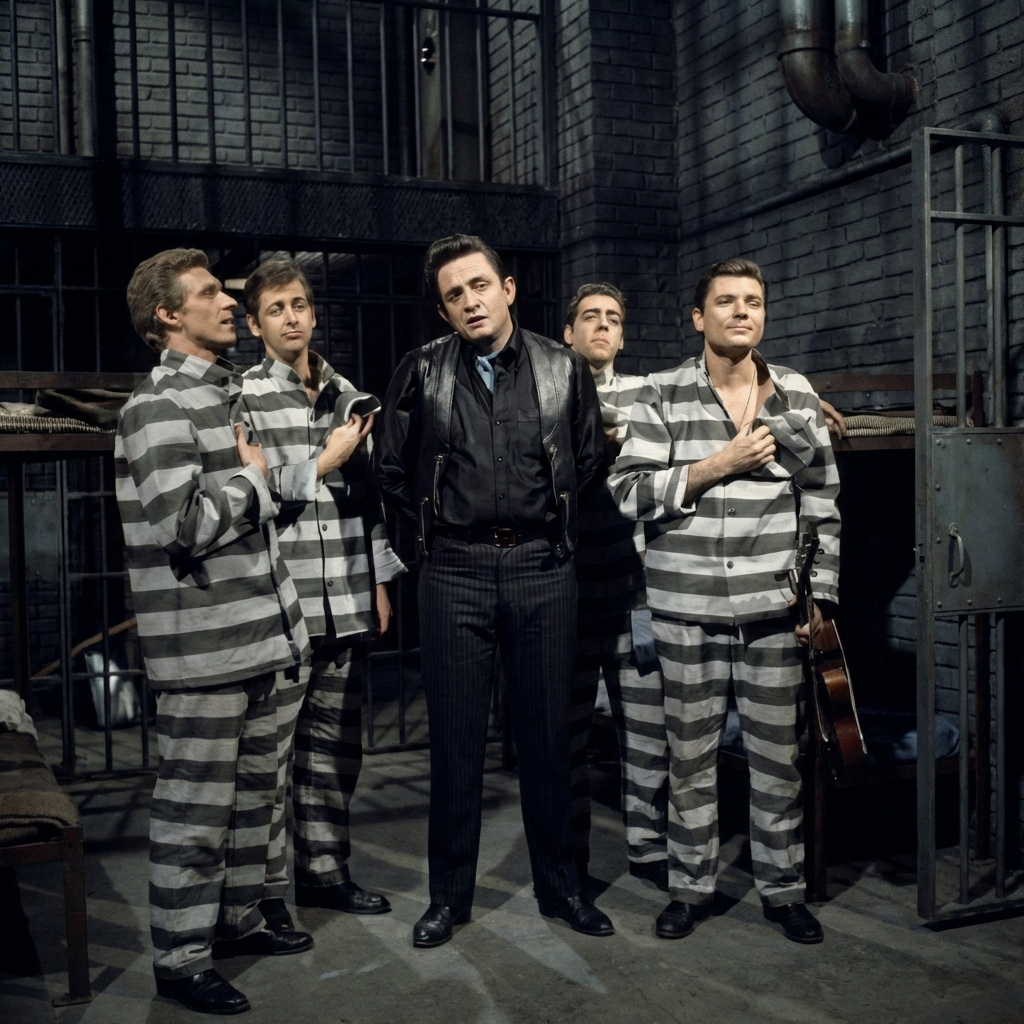
In 1965, Four Voices Chose Risk Over Comfort — and Country Music Changed
In 1965, The Statler Brothers were doing what thousands of singers dreamed of doing: standing on a major stage, working steady shows, collecting applause, and traveling with Johnny Cash. Night after night, Johnny Cash owned the spotlight. The band was tight. The crowds were loud. And just a few steps behind him, four harmonies locked together like a promise that never broke.
It should have felt like security. In many ways, it was. A paycheck you could count on. A stage you didn’t have to fight for. A name on the ticket that guaranteed attention. But comfort can be its own kind of trap, especially when you’re talented enough to be noticed, yet always introduced as an addition instead of the main event.
The Statler Brothers were respected. They were reliable. They were praised for being “perfect.” That word sounds like a compliment until you realize what it can mean in the background: perfect at supporting someone else’s story. The applause came. The respect came. But identity didn’t. Fame felt close enough to brush against, never close enough to claim.
Backstage moments rarely look like turning points while they’re happening. They look like clutter and tired jokes. They look like someone digging through a bag for a pen. They look like a crumpled tissue box sitting where it doesn’t belong.
One night, there was a quiet moment between shows. A quick joke that landed. A little laughter that filled the room and then fell away like it always did. The tissue box got moved. Somebody made a comment about the long road ahead. Someone said a name in passing — not an insult, not a praise, just a label that stuck in the air longer than it should have.
And in that ordinary mess, something sharpened. It wasn’t about the box. It wasn’t about the joke. It was the realization that hit after the laughter faded: if The Statler Brothers kept singing backup, they might spend their entire lives living inside someone else’s shadow. Not because Johnny Cash was unfair. Not because the crowds were unkind. But because the structure of the job didn’t leave room for ownership.
“If we stay here forever,” one of them said softly, “we’ll always be the best voices nobody claims.”
Leaving Johnny Cash Wasn’t Rebellion — It Was a Leap
Walking away from Johnny Cash wasn’t a dramatic feud. It wasn’t a public argument. It was risk, plain and simple. Leaving steady paychecks, steady stages, and the safest path in country music for something uncertain and unnamed.
They didn’t know if radio would follow. They didn’t know if audiences would care without Johnny Cash in front of them. They didn’t know if promoters would take them seriously as a headlining group. Every practical voice in the business could have made a strong case for staying put.
But there’s a truth that performers learn when they’ve stood in the wings long enough: harmony without ownership eventually becomes a cage. The walls are soft at first. They’re made of compliments. They’re padded with security. But they’re still walls.
So The Statler Brothers made the choice. They stepped away from the most dependable situation they could have asked for and turned toward the unknown, carrying nothing but their voices, their timing, and a stubborn belief that they were meant to be more than background sound.
When You Step Forward, Everything Gets Loud
The first thing that happens when you stop being “the backup” is that the silence feels bigger. There’s no headliner to hide behind. No guaranteed reaction. No easy way to measure whether the crowd loves you or simply loves the show around you.
But that’s also when the real work begins. The Statler Brothers weren’t just four voices anymore. They were a name. A face. A decision you could either agree with or doubt. They had to prove that their harmonies weren’t just supportive — they were central. That their stories weren’t filler — they were the point.
And slowly, something changed. They weren’t just voices behind someone else. They were The Statler Brothers, standing together in full view. The same precision that once made them “blend in too well” became their signature. The same unity that made them safe in the shadows became powerful in the light.
The Legacy That Only Risk Can Build
Looking back, it’s easy to call it destiny. But in 1965, it was just a hard choice made by four men who understood something most people avoid: security can be the enemy of becoming.
Their legacy wasn’t born from a single perfect performance. It was born from a decision. The decision to stop singing behind someone else and start singing their own name.
Because sometimes the most important moment in music isn’t how well you sing. It’s when you decide you’re done living in the background. It’s when you step forward, together, and accept the full risk of being seen.
In 1965, four voices chose uncertainty over comfort — and that choice didn’t end their security. It created their legacy.
Post navigation
UNSPECIFIED – JANUARY 01: Photo of Don Williams (Photo by Michael Ochs Archives/Getty Images)
Don Williams never chased the spotlight. He stood still and let the room come to him. No dramatic gestures. No raised voice. Just a calm presence that made people lean in instead of sit back. In a genre full of big personalities, Don Williams built a career by doing the opposite. He trusted stillness. And somehow, that stillness followed him everywhere.
Yet wherever Don Williams went, audiences waited for the same quiet moment — that familiar hush, that gentle ache they all recognized before the first note even landed. He could change the setlist, change the year, change the city. It didn’t matter. There was always one song they were listening for, even if no one said its name out loud.
That song was “I Believe in You.”
It wasn’t flashy. It didn’t race to impress. The words moved slowly, like they had nowhere else to be. When Don Williams sang it, the room seemed to breathe differently. Conversations stopped. Drinks stayed untouched. People didn’t cheer when the first line arrived — they settled in. It felt less like a performance and more like a shared understanding.
The strange part is that Don Williams never fought it. Some artists grow restless when one song begins to define them. They try to outrun it. Rearrange it. Bury it late in the set. Don Williams did none of that. He sang “I Believe in You” softly, almost carefully, like someone handling a memory that didn’t belong only to him anymore.
Because by then, the song had stopped being his alone.
People brought their own lives into it. Failed marriages. Long workdays. Quiet hopes they never said out loud. The song didn’t promise miracles. It didn’t shout about change. It simply said belief still mattered, even when things felt worn down. That kind of honesty sticks. It doesn’t age out. It doesn’t fade when trends move on.
Behind the scenes, Don Williams lived much the same way he sang. He avoided the noise of celebrity culture. He valued privacy. He didn’t seem interested in being misunderstood just to be talked about. That made the song follow him even more closely. Fans felt like it wasn’t a performance persona — it was the man himself standing there, unguarded.
“I don’t believe in superstars,” Don Williams once suggested through his actions more than his words. “I believe in songs that tell the truth.”
As the years passed, the voice grew a little weathered. The steps across the stage became slower. But when the opening notes of “I Believe in You” arrived, none of that mattered. Time paused in the same way it always had. The song aged with him, not against him. It carried the weight of a long road without ever sounding tired.
There’s a quiet irony in that. A man known for simplicity ended up with a song too honest to escape. But maybe escape was never the goal. Maybe Don Williams understood something others missed — that some songs aren’t cages. They’re companions.
So the real question isn’t whether Don Williams carried that song.
It’s whether “I Believe in You” quietly carried Don Williams all the way through his life — from small rooms to sold-out halls, from youth to reflection — steady, unassuming, and faithful to the very end.