One Heated Word. One Deadly Choice. One Life Gone. 4334

On February 10, 2026, the kind of late-afternoon light that usually signals errands and dinner plans fell over Greenville, North Carolina.
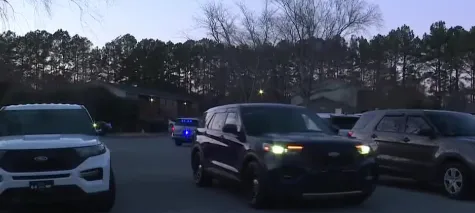
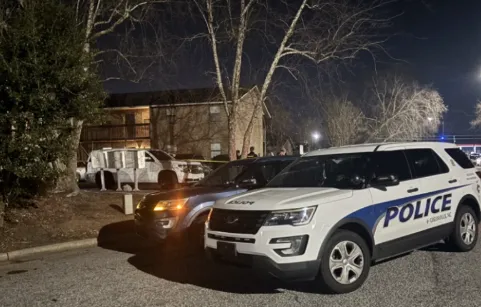
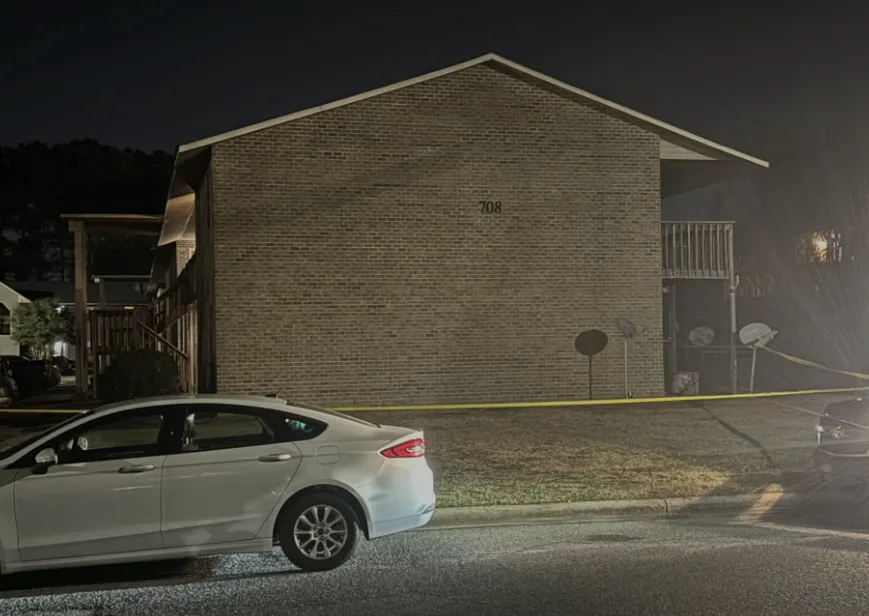
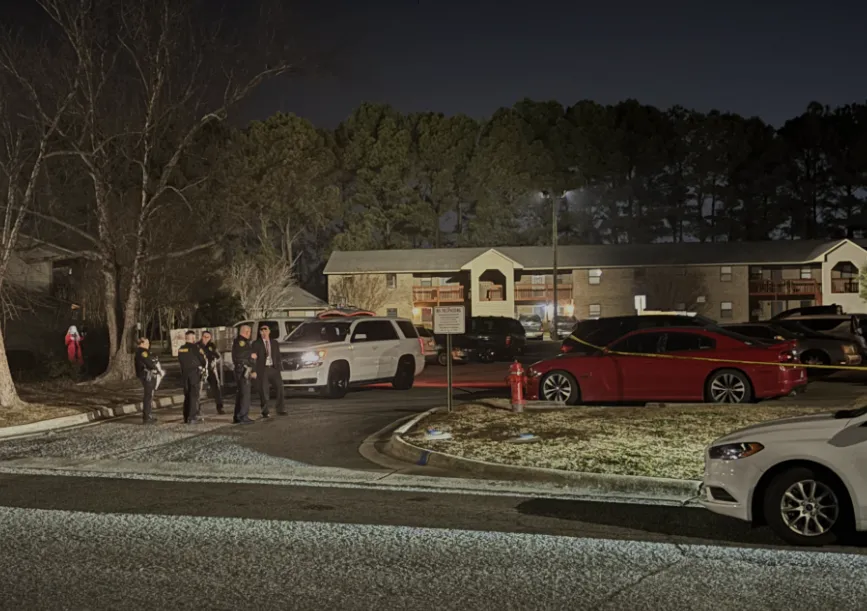
Inside an apartment in the 700 block of Patton Circle, police say a domestic disturbance was unfolding into something far more final.
By the time officers arrived around 4:30 p.m., a 26-year-old man named Ja’Quaveus Suggs was dead at the scene.
At first, people outside the apartment would have heard only fragments—raised voices, a door, footsteps, the sharp hush that follows a slammed word.
Domestic fights rarely sound like the beginning of tragedy, because they often begin like arguments everywhere begin: with tension, with pride, with pain trying to talk.
But investigators say this fight turned physical between Suggs and
22-year-old Jaliyah Archer, the woman he lived with and was dating.
There are certain details that land like ice in the body when you read them.
Authorities say Suggs and Archer were in a physical altercation inside the home they shared.

During the incident, Suggs suffered a stab wound, and he did not survive.
The story, as it stands right now, is full of unanswered moments.
Investigators say Archer allegedly put a knife into her pocket at some point, but officials have not clarified exactly when she armed herself or how that moment fit into the fight.
In cases like this, timelines become everything, because one minute can change how the law describes the next.
What is clear, police say, is that Archer called 911.
She stayed at the scene until first responders arrived.
In the language of reports, that sounds simple, but in real life it means a room full of shock, a phone in shaking hands, and a reality that cannot be “uncalled.”
When a young life ends inside a shared home, the grief doesn’t stop at the doorframe.
It spreads into families, into friend groups, into coworkers who will never hear that voice again.
It turns ordinary places—an entryway, a couch, a kitchen—into locations people cannot think about without flinching.
In the first hours after, the community began doing what communities often do when they don’t know what else to do.
They gathered, they talked in low voices, they held each other tighter than usual.
One neighbor told local media it felt like people were showing up for the family, consoling them, trying to make the impossible feel slightly less lonely.
But grief and shock are not the only currents running through a case like this.
There is also the machinery of the legal system, which moves forward even when hearts are stuck.

There are charges, courtrooms, bond hearings, conditions, and the cold fact that a death has to be translated into statutes and procedure.
Archer was charged in connection with Suggs’ death, and local reporting described the charge as an “open count of murder.”
Those words can sound strange to people outside the courtroom world, but they signal that prosecutors are still assessing what degree of homicide the evidence ultimately supports.
It is a reminder that investigations don’t end when the flashing lights fade; they intensify.
Then came the bond question, and with it, a new layer of tension.
On February 11, a judge set Archer’s bond at $1 million, according to local reporting.
Court records also listed conditions that included a curfew and
no contact with Suggs’ family.
Bond decisions are supposed to balance competing fears.
Courts weigh public safety, flight risk, the seriousness of the charge, and the rights of a person who has not yet been convicted.
Every factor feels heavier when the allegation involves a death, because the stakes have already proven catastrophic.
And in North Carolina, in late 2025 and early 2026, bond decisions have been under a brighter spotlight than usual.
A new law—often referred to as Iryna’s Law—was designed to tighten pretrial release rules for certain violent offenses and expand requirements like mental-health evaluations in specific situations.
News coverage has described it as a major shift in how the state handles pretrial release for violent charges, and it has also sparked debate about implementation and resources.
In this case, local reporting said Archer was initially presumed ineligible for bond under Iryna’s Law.
However, the judge allowed bond to be set through judicial discretion, pairing it with conditions like curfew and no-contact orders.
To families grieving a death, any bond decision can feel like a second shock, regardless of the legal reasoning behind it.
Because bond is not a verdict, but it can feel like a message.
To one side, it can feel like the system is taking the risk too lightly.
To the other, it can feel like the system is punishing before trial.
And to everyone else watching from the outside, it is a reminder that justice is often a long road, not a single moment.
As the case moved into the public eye, another detail surfaced that made the situation feel even more layered.
The district attorney confirmed, according to local reporting, that law enforcement had previously responded to the residence for domestic-violence-related calls.
That kind of history changes how people read the present, because it suggests patterns that did not begin on February 10.
A “previous response” doesn’t tell the whole story by itself.
It doesn’t tell you who was afraid, who was injured, who felt trapped, or how many apologies followed the sirens.
But it does underline something many people already know in their bones: domestic conflict often isn’t one fight—it’s a cycle.
Cycles have a cruel way of making danger look familiar.

The first argument feels shocking, the next feels “normal,” and the one after that becomes a routine people try to survive rather than solve.
In shared homes, fear can become quiet, because quiet is how you avoid making things worse.
And then there’s the moment when quiet breaks.
A struggle turns into a shove, a shove turns into desperation, and desperation turns into an irreversible act.
After that, every explanation sounds like it arrives too late, because it does.
What happened inside that apartment will be argued in details most people will never know.
Investigators will track phone records, interview neighbors, review the 911 call, document injuries, map timelines, and test statements against evidence.
The difference between self-defense, reckless escalation, and intentional harm can hinge on seconds, and the law will demand that those seconds be accounted for.
But outside the evidence, there is a human story that doesn’t fit neatly into legal forms.
Ja’Quaveus Suggs was 26, an age where life is still in motion—work, friendships, plans, arguments, forgiveness, hope.
Now his name is spoken in the past tense, and his family is forced into a reality they did not choose.
When someone dies young, the mind keeps reaching for the future like it’s still there.
People imagine birthdays that won’t happen, calls that won’t be answered, holidays with an empty space where laughter used to sit.
Grief doesn’t just mourn what was—it mourns what was supposed to be.
For Suggs’ loved ones, the coming weeks will likely feel like a blur of procedural moments and emotional collapse.
There may be a funeral, or a memorial, or a family gathering that ends with everyone holding their breath so they don’t fall apart in public.
And there will be the ongoing ache of waiting—waiting for answers, waiting for charges to solidify, waiting for court dates to appear on calendars like wounds.
For Archer, there is another kind of waiting.
A criminal case can swallow a life whole, even before a trial, because it becomes the center of every decision and every day.
Court conditions—like curfew and no-contact orders—are not just words; they become boundaries that shape how someone exists while the system decides what comes next.
Still, the central truth doesn’t shift.
One person is dead, and that cannot be reversed.
Everything else—bond, charges, court strategy, legal language—exists in the shadow of that final outcome.
In cases of domestic violence, communities often split into private conversations.
Some people ask, quietly, what the relationship was like behind closed doors and whether anyone tried to intervene.
Others insist they never saw warning signs, because sometimes warning signs hide in plain sight, disguised as “they’re just having a rough patch.”
There are also people who blame themselves after a tragedy, even when they shouldn’t.
Friends replay missed calls and think, “If I had checked in sooner.”
Relatives remember a tense holiday and think, “If I had said something harder.”
But hindsight is cruel, because it gives you information you didn’t have when it could have helped.
The police response on February 10 was not the beginning of the pain—it was the moment the pain became undeniable.
Responders arrived to a scene where they said the victim died there, on-site, without making it to the hospital.
That detail alone tells you how quickly a domestic disturbance can become a death notification.
And then there’s the 911 call, the detail that always lingers.
Because calling 911 is a choice that says, “This is out of my control now,” or “I need help now,” or “Something has happened that I cannot undo.”
Investigators will listen to that call carefully, not only for words but for timing, tone, and what it reveals about what happened in the moments before.
Every case like this leaves behind two kinds of wreckage.
There is the visible wreckage: police tape, court paperwork, news headlines, a bond figure printed in black ink.
And there is the invisible wreckage: the way a family’s sleep changes, the way friends jump when their phone rings late, the way a home no longer feels like safety.
The investigation is still ongoing, and officials have said they will continue working the case.
That means more interviews, more documentation, more analysis, and eventually more decisions about how the state will pursue accountability.
For the public, it can feel slow, but for the people living inside it, it can feel like standing under a weight that never lifts.
In the meantime, Greenville keeps being Greenville.
People go to work, drive the same roads, buy groceries, pick up kids, answer emails, make dinner.
But somewhere in the middle of that routine, a family is learning how to breathe with a loss that will not shrink.
And somewhere else, another family is grappling with fear, shame, anger, or disbelief—depending on what they believe happened and what the evidence will show.
Because when a relationship turns deadly, the blast radius expands beyond the couple.
It hits parents, siblings, children, coworkers, neighbors—anyone who loved either person, or both.
What is left, right now, is a set of known facts and a wide field of unknowns.
A fight, a knife, a death, a 911 call, an arrest, a bond set at $1 million with conditions, and a reminder that law enforcement had been called there before for domestic-violence-related issues.
The rest will be established in the careful, often painful way the justice system moves: step by step, document by document, hearing by hearing.
For those watching from afar, it’s easy to reduce cases like this to headlines.

But headlines can’t hold the sound of a mother crying, or a brother trying to stay strong, or the way a friend stares at old messages and can’t believe there won’t be new ones.
And they can’t capture the heavy truth that domestic violence doesn’t always announce itself as danger—sometimes it looks like “just an argument,” right up until it isn’t.
If you or someone you know is experiencing domestic violence, help is available.
In the U.S., you can contact the National Domestic Violence Hotline by phone at 1-800-799-SAFE (7233) or by chat through their official website.
Even one conversation can be the beginning of a safer outcome.
The Warmest Welcome: A Simple Dinner That Meant the World 228


When I returned from my deployment to Iraq in 2004, the scene was one I’ll never forget — but not for the reasons most might imagine. After the final march, the air was filled with joy as wives and children rushed into the arms of their loved ones. Laughter, tears, and hugs were everywhere. But for those of us who were single, the moment felt different.
There were about six of us without families waiting. We walked away together, the sound of reunions fading behind us, our eyes stinging with unspoken emotions. I had made it home healthy, but the absence of someone to run into my arms was a quiet ache I wasn’t prepared for.
Most of the soldiers soon dispersed, heading off with their families. A few lingered, and among them was my sergeant. I’d heard him talk countless times during deployment about how much he missed his wife’s cooking, how he could almost taste her meals just by thinking about them. As I carried my own gear into the barracks, I saw her waiting for him — their reunion warm and happy.
Then something unexpected happened. Out of the blue, they both called over to me and extended an invitation: come to dinner with them.
It may have seemed like a small gesture to them, but to me, it was monumental. After more than a year of eating military food in the heat and dust of Iraq, the idea of a home-cooked meal felt like a rare luxury. That night, I sat at their table, surrounded by warmth and kindness that made me feel like I belonged.
The food was delicious — maybe the best meal I’d ever had — but it wasn’t just about the flavors. It was about the thoughtfulness, the welcome, and the feeling of being seen when I could have so easily been overlooked.

That simple act of hospitality left a lasting mark on me. It was a reminder that kindness doesn’t have to be grand to be life-changing. Sometimes, it’s as simple as pulling up an extra chair at the table.
To my sergeant and his wife, it may have been just another dinner. To me, it was a homecoming.