THE STATLER BROTHERS HAD 5 GRAMMYS AND 58 CHART HITS. BUT ONLY ONE SONG MADE AN ENTIRE GENERATION AFRAID OF GROWING OLD. Everyone remembers Flowers on the Wall. Many think of Do You Remember These — the song that turned old radios, sock hops, and drive-ins into country music nostalgia. But the song that truly became The Statler Brothers was quieter. In 1972, they sang about the Class of ’57 — the boys who dreamed big, the girls who thought life would stay young forever. Then, one by one, those dreams disappeared. One man drinks too much. One woman cries herself to sleep. Another hides behind a smile. It reached number 6 on the country chart. But its real power came years later, when the same fans who first heard it at 20 suddenly heard it again at 50. Some songs make you remember the past. This one made people realize it was gone. – Country Music
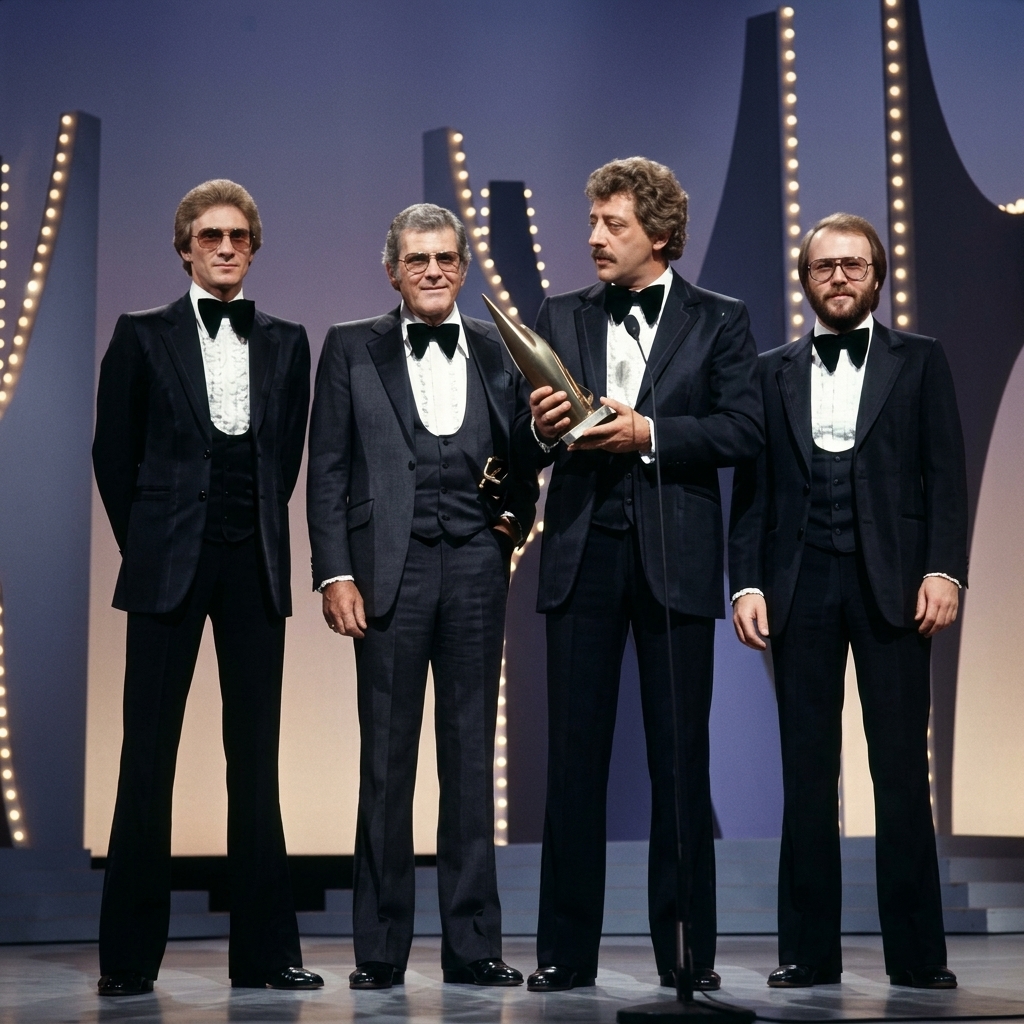
Everyone remembers “Flowers on the Wall.” It was clever, funny, impossible to forget. Others remember “Do You Remember These,” the song that turned old radios, drive-ins, and sock hops into something almost sacred.
But the song that may have said the most about The Statler Brothers was quieter than both of them.
In 1972, The Statler Brothers released “The Class of ’57.” At first, it sounded like another nostalgic country song. The opening felt warm and familiar. Four voices remembering high school days. Football games. Young love. The feeling that life was still waiting just around the corner.
For a moment, it seemed comforting.
Then the song changed.
The Class of ’57 had grown older. The boys who thought they would be rich and fearless had become tired men with ordinary jobs. The girls who believed life would stay beautiful forever were suddenly carrying disappointments no one saw coming.
One man drank too much. Another never left town. One woman cried herself to sleep at night. Another smiled through everything, even when she was falling apart.
There was no villain in the song. No dramatic ending. Just time.
That was what made it different.
Most songs about youth try to preserve it. “The Class of ’57” did the opposite. It admitted that youth disappears. Not all at once. Quietly. Slowly. In ways people do not notice until they wake up one day and realize they have become someone older than they ever imagined.
The song climbed to number 6 on the country chart, making it one of The Statler Brothers’ biggest early hits. But chart positions never explained why people held onto it for so long.
The real reason came years later.
In 1972, many fans heard “The Class of ’57” when they were still young. They nodded along, thinking it was sad, maybe even a little exaggerated. They had no idea they would someday become the people in the song.
Then came the strange part.
Twenty years later, those same fans heard it again.
Now they were 40. Then 50. Some had lost friends. Some had buried parents. Some had stayed in marriages that no longer felt the same. Others had watched their old dreams quietly slip away while they were busy raising children, paying bills, and pretending everything was fine.
Suddenly, “The Class of ’57” no longer sounded like a story about someone else.
It sounded personal.
“Can you remember when the class of ’57 had its dreams?”
That line hurt in a way few country songs ever do. Not because it was dramatic, but because it was honest.
The Statler Brothers were never afraid to sing about ordinary people. Harold Reid, Don Reid, Phil Balsley, and Lew DeWitt understood that the hardest stories are often the quietest ones. They did not need to shout. They only needed to tell the truth.
And the truth inside “The Class of ’57” was simple: growing older is not frightening because of wrinkles or gray hair. It is frightening because one day you look back and realize how much of your life is already behind you.
That is why the song still matters.
Even now, people hear it and think about the names they have not spoken in years. The classmates they lost touch with. The person they thought they would become. The dreams they once carried so easily.
Some songs make people remember the past.
“The Class of ’57” made people realize the past was never coming back.
Post navigation
“DON WILLIAMS LEFT THE WORLD THE SAME WAY HE SANG — QUIETLY, GENTLY, AND WITHOUT ASKING FOR ANYTHING.”
That line feels almost too perfect for Don Williams, but it also feels true.
In a genre built on big entrances, bigger personalities, and farewell moments designed to be remembered, Don Williams chose something else. Don Williams chose calm. In March 2016, at 76 years old, with a career that had already given country music 17 No. 1 songs and one of the most recognizable voices it had ever heard, Don Williams stepped away without noise.
There was no grand announcement wrapped in sentiment. No dramatic stage moment. No effort to turn retirement into one last performance. Don Williams simply said, “I think it’s time to hang my hat up and enjoy some quiet time at home.”
At the time, it sounded exactly like something Don Williams would say. Plain. Warm. Uncomplicated. The kind of sentence that did not beg to be quoted, but stayed with people anyway.
Eighteen months later, in September 2017, Don Williams was gone.
That was the moment many fans went back and heard those words differently. What once sounded like a graceful retirement suddenly felt like something more final. Not because Don Williams had tried to be mysterious. Not because Don Williams had hinted at tragedy. But because Don Williams had always known how to say the deepest things in the simplest possible way.
The Man Who Never Needed to Raise His Voice
There are singers who command a room by sheer force. Then there was Don Williams, who could make a room fall silent by doing almost nothing at all.
That was the miracle of Don Williams. The voice was never hurried. The delivery was never desperate. Don Williams did not chase a lyric. Don Williams let it land. Every song felt as though it had been lived with for a while before it was ever sung out loud.
Fans did not love Don Williams because Don Williams demanded attention. Fans loved Don Williams because Don Williams offered comfort. In song after song, Don Williams sounded like someone who understood that life could be heavy, lonely, uncertain, and beautiful at the same time.
That is why the nickname “The Gentle Giant” fit so naturally. It was not just about Don Williams’ physical presence. It was about the emotional space Don Williams created. There was strength in the softness. There was steadiness in the restraint. Don Williams made gentleness feel powerful.
A Goodbye Hidden Inside an Ordinary Sentence
Looking back now, the most heartbreaking part is how ordinary it all seemed.
Don Williams did not give fans a final speech meant for history. Don Williams did not stand under a spotlight and announce that the end was near. Don Williams just talked about home. About quiet. About hanging up the hat.
Maybe that is why it hurts.
Because only later did it begin to feel like Don Williams was doing what Don Williams had always done in music: saying something profound so gently that people did not realize how much it meant until long after it was over.
“I think it’s time to hang my hat up and enjoy some quiet time at home.”
Read now, the sentence carries a different weight. It sounds peaceful, but it also sounds like a man already moving toward silence on his own terms. No bitterness. No spectacle. No demand to be watched while leaving. Just gratitude, calm, and a wish to go home.
Why Don Williams Still Feels Close
Some artists leave behind noise. Don Williams left behind presence.
Even now, that is what makes the loss feel so personal to so many people. Don Williams never performed like a distant legend. Don Williams sang like someone sitting a few feet away, telling the truth in a low voice. That kind of artist does not disappear easily.
And maybe that is why the final chapter of Don Williams’ life continues to linger. Not because it was shocking, but because it was so completely in character. Don Williams exited the world the same way Don Williams moved through song: with grace, patience, and almost no need to explain himself.
There is something deeply moving about that. In the end, Don Williams did not ask the world to stop for him. Don Williams simply stepped back, left one quiet sentence behind, and let people discover its meaning when they were ready.
That sentence still echoes now, not because it was dramatic, but because it was Don Williams. And somehow, that makes it even harder to forget.