10 YEARS AFTER MERLE HAGGARD PASSED AWAY, SOMEWHERE IN A VAULT SITS 400 SONGS THE WORLD HAS NEVER HEARD — AND STILL NO ONE HAS OPENED IT. Merle said it himself. “I’ve got 300 to 400 songs that I haven’t released. We call it ‘The Archive.’ When I get unable to sing anymore, or get killed or something, they’ll probably put it out.” That was the deal. He recorded them. He labeled them. He told the world they existed. Then on April 6, 2016 — his 79th birthday — he was gone. In 2025, his son Ben confirmed the archive is real. “Never been heard, new songs and stuff.” Still there. Still sealed. Ten years of silence. Ten years of Cody Johnson covering “Footlights.” Ten years of “Mama Tried” on T-shirts and bumper stickers. Ten years of the world celebrating what Merle gave us — while ignoring what he left behind. Somewhere in that vault, there are melodies no human ear has ever touched. Lyrics written by the greatest storyteller country music ever produced. Songs that were finished before the man was. The world mourns Merle Haggard every April. But it has never once asked the only question that matters — why is the vault still closed? – Country Music
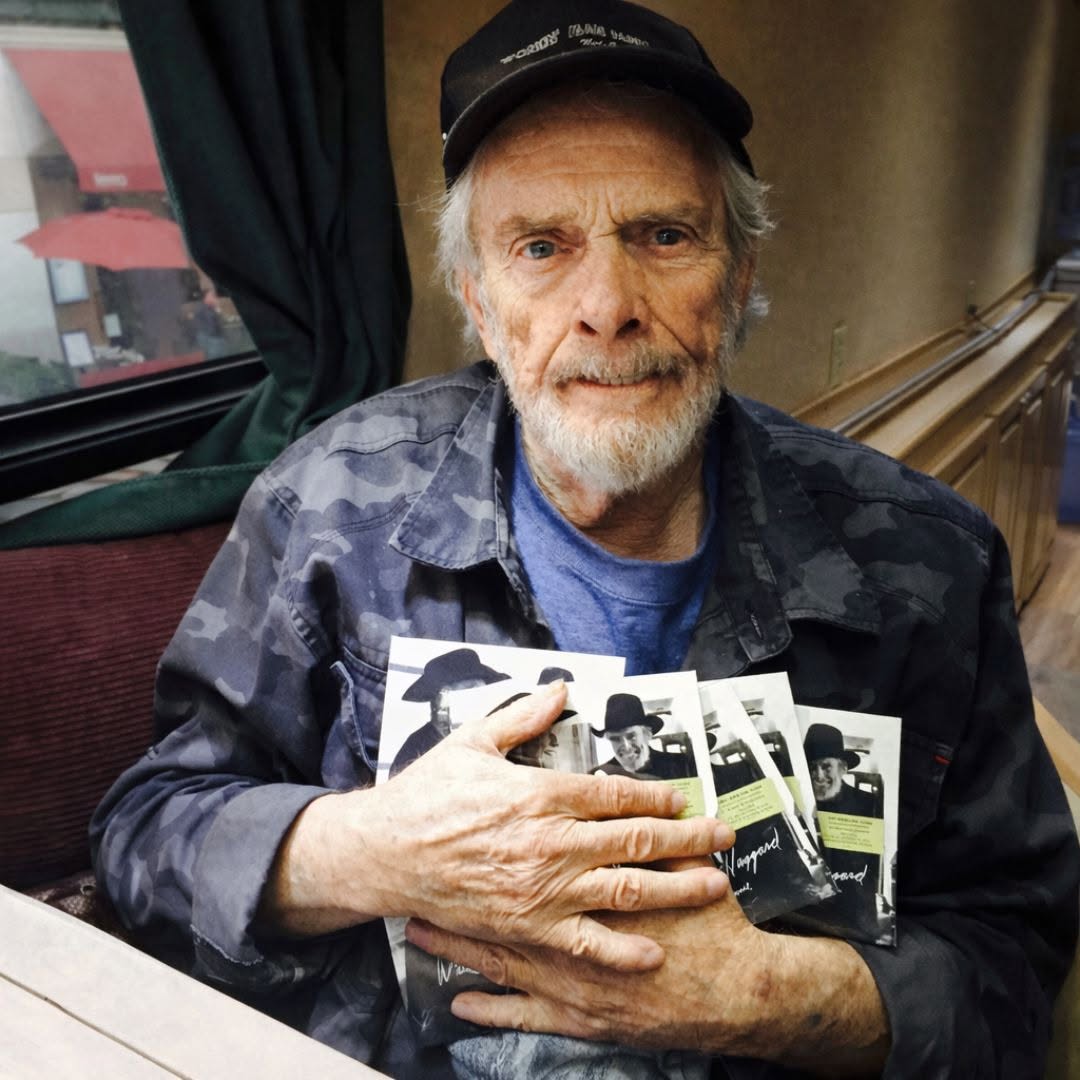
Ten years after Merle Haggard passed away, one of the most haunting stories in country music is still waiting for an ending. Somewhere in a vault sits a collection of songs the world has never heard. Not one. Not a preview. Not a rough leak from an old studio reel. According to Merle Haggard himself, there may be 300 to 400 finished songs tucked away in what he called “The Archive.” He spoke about it plainly, almost casually, as if leaving behind a hidden chapter of his life was just another part of the job.
“I’ve got 300 to 400 songs that I haven’t released. We call it ‘The Archive.’ When I get unable to sing anymore, or get killed or something, they’ll probably put it out.”
That statement has followed his legacy ever since. It feels like a promise, a warning, and a mystery all at once. Merle Haggard did not just write songs; he documented a life. He gave listeners stories about regret, survival, hard work, loneliness, and the quiet dignity of ordinary people. So when he said he had more music waiting, people naturally assumed they would hear it someday.
The man who kept writing
Merle Haggard never seemed like an artist who could slow down for long. Even when fame found him, he kept his boots on the ground. He wrote like someone trying to tell the truth before the moment slipped away. That is part of why his music still matters so much. Songs like “Mama Tried,” “Okie from Muskogee,” and “Footlights” are not just classics because they are catchy. They feel lived in. They feel earned.
That same instinct likely shaped the archive. If Merle Haggard really left behind hundreds of songs, then those recordings are more than leftovers. They are pieces of a creative mind that kept working until the end. They may hold new details about the way he saw the world, or simply new versions of the same honesty that made him unforgettable.
A sealed vault and a lingering question
In 2025, Merle Haggard’s son Ben confirmed that the archive is real. He described it as full of “new songs and stuff,” and said it is still there. Still sealed. That confirmation only deepened the curiosity. If the music exists, why has it not been opened? Why has no one made the decision to share it with fans who have spent years keeping Merle Haggard’s name alive?
There are many possible reasons. Rights issues. Family decisions. Label concerns. A desire to protect the material until the timing feels right. Or maybe the songs are being treated with the care they deserve, because once they are released, there is no going back. The world will hear Merle Haggard in a new way, and that is a serious responsibility.
Sometimes the hardest part of preserving an artist’s legacy is deciding when a gift becomes public.
What fans have carried for a decade
In the years since Merle Haggard passed away on April 6, 2016, his music has never really left public life. New generations keep finding him. Other artists keep honoring him. Cody Johnson’s cover of “Footlights” is one example of how Merle Haggard still lives in modern country music, not as a museum piece but as a working influence. “Mama Tried” still appears on shirts, hats, and bumper stickers, as if a song can become a family tradition.
That is the strange thing about legacy. Fans do not just remember the person; they keep asking for more of him. They want the story to continue. They want the missing verses. They want the songs that were written but never released, especially when the artist himself admitted they existed.
Why the vault matters
If the archive is ever opened, it could change how people hear Merle Haggard’s final chapter. The songs might be rough, polished, joyful, haunted, or unfinished in ways only he could make interesting. They might sound like the voice of an older man looking back, or like the restless heartbeat of a writer who never stopped chasing the next line.
But even without hearing them, the archive has become part of the legend. It is a reminder that great artists sometimes leave behind more than the public was ever able to see. It also raises a simple, powerful question: what does a finished life look like when the work is still waiting behind a locked door?
The question that will not go away
Every April, the world remembers Merle Haggard. It plays the records, tells the stories, and honors the man who turned hard experience into timeless music. But there is still that one unanswered question sitting in the background, growing louder with each passing year.
Why is the vault still closed?
Maybe the answer is practical. Maybe it is emotional. Maybe it is both. But as long as “The Archive” remains unopened, Merle Haggard’s legacy includes not only the songs we know, but the songs we have not yet heard. And for fans who have spent a decade wondering what is inside, that silence may be the most powerful part of the story.
Post navigation
People remember Don Williams as the gentle giant of country music, the man with the calm voice and the easy smile. He did not storm into the spotlight. He did not seem interested in proving anything. Instead, he arrived quietly, with a song, a barstool, and a kind of honesty that made listeners lean in. But behind that calm image was a life built on choices, and one of the biggest choices was not made in a studio or on a stage. It was made at home, every single day, for more than half a century.
Before the Music, There Was Work
Long before the awards, the sold-out shows, and the songs that became part of country music history, Don Williams was just a Texas kid trying to make a living. He worked oil fields. He drove trucks. He collected debts. These were not glamorous jobs, but they were real ones, the kind that teach patience, grit, and the value of showing up even when no one is watching.
That part of Don Williams matters because it explains so much about the man he became. He never seemed interested in pretending to be larger than life. He understood ordinary work, ordinary days, and ordinary responsibility. He knew what it meant to keep going.
Joy Bucher Saw the Man Before the Legend
In 1960, Don Williams married Joy Bucher. This was before Nashville noticed him. Before the hit records. Before the Hall of Fame. Before millions would hear I Believe in You and feel like the song had been written just for them.
Joy Bucher did not marry a star. She married a man with potential, ambition, and a dream that had not yet taken shape. She worked as a secretary so Don Williams could keep chasing music. That detail says everything about their early life together. It was not built on glamour. It was built on trust, sacrifice, and a shared belief that the future could be different from the present.
Some people fall in love with a spotlight. Joy Bucher fell in love with the person standing before it.
When Success Finally Came, Nothing Important Changed
Eventually, the songs came. The success came. The recognition came. Don Williams became one of country music’s most beloved voices, earning 17 number ones and a place in the Hall of Fame. His concerts drew crowds, and his songs crossed generations. But even then, Don Williams never acted like the moment was bigger than the man.
He would walk onstage with a cup of coffee and sit on a barstool, as if he were inviting the audience into his living room. There was no need for fireworks. No need for drama. Don Williams trusted the power of a steady voice and a simple truth. That was his style in music, and it was his style in life.
And Joy Bucher remained where she had always been. Not chasing cameras. Not trying to become part of the story. She stayed home, holding together the quiet life that made the rest of it possible. In a world that often rewards attention, her loyalty was invisible to many people, but it was never unimportant.
The Quiet Kind of Devotion
People often talk about love as if it is measured by grand gestures. But the story of Don Williams and Joy Bucher reminds us that real devotion is usually less dramatic and much harder. It looks like decades of consistency. It looks like supporting someone while they build something uncertain. It looks like choosing the same person again and again, even after the applause fades and the schedule gets long.
By the time Don Williams retired in 2016, he said it was time for some quiet at home. That choice fit him perfectly. It also honored the life he and Joy Bucher had built together. Joy Bucher had already been living in that quiet for years, keeping the home steady while the world celebrated his voice.
A Love Song Without a Stage
Don Williams became famous for singing songs that felt honest, warm, and deeply human. Yet the most meaningful part of his story may not be found in a chart position or a trophy case. It may be found in the fact that he stayed married to Joy Bucher for 57 years.
That kind of lasting love is not gentle in the way people sometimes imagine. It is not effortless. It is not automatic. It is a choice made every morning, through changing seasons, private struggles, public success, and the long ordinary stretches in between.
Not every love song needs a stage. Some just need someone who stays. Don Williams understood that, and Joy Bucher lived it.