DIABETES DIDN’T TAKE WAYLON JENNINGS ALL AT ONCE. IT TOOK THE ROAD FIRST. Waylon Jennings didn’t leave the stage with a grand farewell speech. No perfect final bow. No spotlight waiting for one last outlaw pose. By the late 1990s, the man who had spent his life moving from town to town was facing something he could not out-sing, out-drive, or out-stubborn. Diabetes did not take the legend all at once. It took the road first. Shows became harder. Appearances became fewer. By 2001, his health was serious enough that he could not attend his own Country Music Hall of Fame induction. For a man built on movement, music, and freedom, that absence said more than any goodbye could. Then the disease took even more. In December 2001, Waylon’s left foot was amputated. Two months later, on February 13, 2002, he died at home in Arizona from complications of diabetes. He was 64. But nothing about him felt defeated. The outlaw did not lose his voice first. He lost the road. And somehow, even that could not make him sound any less free. – Country Music
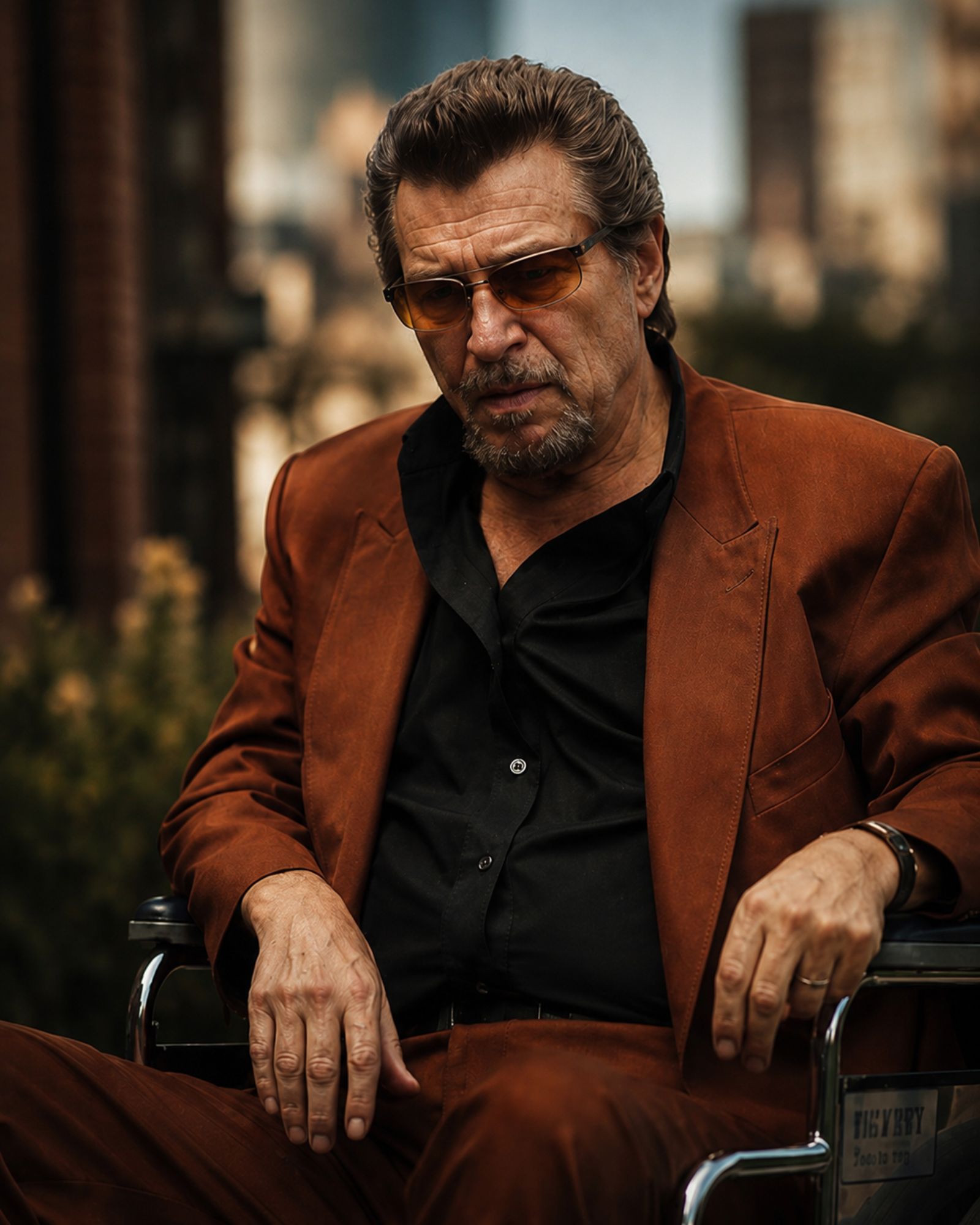
Waylon Jennings did not leave the stage with a polished farewell or a dramatic final speech. He did not stand under bright lights and tell the world he was ready to go. Instead, his final years unfolded in a quieter, harder way. For a man whose life had always been defined by motion, rebellion, and music, the most painful loss came slowly. Diabetes did not take Waylon Jennings all at once. It took the road first.
That is what makes his story so human. The voice was still there for a while. The presence was still there. The spirit that helped define outlaw country never disappeared. But the miles began to fade. Shows became more difficult. Appearances grew fewer. The traveling life that had once seemed natural started to demand more than his body could give.
Waylon Jennings had spent decades moving forward on his own terms. He was the kind of artist who carried an unmistakable edge, but there was always more beneath it. He was tough, yes, but also deeply musical, deeply committed, and deeply connected to the road. Music was never separate from the journey for Waylon Jennings. The road was part of the music, and the music was part of the road.
The man built for motion
Long before his health declined, Waylon Jennings was known for a life lived in motion. He came up through a world where long drives, packed schedules, and late-night performances were part of the job. He was a performer who understood momentum. He knew how to keep going, how to push through, and how to make a stage feel like a place of truth.
That is why the effects of diabetes were especially cruel. The illness did not just weaken him physically. It interrupted the rhythm of the life he had always lived. When you are someone like Waylon Jennings, who built so much of his identity around movement and independence, losing the ability to travel easily can feel like losing part of yourself.
For Waylon Jennings, the first thing diabetes took was not the music. It was the road.
By the late 1990s, the changes were becoming impossible to ignore. Fans could feel that something was different. He was still Waylon Jennings, still unmistakable, still carrying that familiar voice and attitude. But the distance between the man and the stage was growing harder to close.
A difficult absence
In 2001, Waylon Jennings faced a moment that said more than words could. He was unable to attend his own Country Music Hall of Fame induction because of his health. For many artists, that kind of honor is a celebration, a moment to stand in the spotlight and take in a lifetime of work. For Waylon Jennings, it became an absence that spoke volumes.
There was something deeply sad about that. Not because the honor mattered more than the man, but because it marked how much his body was fighting him. The world was recognizing his place in music history, but diabetes was making it difficult for him to even be there in person.
That kind of moment can feel unfair. The public sees the legend, but behind the legend is a person dealing with pain, limitations, and fear. Waylon Jennings had always seemed larger than life, but in those final years he was, like anyone else, vulnerable to time and illness.
What happened next
In December 2001, the disease progressed to the point that Waylon Jennings had his left foot amputated. It was another heartbreaking turn in a long and difficult health battle. For many people, that would have been the end of any sense of control. For a performer whose life had depended on energy and presence, it was especially severe.
Yet even then, the story of Waylon Jennings was not one of surrender. He remained remembered not for the decline, but for the force of what he had already given. His songs, his style, and his influence had already changed country music. The illness could affect his body, but it could not erase that legacy.
Two months later, on February 13, 2002, Waylon Jennings died at home in Arizona from complications of diabetes. He was 64 years old. The news hit hard because it felt like losing more than a musician. It felt like losing a certain kind of American voice, one that had always sounded stubborn, honest, and free.
The legend remained
Even in the end, nothing about Waylon Jennings felt defeated. That is part of what makes his story endure. He did not go out in a blaze of theatrical finality. He went through something much more ordinary and much more painful: a long illness that steadily took away pieces of the life he loved.
And yet the strongest image left behind is not of weakness. It is of identity. Waylon Jennings was still Waylon Jennings. The outlaw did not lose his voice first. He lost the road first. And somehow, even that could not make him sound any less free.
That freedom is why people still talk about him. Not just because he was famous, but because he felt authentic. He stood for a version of country music that valued honesty over polish and soul over perfection. Even as diabetes changed the final chapter, it did not change the meaning of the life before it.
Waylon Jennings left behind more than songs. He left behind a feeling. A rough-edged, unshakable, deeply human feeling that still lingers every time one of his records plays. The road may have been taken from him, but the legend kept moving.
Post navigation
Before the world knew him as a country-pop superstar, Glen Campbell was already part of the sound of America. Long before his own name filled arenas and radio charts, his guitar was helping other people become legends. He did not learn to read music, but he did not need to. He listened, he felt the rhythm, and his fingers seemed to understand songs before the rest of the room even caught up.
People who worked with Glen Campbell described his playing as something almost unreal. Smooth. Fast. Effortless. Liquid was the word that kept coming up. In the studio, he became one of the most trusted musicians in Los Angeles, a quiet force behind the scenes. He played on records for Frank Sinatra, Elvis Presley, and The Beach Boys. He was one of the secret weapons of The Wrecking Crew, the group of elite session musicians who helped shape the sound of a generation.
From background player to household name
For years, Glen Campbell lived in the shadow of the songs he helped create for others. Then the spotlight found him. Once his own voice and presence took center stage, the world heard something more than just a gifted guitarist. It heard a performer with warmth, grit, and plainspoken charm.
Hits like “Gentle on My Mind”, “Wichita Lineman”, and “Rhinestone Cowboy” turned Glen Campbell into a star in his own right. He sold an astonishing 45 million records and became one of the defining artists of his era. His music crossed lines between country, pop, and folk in a way that felt natural, not calculated. He had a voice that sounded both strong and vulnerable, like someone telling the truth even when the truth was hard.
He was not just a guitar player or a singer. Glen Campbell was the kind of artist who made difficult things sound simple.
The diagnosis that changed everything
In 2011, Glen Campbell told the world he had Alzheimer’s disease. For many fans, it was a painful announcement, because it meant the man known for precision, charm, and easy stage confidence was now facing a deeply personal battle. The disease was slowly taking pieces of his memory, his timing, and his sense of place.
But what Glen Campbell did next surprised nearly everyone. Rather than disappear quietly, he chose to go back on the road for a final tour. It would become a 151-show farewell, a long goodbye that was as courageous as it was heartbreaking. Night after night, he stood before crowds while forgetting more of himself at every stop.
His family placed a teleprompter onstage so he could remember his own words and stay connected to the songs that had carried him through life. Some nights it worked perfectly. Some nights it failed. When that happened, Glen Campbell did not collapse into embarrassment. He laughed it off, kept moving, and leaned on the music and the people around him.
A farewell that felt like a promise
There was something deeply human about watching Glen Campbell continue despite the confusion and loss. He was not pretending everything was fine. He was showing up anyway. That mattered to fans, and it mattered to his family. The tour became more than a performance. It became a statement of love, resilience, and dignity.
In those final years, the songs carried even more weight. They were no longer just hits from the past. They were anchors. Familiar words. Familiar melodies. Familiar feelings. When memory became unreliable, music still offered a path home, even if only for a few minutes at a time.
The last song said what words could not
One of the most moving parts of Glen Campbell’s final chapter was the song he recorded near the end of his life. In it, he sang: “I’m still here, but yet I’m gone. I don’t play guitar or sing my songs.” The line carried a quiet sadness, but also a strange kind of peace. It was a clear-eyed farewell from a man who understood exactly what was happening to him.
By 2017, the fingers that once seemed capable of playing anything could no longer even hold a pick. The instrument that had been such a natural extension of his body was slipping away. And yet the music remained, at least for a while longer. It was the last thing his brain let go of, the final doorway closing behind him.
Glen Campbell’s story is not only about fame, or illness, or loss. It is about talent so deep that it became part of the body itself. It is about a musician who gave the world joy before the world fully recognized him, and who gave it one more unforgettable lesson at the end: even when memory fades, a life can still echo.
Glen Campbell was more than a star. He was proof that music can live in the hands, the heart, and the people who keep listening long after the final note.