THE COUNTRY SONG THAT DIDN’T ASK GOD FOR A MIRACLE — JUST ONE GOOD DAY. Don Williams never sang like a man trying to shake the walls of heaven. He didn’t beg, shout, or turn faith into a performance. He just opened his mouth in that warm, steady baritone and made a simple prayer sound like something you might whisper before leaving the house on a hard morning. “Lord, I hope this day is good…” That was the whole power of it. Not a demand. Not a sermon. Not a man asking God to fix his whole life before sunset. Just one good day. When Don released “Lord, I Hope This Day Is Good,” people heard more than a country song. They heard the quiet request they were too tired to say out loud — less pain today, less worry today, enough strength to get through what was waiting. Maybe that’s why it lasted. Because Don Williams didn’t make faith sound far away. He made it sound like a porch light, a kitchen table, and a man asking gently for peace before the world got too loud. – Country Music
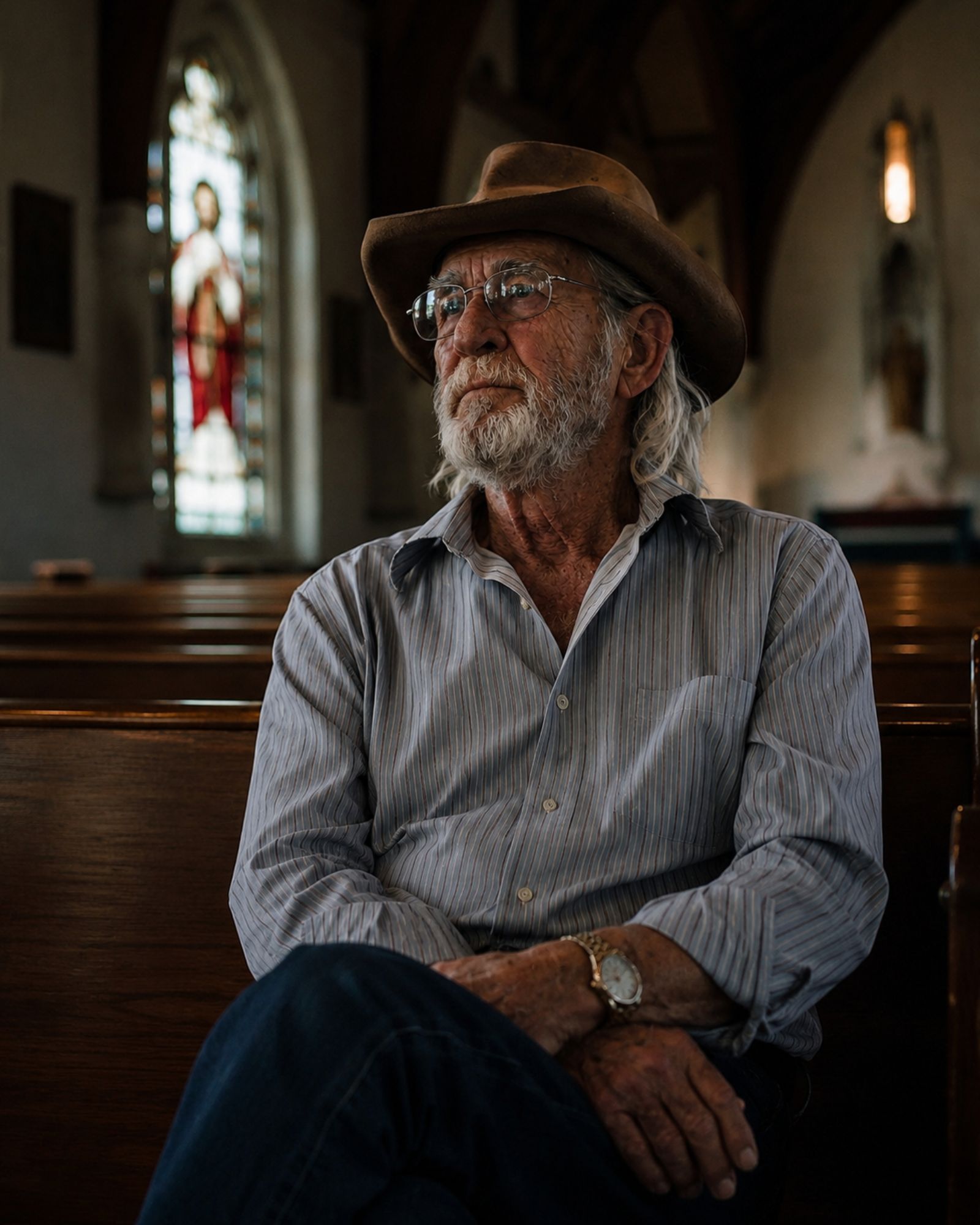
Don Williams never sang like a man trying to shake the walls of heaven. He didn’t rush his words, and he didn’t turn belief into a performance. Instead, he sang with a calm that felt lived-in, like someone who had seen enough hard mornings to know that hope does not always need to arrive in a thunderclap.
When Don Williams recorded “Lord, I Hope This Day Is Good”, he was not reaching for something grand and dramatic. He was reaching for something smaller, and in many ways, harder to ask for: one steady day, one clear step, one break from the weight of everything that might go wrong.
“Lord, I hope this day is good.”
That line landed because it sounded like real life. Not every prayer is about miracles. Sometimes the deepest need is simply to make it to lunch without falling apart. Sometimes it is to sit in the truck for a moment before work and breathe. Sometimes it is to wake up and hope the world will be gentle, just for today.
A Song That Felt Like a Conversation
Part of the magic of Don Williams was that he never sounded like he was preaching from a stage. He sounded like he was talking to you from across the room, or from the front porch after sunset. His voice had a way of making the listener lower their shoulders. It was warm, steady, and reassuring without trying too hard.
“Lord, I Hope This Day Is Good” is built on that feeling. It does not crowd the listener. It does not insist on a big emotional reaction. Instead, it offers a quiet kind of faith, the kind many people recognize immediately because they have lived it. Faith is not always loud. Sometimes it is just continuing.
Why the Song Still Matters
Country music has always held a special place for songs about struggle, family, work, and hope. But Don Williams found a different lane inside that tradition. He made room for tenderness. He made room for doubt. He made room for the ordinary person who is doing their best and asking for a little mercy along the way.
That is why “Lord, I Hope This Day Is Good” still resonates. It speaks to people who do not need a grand answer right now. It speaks to people who are not asking for their whole life to change before dinner. They just want the phone call to be okay. The bills to be manageable. The grief to loosen its grip. The day to feel less heavy.
In a world that often rewards louder and bigger expressions of everything, Don Williams offered something softer. He gave people permission to be honest about needing peace.
The Power of a Simple Prayer
The beauty of the song is in its restraint. It does not pretend life is easy. It does not pretend the hard parts disappear just because a person sings about faith. Instead, it suggests that grace can show up in smaller ways. A calmer mind. A safer drive home. A conversation that goes better than expected. A moment of relief that feels like enough.
That is a powerful message, especially for listeners who have carried too much for too long. A miracle is wonderful, but many people are looking for something they can hold onto today. Don Williams understood that. He knew that hope does not always arrive in dramatic fashion. Sometimes it arrives as endurance. Sometimes it arrives as a good cup of coffee and one less worry than yesterday.
Don Williams and the Quiet Side of Country Music
Don Williams had a gift for making restraint feel rich. He never needed to force emotion because the emotion was already there, folded into the voice, the melody, and the plainspoken honesty of the lyric. That is one reason his music has lasted across generations. He trusted simplicity, and that trust paid off.
“Lord, I Hope This Day Is Good” remains one of those songs that can meet people wherever they are. For some, it is a comfort on a rough morning. For others, it is a reminder that asking for a good day is not small at all. It is human. It is practical. It is deeply sincere.
A Song for the Morning After a Hard Night
There is something especially moving about the way the song opens a door without forcing anyone through it. It gives listeners a place to stand when they are tired, uncertain, or simply worn down by the pace of life. It says that hope does not have to be loud to be real.
Maybe that is why the song feels timeless. It does not belong to one era, one mood, or one generation. It belongs to anyone who has ever sat quietly and thought, “Let today be better.”
Don Williams never asked for a miracle in that song. He asked for one good day. And in doing so, he gave millions of people something even more lasting: a gentle way to hope.
Post navigation
In 1979, a Clint Eastwood movie helped give country music one of its most memorable little surprises. The song was “Coca-Cola Cowboy,” and at first glance it sounded like a playful tie-in, the kind of tune made to sit neatly inside Every Which Way but Loose. It had a wink, a swagger, and a bright enough hook to feel right at home beside Clint Eastwood on the big screen.
But the reason the song lasted had less to do with the movie and more to do with Mel Tillis. When Mel Tillis sang “Coca-Cola Cowboy,” he turned it into something deeper than a soundtrack novelty. The song still had humor, but it also carried a little ache. It felt like a man laughing at himself while admitting he had been bruised by life more than he cared to say out loud.
A Movie Song With a Country Heart
Every Which Way but Loose was not a tidy little romance or a polished musical. It had attitude, rough edges, and enough personality to make a country song feel perfectly at home. “Coca-Cola Cowboy” fit that world immediately. It was catchy, light on its feet, and built around the kind of character country music has always understood: the man who tries to look tough, cool, and self-assured, even when the truth is more complicated.
That was the secret. The song did not just describe a cowboy figure. It described a recognizable type of man, one who could walk into a room acting like he owned it, then leave carrying a private disappointment nobody else could see. Country listeners knew that man well. They had heard him in countless other songs, and they had probably met him in real life too.
Why Mel Tillis Made It Stick
Mel Tillis had a gift for making a line sound easy while giving it emotional weight. He was not the kind of singer who forced a song to become serious. Instead, he let the seriousness appear naturally, almost by surprise. That is what happened with “Coca-Cola Cowboy.” He sang it with a relaxed confidence, but he never erased the vulnerability hiding underneath.
That mattered because the song could have stayed a novelty if another voice had treated it that way. Instead, Mel Tillis gave it a human center. The “Coca-Cola Cowboy” was not a real outlaw or a grand hero. He was part charm, part performance, and part wounded pride. Mel Tillis made him believable.
He sang it like he understood that a grin can cover a lot, but not everything.
Country Radio Heard More Than a Movie Tie-In
Country radio did what it often does best: it took a song that seemed simple on the surface and found the emotional truth in it. “Coca-Cola Cowboy” climbed all the way to No. 1 on the country chart, and that success was not just about the movie connection. Listeners responded because the song sounded fun without feeling empty.
There was a little mischief in it, but also dignity. There was playfulness, but also honesty. The kind of man in the song might joke his way through trouble, but he still felt the sting of being misunderstood, overlooked, or quietly heartbroken. That balance made the record work.
It helped that Mel Tillis already had a strong reputation as a storyteller who could bring warmth and character to just about anything he sang. He did not need to push the emotion. He simply let it breathe.
Why the Song Became a Signature Moment
Some hits are loud and immediate, then fade into the background. “Coca-Cola Cowboy” did something different. It became one of those songs people remembered because it felt both catchy and knowing. It sounded like a joke at first, then like a confession the second time you heard it.
That is what made it special in Mel Tillis’s catalog. It showed how country music can take a playful idea and uncover something real inside it. A man can be funny and proud, flashy and fragile, confident and insecure all at once. The song did not judge that contradiction. It celebrated it.
A Lasting Country Moment
Looking back, “Coca-Cola Cowboy” is more than a movie song from 1979. It is a small but perfect example of how country music turns character into feeling. Clint Eastwood brought the movie power. Mel Tillis brought the soul. Country radio brought the audience that recognized the truth in the joke.
That is why the song still stands out. It was never just about a cowboy, a brand-name title, or a film soundtrack slot. It was about a man trying to look fearless while carrying the kind of hurt that never fully disappears. Mel Tillis understood that instinctively, and listeners heard it right away.
In the end, “Coca-Cola Cowboy” became what the best country songs often become: a story that starts with a smile and ends with something more honest than anyone expected.