ONE OF THE 58 VICTIMS WAS BURIED IN AN ERIC CHURCH T-SHIRT. HE WAS 29. His name was Sonny Melton. He died shielding his wife from the bullets. Two nights before the massacre at Route 91 Harvest Festival in Las Vegas, Eric Church stood on that same stage. He jumped into the crowd, shook hands, hugged fans, saw smiling faces with their hands in the air. 48 hours later — those exact spots became a killing field. Church couldn’t sleep. Couldn’t think. He’d promoted travel packages to help fans get to Vegas. “I felt like the bait,” he said. So he did the only thing he knew. He wrote a song called “Why Not Me.” No studio. No polish. Just a broken man with a guitar at the Grand Ole Opry, voice cracking, asking God one question — why them and not me? He left two seats empty that night. One for Sonny. One for Heather, Sonny’s wife — who survived. What Church said next about those empty chairs… that’s the part that wrecked everyone in the room. – Country Music
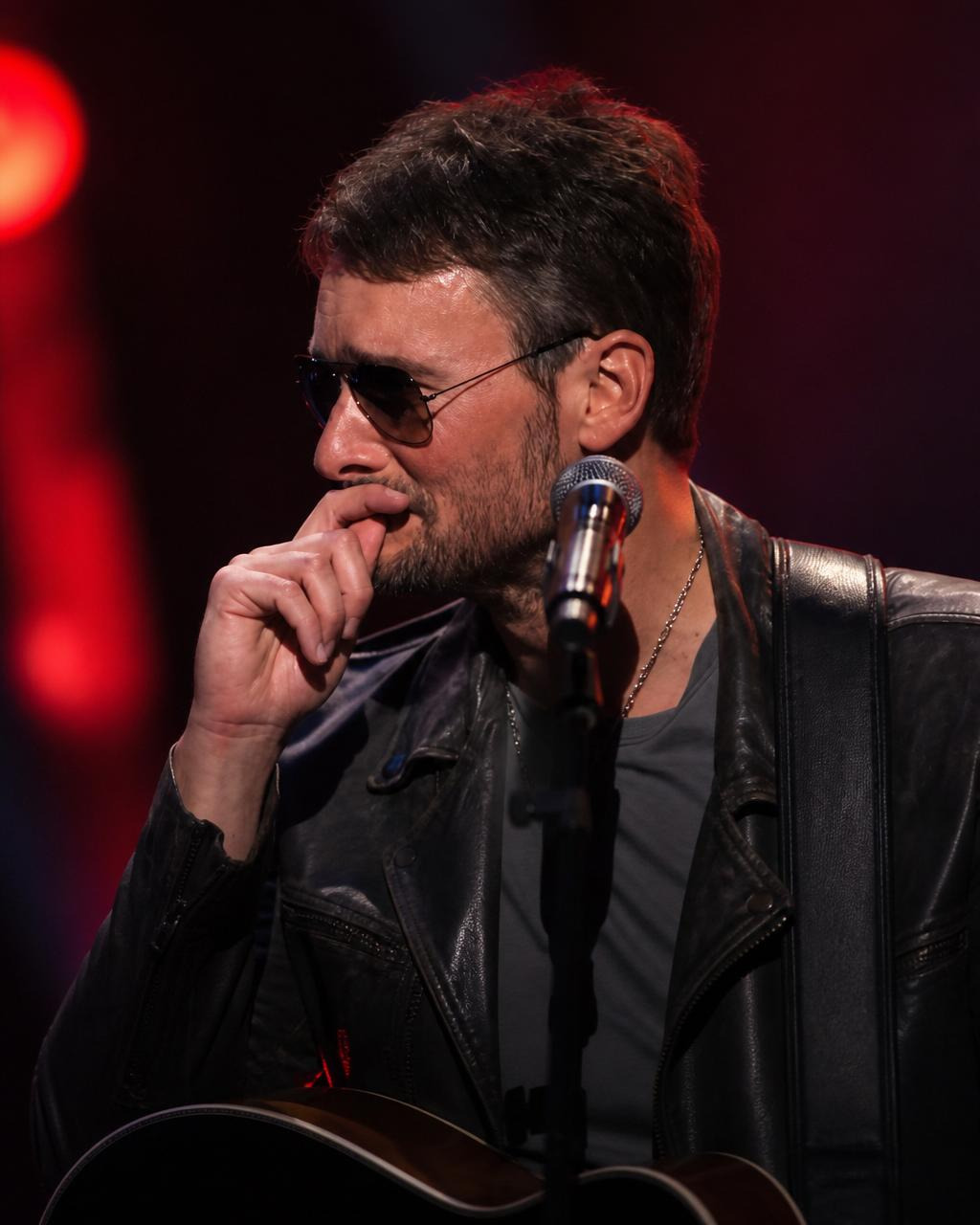
Sonny Melton was 29 years old when his life ended in an instant at the Route 91 Harvest Festival in Las Vegas. He was there with his wife, Heather, enjoying a night of music and celebration. In the chaos that followed, Sonny did what so many people would hope they could do in a moment of danger: he shielded the person he loved most. Heather survived. Sonny did not.
Later, when Sonny was laid to rest, he was buried in an Eric Church T-shirt.
That detail says everything about the way music can live inside a person long after the lights go down. It also says something about the strange, heartbreaking connection between a singer and the people who stand in front of the stage believing, for a few hours, that they are part of something safe and joyful.
Two Nights Before the Tragedy
Just two nights before the mass shooting in Las Vegas, Eric Church had stood on that very stage. He had jumped into the crowd, shaken hands, hugged fans, and seen smiling faces with hands in the air. It was one of those nights that should have lived in memory as pure concert magic.
Instead, 48 hours later, those same spots became part of a scene no one could have imagined.
Church later spoke openly about how the aftermath hit him. He couldn’t sleep. He couldn’t stop thinking. He had even promoted travel packages that helped fans get to Las Vegas, and that detail weighed on him heavily. “I felt like the bait,” he said, a sentence that carried the kind of pain only guilt can create, even when the person speaking did nothing wrong.
When Grief Becomes a Song
There are moments when words fail, and music becomes the only language left. For Eric Church, that moment became a song called Why Not Me. He did not hide behind production or a polished studio version. He went to the Grand Ole Opry and performed it raw, with just a guitar and a voice that sometimes cracked under the weight of emotion.
The song was not written to impress anyone. It was written like a question asked in the dark.
Why them and not me?
That question is simple, but it carries an ache that no answer can fully fix. Church sang it like a man trying to hold himself together while acknowledging the impossible scale of what had happened.
Two Empty Seats
On that night at the Grand Ole Opry, Eric Church left two seats empty. One seat was for Sonny Melton. The other was for Heather Melton, Sonny’s wife, who survived the shooting and had to carry forward with the memory of what Sonny did for her.
The empty chairs were more than a tribute. They were a visible pause, a space where sorrow could sit down and be recognized. In a room full of people, those two empty seats became the loudest part of the night.
What Eric Church said next about those seats struck everyone present. It was the kind of moment that does not feel like a performance at all. It feels like a man standing in front of a shared wound, trying to honor names that should never have become part of a tragedy.
Why Sonny’s Story Still Matters
Sonny Melton’s story continues to move people because it is both deeply personal and painfully universal. He was a husband, a concertgoer, a person who went to a music festival expecting joy. He died protecting Heather, and that act of love became the final chapter of his life.
There is no clean ending to a story like this. There is only memory, grief, and the difficult effort to keep telling the truth about what happened. Eric Church’s response did not erase the loss, but it gave people a place to feel it together.
In the end, the image that remains is not only of tragedy, but of presence: a stage, a song, two empty seats, and the name Sonny Melton remembered in full.
Sometimes the smallest gesture — a song sung through tears, an empty chair, a T-shirt worn to a burial — becomes the thing that carries a story forward when everything else feels unbearable.
Post navigation
In December 2002, Darryl Worley stood in Afghanistan and faced a scene that would stay with him forever. He was far from home, surrounded by American soldiers who carried more than gear and uniforms. They carried distance, sacrifice, and the quiet weight of being away from the people and places they loved. For Darryl Worley, that moment changed everything.
When Darryl Worley returned to Nashville, the feeling did not leave him. It followed him into the room where he sat down with songwriter Wynn Varble. There was no long waiting period, no complicated plan, and no careful polishing of ideas. The song came fast. In just two hours, the words and melody formed into something direct, honest, and unforgettable.
A Song That Felt Bigger Than Music
“Have You Forgotten?” was not written to sound clever or distant. It was written like a question people were already asking in their hearts. The song captured memory, loss, patriotism, and the challenge of holding onto what matters when the world feels unsettled. It spoke plainly, and that plainness is part of why it connected so deeply.
Some songs entertain. Some songs comfort. This one seemed to do both while also striking a nerve. It had the force of a conversation, the kind that makes people stop what they are doing and listen carefully.
“Have You Forgotten?” did not feel like it was trying to impress anyone. It felt like it was trying to remember something important.
The Grand Ole Opry Moment
When Darryl Worley first performed the song at the Grand Ole Opry in January 2003, the room reacted with rare stillness. That kind of silence can mean many things, but in this case it meant the audience was fully engaged. People were not just hearing a performance. They were feeling the message.
After that debut, the response grew quickly. Requests began pouring into country radio before the single had even been officially released. That kind of momentum is not common. It usually takes time, promotion, and a lot of patience. But Darryl Worley had tapped into something immediate, and listeners recognized it right away.
Why the Song Took Off So Fast
The success of “Have You Forgotten?” was not only about timing, though timing mattered. It was also about emotional clarity. The song gave listeners language for feelings they were already carrying. It did not hide behind vague imagery or complicated storytelling. It went straight to the point, and that directness made it powerful.
By the time it reached the top of Billboard’s Hot Country Songs chart, it had climbed faster than any country single had in over five years. Then it stayed there for seven weeks straight. That kind of run is more than a chart story. It is a sign that a song has crossed over from being new to being essential listening.
A Platinum Record and a Lasting Memory
The song later went Platinum, confirming what radio, fans, and live audiences had already shown. “Have You Forgotten?” became one of those rare country songs that seemed to capture a specific moment in history while also remaining personal to each listener. People heard it in different ways, but they heard it strongly.
For Darryl Worley, the story behind the song is inseparable from the trip that sparked it. Afghanistan was not just a place he visited. It was the place where an emotional response turned into a song that would define a chapter of his career. And for Wynn Varble, the two-hour writing session became part of country music history.
What Made It Endure
Years later, the memory of that song still stands out because it was built on something real. Not every hit begins with a dramatic moment, and not every dramatic moment becomes a hit. But sometimes an artist sees something, feels something, and returns home with the kind of clarity that cannot be manufactured.
Darryl Worley and Wynn Varble created a song that moved quickly from private feeling to public reaction. It started in a room, reached the Grand Ole Opry, took over country radio, and stayed at number one for seven straight weeks. That is a remarkable journey for any song, but especially one written in just two hours.
In the end, “Have You Forgotten?” became more than a hit. It became a reminder that music can arrive fast when the truth is already waiting to be told.