“SHE WAS ONLY 4 WHEN SHE LOST HER MOTHER — BUT 63 YEARS LATER, SHE STILL KEEPS HER VOICE ALIVE.” In 1958, Patsy Cline held her newborn daughter Julie for the first time. Nashville was calling her name louder every day — but at home, she was just mom. She’d come back from late-night shows, exhausted, and still find a way to be there. Then came March 5, 1963. A plane crash took Patsy at just 30. Julie was four. Her brother Randy was two. They’d never hear their mother sing to them again. But Julie never let go. She grew up carrying every small memory like something sacred. Today, as Julie Fudge, she built an entire museum so the world could walk through her mother’s story. What Patsy Cline left behind wasn’t just music — and what Julie still remembers might be the most beautiful part of it all. – Country Music
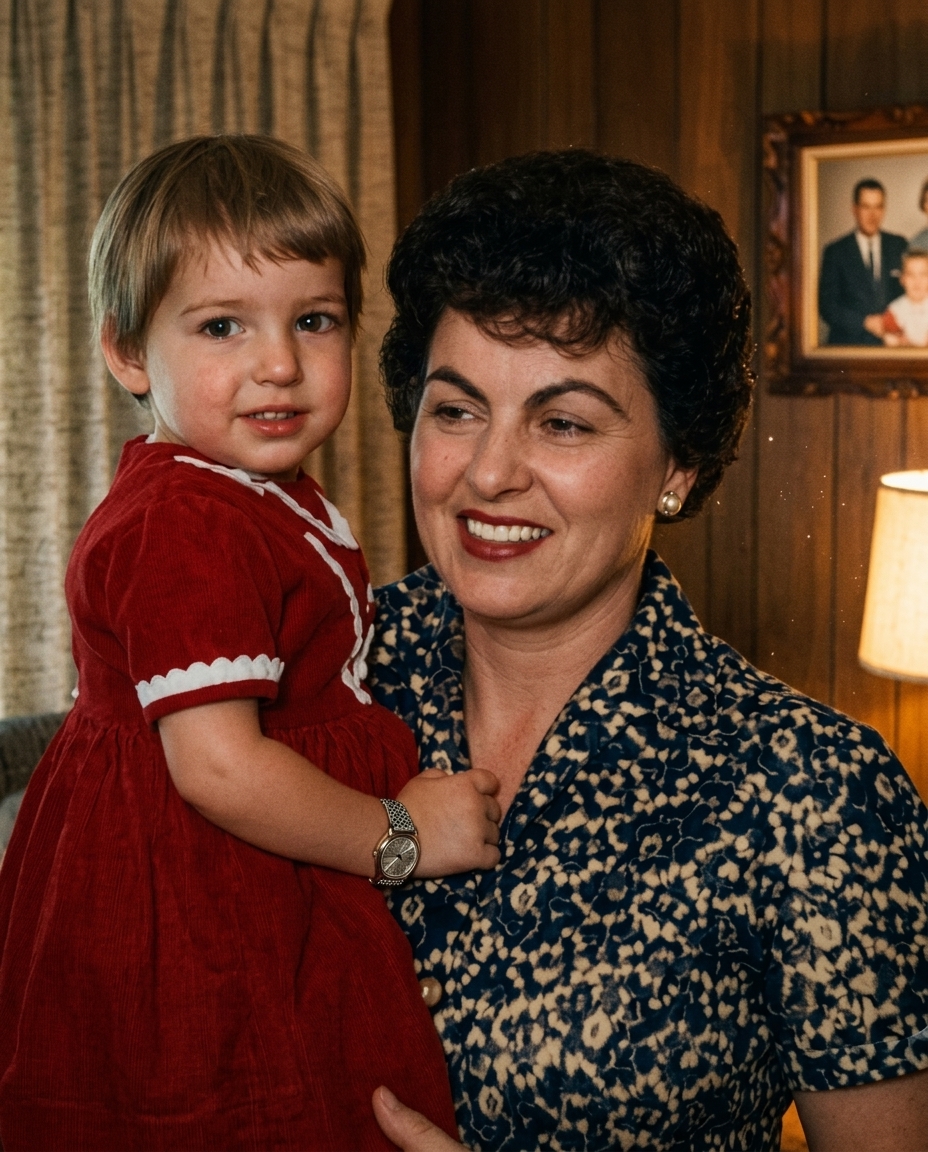
In 1958, Patsy Cline welcomed her daughter Julie into the world at the same moment her own career was beginning to rise with unstoppable force. To the public, Patsy Cline was becoming one of the most unforgettable voices in country music. To her family, Patsy Cline was something simpler and even more important: a mother trying to hold together a home while the road kept calling her name.
That contrast is what makes this story linger. History remembers the spotlight, the recordings, the heartbreak in Patsy Cline’s voice. But inside her own house, there were smaller moments that mattered just as much. There were late nights. There was exhaustion. There was the reality of an artist trying to balance growing fame with the ordinary needs of two young children. Even while building a career that would outlive generations, Patsy Cline still came home as a mom.
A Childhood Split in Two
Then came March 5, 1963.
The plane crash that killed Patsy Cline ended one life and changed several others forever. Patsy Cline was only 30 years old. Julie was just four. Randy was only two. At an age when most children barely understand what loss means, Julie lost the sound, comfort, and physical presence of her mother all at once.
That is the part of fame people often forget. When the headlines fade, families are left with silence. For fans, the tragedy became part of music history. For Julie, it became the dividing line of her life: the years when Patsy Cline was here, and the years when Patsy Cline was gone.
And yet, gone is not the same as forgotten.
The Weight of Small Memories
When a child loses a parent that early, memory does not arrive in neat chapters. It comes in fragments. A voice. A feeling. A gesture. A face leaning down close. The shape of love is often made from small things that should have been ordinary, but become priceless after loss.
That seems to be the quiet power in Julie’s story. Julie Fudge did not grow up simply as the daughter of a legend. Julie Fudge grew up as someone trying to protect what little remained of her mother in a world that already belonged to the public.
For many people, Patsy Cline is an icon. For Julie Fudge, Patsy Cline was also the woman who held her, the woman whose presence once filled a home, the woman who should have had decades more with her children. That difference matters. It turns memory into responsibility.
What Patsy Cline left behind was not only a catalog of songs. Patsy Cline also left behind a daughter who refused to let the most personal parts of her life disappear.
Keeping Patsy Cline Human
Over time, legends can become distant. Their names grow larger, but their humanity can shrink. Julie Fudge seems to have spent much of her life pushing against that. Not by fighting Patsy Cline’s fame, but by deepening it. By reminding people that the woman behind the voice was real. She laughed. She struggled. She loved her children. She lived in the space between stardom and family, just as so many people do in their own way.
That may be why Julie Fudge’s work to preserve Patsy Cline’s story feels so moving. Building a museum is not just an act of tribute. It is an act of care. It says that this life deserves to be walked through slowly. It says that memory should have walls, rooms, and objects that people can stand beside. It says that Patsy Cline was not only heard. Patsy Cline was lived.
And in that choice, Julie Fudge did something remarkable. Julie Fudge turned grief into stewardship.
A Daughter’s Long Devotion
Sixty-three years is a long time to carry a loss. It is long enough for children to become grandparents, for styles of music to change, for audiences to come and go. But some voices do not fade. Patsy Cline’s voice still reaches people because it was full of ache, honesty, and strength. Julie Fudge has made sure that voice does not float through history detached from the woman who gave it life.
There is something deeply beautiful about that. Julie Fudge could have stepped away from the burden of memory. Instead, Julie Fudge stepped closer. Julie Fudge chose to protect the story, not just the songs. Julie Fudge chose to keep Patsy Cline present in a way that feels intimate, not frozen.
That may be the most touching part of all. The legacy did not survive on records alone. The legacy survived because a daughter kept holding on to what was left, year after year, with the kind of devotion that cannot be taught.
More Than Music
Patsy Cline’s voice remains one of the most beloved in American music. That much is certain. But the deeper story is not only about fame or influence. It is about what remains after a life is cut short. It is about what children carry. It is about how memory can become its own kind of inheritance.
Julie Fudge was only four when she lost Patsy Cline. Most people would understand if those memories had faded into shadow. Instead, Julie Fudge helped turn them into something lasting. Not loud. Not flashy. Just lasting.
And maybe that is the most beautiful legacy of all: somewhere between history and heartbreak, between the records and the photographs, a daughter is still keeping her mother’s voice alive.
Post navigation
The room was full, the applause was ready, and everyone knew the moment mattered before a single name was spoken. At the National Cowboy & Western Heritage Museum, the Special Directors’ Award was called for Toby Keith, a rare honor reserved for figures who leave a mark larger than entertainment. But when the time came, Toby Keith did not walk to the stage. Toby Keith’s family did.
For one long second, the room seemed to hold its breath.
That was the part no script could soften. Awards usually come with a smile, a wave, maybe a speech that eases the tension. This one came with absence. And that absence said everything. Toby Keith was not there to take the applause himself. Still, somehow, Toby Keith was everywhere in that room.
More Than a Country Star
It would have been easy to frame the moment around the obvious things: the hit songs, the sold-out shows, the decades of fame, the unmistakable voice. Toby Keith had all of that. But the emotional weight of this award came from something deeper. It was not simply about success. It was about identity.
Toby Keith never felt manufactured. Toby Keith never looked like a man trying to fit a trend. There was always something solid and local about him, even when the spotlight was at its brightest. Toby Keith carried Oklahoma the way some people carry family history: naturally, stubbornly, and with no interest in polishing away the rough edges.
That is why the image of Toby Keith’s family standing there hit so hard. They did not seem staged for effect. They looked steady. Proud. A little heartbroken, maybe, but not fragile. They looked like people who understood exactly who Toby Keith had been and exactly what he had meant.
The Kind of Presence You Cannot Replace
Some artists become famous and slowly drift away from the place that made them. Toby Keith seemed to do the opposite. The bigger Toby Keith became, the more Toby Keith represented home. Not in a sentimental, postcard way. In a real way. In the way of working people, dusty roads, football nights, loud opinions, and the kind of pride that does not need explaining.
That is why this tribute felt different from a typical memorial moment. It was not only grief. It was recognition. The museum was honoring a man who had turned a regional spirit into something national, even global, without losing its original shape. Toby Keith made small-town grit feel enormous. Toby Keith made plainspoken conviction sound like music people could live inside.
This was not just a room remembering Toby Keith. It was a room recognizing that some people become part of the landscape they came from.
Why the Family’s Walk Mattered So Much
There was something almost piercing about the simplicity of it. No dramatic production. No clever twist. Just family members walking forward to accept an honor Toby Keith had earned. And in that plainness, the truth came through stronger than any speech could have.
Toby Keith was gone too soon. At 62, that fact still lands with a kind of disbelief. There are some losses people understand with their minds but never quite accept emotionally. This feels like one of them. Because Toby Keith had become one of those figures who seemed built into the culture itself, as if Toby Keith would always be somewhere nearby, still singing, still laughing, still standing his ground.
Instead, there was an empty chair and a family carrying the moment for him.
Oklahoma Still Shows Up Looking Like Toby Keith
Maybe that is what people were really responding to. Not just the sadness of who was missing, but the unmistakable shape of what remained. Toby Keith’s family walked to that stage looking grounded, unvarnished, and proud. In other words, they looked like the values Toby Keith had spent a lifetime embodying.
And maybe that is the final measure of a person’s legacy. Not only what Toby Keith recorded. Not only what Toby Keith sold. Not only what Toby Keith won. But whether the place Toby Keith loved still reflects him after he is gone.
On that day, it did.
At the National Cowboy & Western Heritage Museum, the applause was meant for Toby Keith. But what people saw was something just as powerful: proof that the spirit Toby Keith brought into every room had not disappeared. It had simply stood up in the form of family, memory, and a state that still knows exactly what Toby Keith looked like.