“SHE SANG ABOUT POVERTY, HEARTBREAK, AND SURVIVAL FOR 60 YEARS — BUT THE ONE PAIN SHE COULD NEVER TURN INTO A SONG WAS LOSING HER SON.” Loretta Lynn’s eldest son, Jack Benny, was 34 when he tried to cross Duck River on horseback near the family ranch in Hurricane Mills, Tennessee. The horse made it. Jack didn’t. Loretta was on tour when it happened. She had collapsed from exhaustion at a truck stop. Her husband drove to her — not to check on her health, but to tell her their boy was gone. She went silent for weeks. The woman who turned every pain into a song said this one hurt too much to write about. Then in 2013, her firstborn daughter Betty Sue died of emphysema at 64. Two children. Gone. But here’s what no one talks about enough — Loretta Lynn grew up dirt poor in a coal mining family, became a mother before she was old enough to drive, and still built a career spanning over 60 years. She sang about the hardest parts of being a woman when nobody else dared to. Some grief doesn’t make it into the lyrics. It just lives in the silence between the notes. – Country Music
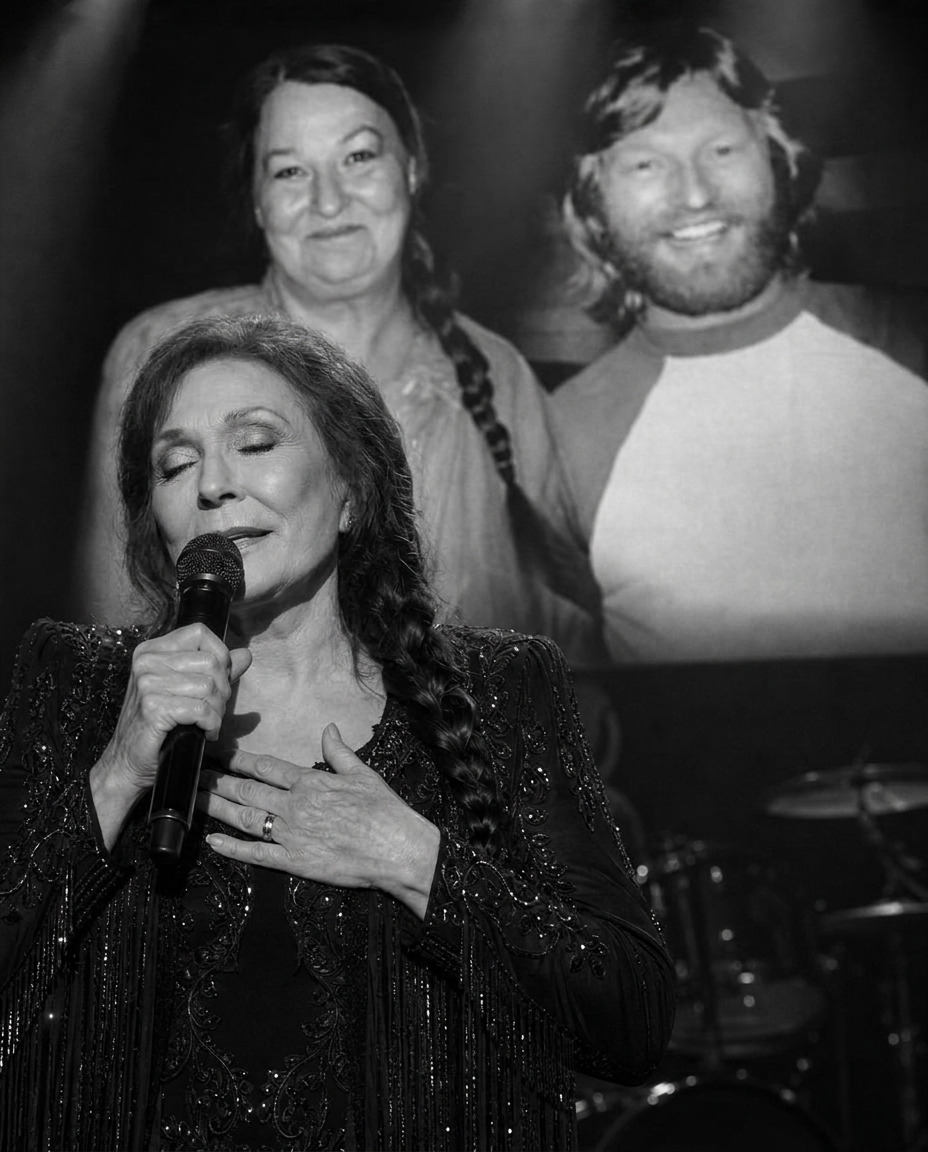
Loretta Lynn, the Woman Who Sang Every Hard Truth Except the One That Broke Her
Loretta Lynn spent more than 60 years telling the truth in song. She sang about poverty, heartbreak, marriage, motherhood, survival, and the sharp-edged reality of being a woman with responsibilities bigger than her own dreams. Her voice carried the weight of a life lived in full daylight, where nothing was polished and nothing was easy. But there was one pain she could never turn into music: losing her son.
A life that began with hardship
Loretta Lynn was born into a coal mining family in Kentucky, where money was scarce and work was constant. She grew up knowing what it meant to do without, and that early hunger for stability shaped the woman she would become. Long before fame, long before bright stage lights and applause, she was a mother trying to hold a family together. She had already lived enough life to understand what it meant when bills piled up, when love was complicated, and when survival depended on grit.
That is part of why her music connected so deeply. Loretta Lynn did not sing from a distance. She sang from inside the struggle. When she wrote about a woman’s anger, loneliness, or exhaustion, she was giving voice to feelings many people had been taught to hide.
The songbook of a working woman
Over the decades, Loretta Lynn became one of country music’s most fearless storytellers. Her songs spoke plainly about marriage, motherhood, and the pressures placed on women. She was never afraid to say what others would not. That honesty made her beloved, and sometimes controversial, but it also made her unforgettable.
Fans did not just hear a great singer. They heard someone who understood the long days, the hard choices, and the quiet sacrifices that shape a family. Loretta Lynn could make pain sound familiar, even comforting, because she never pretended life was simple.
Some voices entertain. Some voices reveal. Loretta Lynn did both.
The loss that stopped the music
Then came the kind of grief that cannot be dressed up or neatly explained. Loretta Lynn’s eldest son, Jack Benny, was 34 when he tried to cross Duck River on horseback near the family ranch in Hurricane Mills, Tennessee. The horse made it across, but Jack Benny did not survive. Loretta Lynn was on tour when it happened. She had already collapsed from exhaustion at a truck stop when her husband came to her with the news. He did not come to ask how she felt or whether she needed rest. He came to tell her their son was gone.
The shock of that moment changed everything. Loretta Lynn went silent for weeks. For a woman who had built a career out of putting pain into words, this loss was too deep, too raw, too personal. Some heartbreaks can be shaped into lyrics. Others sit in the chest like a stone.
It is easy to imagine that fans would have wanted a song, a statement, a way to understand the grief. But Loretta Lynn did not owe the world a performance of her private devastation. She was not just a legend. She was a mother mourning a child.
Another heartbreak years later
In 2013, more sorrow struck when Loretta Lynn’s firstborn daughter, Betty Sue, died at 64 from emphysema. With that loss, Loretta Lynn carried the heartbreak of two children gone. For anyone, that would be unbearable. For someone who had already lived through so much public and private sorrow, it was a reminder that fame never protects a family from grief.
Yet Loretta Lynn kept going. That is what made her story so powerful. She did not erase pain. She lived alongside it. She kept singing, kept remembering, kept moving through the world with the kind of strength that does not look heroic from the outside because it is made of simple daily endurance.
Why Loretta Lynn still matters
Loretta Lynn matters because she told the truth when the truth was not fashionable. She came from poverty, married young, raised children early, and built a remarkable career anyway. She opened doors for women in country music by singing about real life instead of pretending it was neat and graceful. She gave language to struggles that many families lived quietly behind closed doors.
And still, the most human part of her story may be the part she could not sing. Not every wound becomes art. Not every loss becomes a chorus. Some grief lives in silence, in the pauses between performances, in the private places where even the strongest voice falls quiet.
Loretta Lynn spent 60 years singing the hard truths of life. But when it came to losing her son, the silence said more than any song ever could.
Post navigation
Before the ACM Awards even lit up the Las Vegas night, Shania Twain had already said something that would echo much louder than anyone expected. In an interview with Track Star, she described Ella Langley as carrying a rare kind of voice — the kind that feels older than the person singing it. Shania Twain did not say it casually. She said it with the kind of certainty that comes from hearing something special and knowing it instantly.
Shania Twain compared Ella Langley to an old soul in a young body. Then came the line that stuck with country music fans: a female Conway Twitty. A female George Jones. It was the kind of praise that can sound dramatic if the moment does not back it up. In this case, the moment did back it up, and then some.
A Voice People Could Not Ignore
Ella Langley had already been building a reputation for being more than just another rising name in country music. She had presence, grit, and a voice that could sound tender one second and heartbreakingly honest the next. But what Shania Twain seemed to hear was deeper than technical skill. It was character. Weight. Truth.
That truth became impossible to miss when Ella Langley walked into the MGM Grand in Las Vegas wearing a white silk gown and carrying herself with the quiet focus of someone who knew exactly what the night meant. She did not arrive like someone trying to prove a point. She arrived like someone who had already lived the story and was ready to sing it.
When Ella Langley sat on a stool, picked up her guitar, and sang Be Her, the room changed. The arena did not explode with noise. Instead, it settled. People leaned in. Conversations disappeared. The performance was so restrained, so intimate, that it almost felt like the entire country music world was holding its breath at once.
What happened next was not just applause. It was a statement.
The Night Became a Turning Point
Then the awards began, and the name Ella Langley kept showing up again and again. Seven nominations. Seven wins. By the end of the night, she had broken the all-time ACM record, surpassing names that have long lived in country music history, including Garth Brooks, Faith Hill, and Chris Stapleton. For a young artist, that kind of night is almost unreal.
Even more stunning, Ella Langley became the first artist in ACM history to win 12 awards in just two years. That is not a lucky streak. That is a shift in the landscape. That is an artist moving from promising newcomer to undeniable force in full view of everyone watching.
For fans, the numbers told part of the story. For the industry, they told another. But for anyone who had heard Shania Twain’s words weeks earlier, the connection was obvious. Shania Twain had recognized something raw and timeless before the rest of the world caught up.
When the Emotion Finally Hit
When Ella Langley accepted Female Artist of the Year, the spotlight did not make her look larger than life. It made her look human. She could barely speak. Her hands shook. Tears came quickly, and the room seemed to understand that this was more than a victory lap.
Then she leaned into the microphone and said, “Thank you to the women.”
That simple line landed with real force. It sounded like gratitude, but it also sounded like memory. Like respect. Like a young artist looking over her shoulder at the women who made space for her to stand there at all.
It was the kind of moment that country music fans remember because it feels earned. Not polished. Not overworked. Earned.
What Shania Twain Saw That Others Missed
Shania Twain was not only praising a voice. She was naming a feeling. Ella Langley sings like someone who understands heartbreak, resilience, and hard truth without needing to dress them up. That is why the comparison to legends like George Jones and Conway Twitty resonated so strongly. It was never about imitation. It was about emotional honesty.
And that honesty is what makes Ella Langley stand out in a crowded field. In an era where so much is built for quick attention, Ella Langley gave the country music world something older and rarer: a voice that sounds like it has something to lose.
That is why Shania Twain’s comment mattered. And that is why the ACM Awards felt less like a surprise and more like confirmation. The country music world did not just crown a winner. It witnessed a star step into her place.
The Moment Behind the Curtain
But the thing that made Ella Langley cry backstage was not the record, and not even the trophies. It was the feeling that someone had seen her before the whole world did. That is what artists remember. Not just the applause, but the people who recognized the spark before it became a fire.
Shania Twain saw it early. The ACM Awards proved it in front of everyone. And somewhere behind the curtain, after the speeches and the flashing cameras, Ella Langley had the quiet realization that the road she had been walking was leading exactly where it was supposed to go.
In country music, moments like this do not happen every day. When they do, people talk about them for years. Not because of the trophies alone, but because of the feeling that history was being made in real time.
Shania Twain called it first. The ACM Awards confirmed it. And Ella Langley, standing in tears after the biggest night of her career, made one thing clear: this was only the beginning.