THE DAY AFTER THE STATLER BROTHERS RETIRED, COUNTRY MUSIC LEARNED THAT FOUR EMPTY MICROPHONES COULD FEEL LIKE A GOODBYE. On October 27, 2002, the stage at the Salem Civic Center was quiet again. Just one night earlier, The Statler Brothers had stood there for their final concert, ending 38 years on the road in the same Virginia hills that helped shape them. Nobody had died. There was no tragedy in the usual sense. But for the fans who had grown old with those harmonies, something still felt gone. For decades, Harold, Don, Phil, and Jimmy had made country music sound like family — funny, faithful, familiar, and a little nostalgic before the night was even over. Songs like “Do You Remember These” had always looked backward with a smile. The morning after their final bow, it looked backward for real. That was the ache in their retirement. They didn’t leave with drama. They left together, while the voices were still loved. And somehow, that made the silence around those four microphones even harder to hear. – Country Music
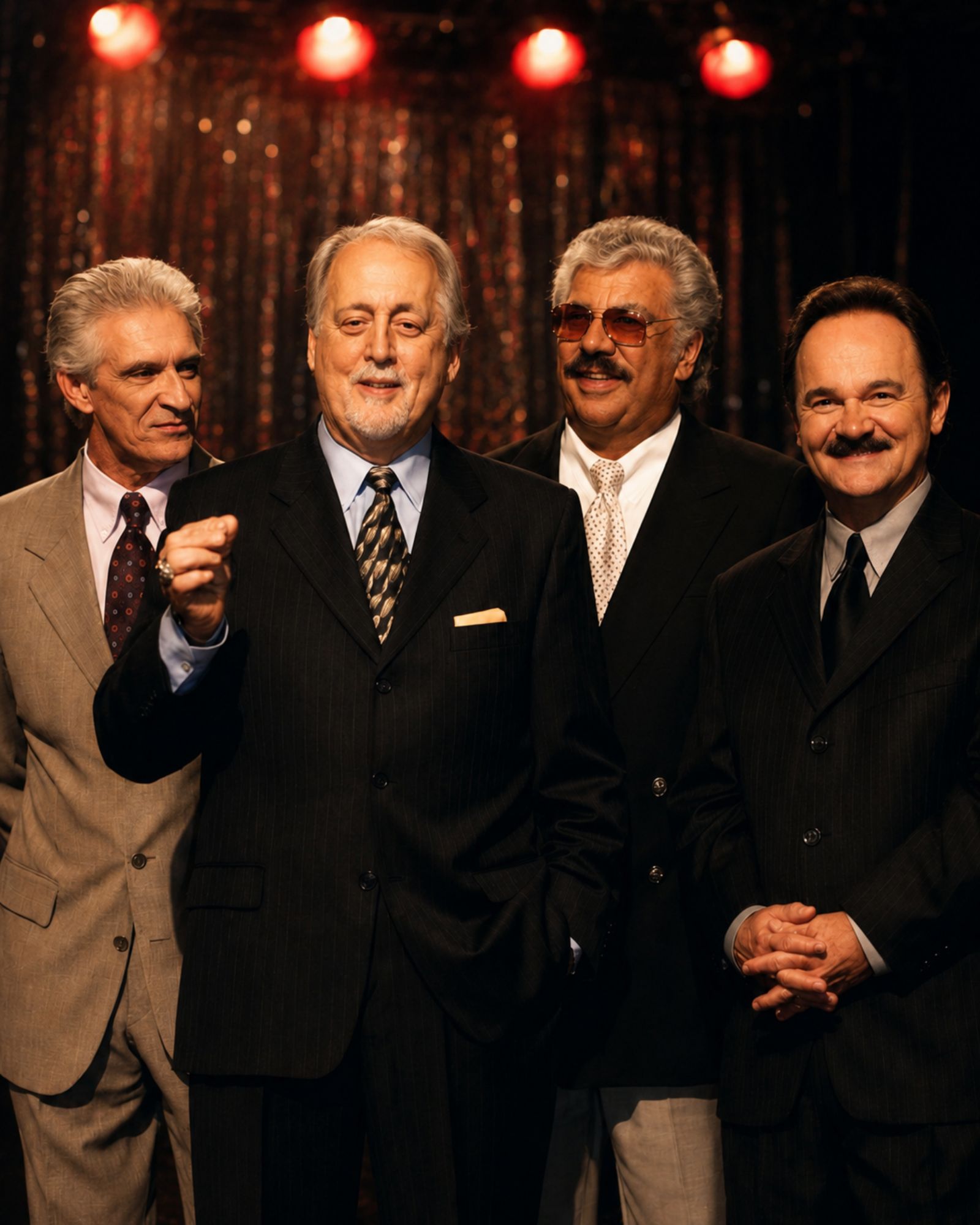
On October 27, 2002, the Salem Civic Center felt different. The lights were still there, the seats were still there, and the stage had not changed overnight. But the air around it had changed in a way that fans could feel immediately. Just one night earlier, The Statler Brothers had taken their final bow, closing a remarkable 38-year run in the same Virginia hills that had helped shape their sound and their story.
No one had died. Nothing dramatic had shattered the room. There was no headline built on tragedy. And yet, for the people who had followed Harold Reid, Don Reid, Phil Balsley, and Jimmy Fortune for decades, the silence the next day felt heavy. It was the kind of silence that arrives after the music stops and stays longer than expected.
A Farewell That Felt Like Home
The Statler Brothers were never just another country group. They sounded like family, and they acted like one too. Their harmonies were smooth and familiar, but their personality was just as important as their vocals. They could be funny without being careless, sentimental without being sentimental for its own sake, and deeply rooted in faith, memory, and small-town life. Fans did not just listen to The Statler Brothers; they invited them into their lives.
That is why the farewell hurt. The final concert did not come with scandal or chaos. The group simply decided the time was right to stop, and they did it while the voices were still strong and the love was still real. That decision made sense, but it also made the ending feel unusually complete. There was no unfinished business to cling to, no promise of one more tour tucked into the future.
They did not leave in a storm. They left in harmony, and that made the ending even harder to absorb.
Why The Silence Felt So Personal
Country music has always had a special way of turning ordinary moments into shared emotions. The Statler Brothers understood that better than most. Their songs often looked backward with warmth, whether they were singing about childhood memories, family stories, or the passing of time. “Do You Remember These” was more than a song title. It was a promise that memory mattered.
So when the final concert ended, fans were not only losing a group they loved. They were losing a rhythm that had quietly shaped their own lives. Weddings, long drives, Sunday mornings, family gatherings, and old radio nights all seemed to carry a little Statler Brothers in them. The morning after retirement, those memories did not disappear. They simply stood out more sharply.
It was strange in the most human way. Four microphones sat unused. Four voices that had blended so naturally were suddenly offstage. That emptiness could not be measured in ticket sales or chart positions. It could only be felt.
The Power Of Leaving Together
Part of what made the retirement so affecting was the unity of it. The Statler Brothers did not splinter apart. They did not fade into a messy public ending. They chose to go out together, while the bond between them was still visible and the audience still knew exactly what it was saying goodbye to.
There is dignity in that kind of ending. There is also heartbreak.
Fans often imagine a final show as a celebration, and in many ways it was. There were smiles, applause, and gratitude. But the day after reminded everyone that celebrations can still carry loss inside them. A farewell can be gracious and still hurt. In fact, when it is gracious, the hurt can be sharper because there is no anger to hide behind.
What The Statler Brothers Left Behind
The legacy of The Statler Brothers was never built on volume. It was built on trust. When Harold Reid, Don Reid, Phil Balsley, and Jimmy Fortune stepped up to sing, listeners believed them. They represented a kind of country music that felt grounded, respectful, and deeply American without needing to explain itself.
That is why their retirement mattered beyond one concert, one town, or one night. It marked the end of an era in a genre that often changes fast but still remembers its storytellers. The day after their final show, country music did not lose its future. It simply had to sit with the fact that one of its most beloved pasts had quietly stepped away.
And maybe that was the real lesson. Not every goodbye arrives with tears and thunder. Some arrive with applause, a final bow, and an empty stage waiting in the morning light.
A Goodbye That Still Echoes
Years later, the memory of that final night still carries weight because it was honest. The Statler Brothers gave fans what they had always given them: warmth, humor, and harmony. They retired with grace, and in doing so, they left behind something that felt larger than silence. They left behind the sound of a room that remembered them.
The next day, four empty microphones stood as a quiet symbol of everything that had already been sung. For country music fans, that was enough to feel like a goodbye.
Post navigation
Kris Kristofferson died on a Saturday morning in Maui at 88, surrounded by his family. There was no dramatic final scene and no public struggle to explain. His family simply asked people to think of him whenever they saw a rainbow. It was a quiet goodbye for a man whose songs had spent decades living loudly in the hearts of others.
In the days that followed, something remarkable happened. His streaming numbers surged by 2,300%. One day he had around 79,000 plays, and then suddenly he was nearing 1.9 million. Listeners returned not only to the songs he performed himself, but also to the songs he gave away to the world: Janis Joplin’s “Me and Bobby McGee” and Sammi Smith’s “Help Me Make It Through the Night.” Kris Kristofferson did more than write hits. He wrote songs that outlived the voices that first carried them.
A Song That Felt Bigger Than One Artist
Two months later, that truth became impossible to ignore at the CMA Awards. The room was full, polished, and bright, the kind of place where every second is measured and every entrance matters. Then Ashley McBryde walked to center stage with no band behind her and no backup to soften the moment. Just a woman, a guitar, and a song that had already lived a long life before she touched it.
She sang “Help Me Make It Through the Night” while photos of Kris Kristofferson appeared behind her. The performance did not feel like a routine tribute. It felt personal, almost private, as if the whole arena had been invited into someone else’s memory.
“My dad taught me to play this song when I was too little to hold a guitar properly on my own. I hope he tunes in tonight to see his little girl play.”
Those words changed everything. The applause came later, but for a moment the room seemed to go still. People were not only watching an award-show tribute. They were witnessing a daughter reaching back through time, into childhood, into a living room or kitchen where a father once showed her the first chords of a song.
Why Kris Kristofferson Meant More Than Fame
It is easy to describe Kris Kristofferson by his accomplishments: songwriter, singer, actor, and one of the most respected names in American music. But that only gets part of it right. The deeper truth is that Kris Kristofferson wrote songs that people carried into their own lives. His work was never trapped inside a studio or a stage. It traveled into cars, bedrooms, wedding receptions, late-night kitchens, and family memories.
That is why the CMA tribute struck so hard. Ashley McBryde was not simply honoring a legend. She was honoring the bridge between generations. Her father had taught her the song when she was small enough to struggle with the guitar, and now she was standing in front of thousands of people singing it for Kris Kristofferson, for her father, and for everyone else who had been shaped by those same notes.
Kris Kristofferson’s genius was not only in writing beautiful songs. It was in writing songs that felt available to ordinary people. He made listeners feel like they could take part in the music, not just admire it from a distance.
The Quiet Power of a Lasting Song
That is what made the arena so silent. Not grief alone, but recognition. Many people in that audience had their own version of the same story: a parent teaching a song, a voice on a record player, a moment when music became a family heirloom.
Kris Kristofferson was the kind of songwriter who could do that. He gave people songs that fit into real lives. They were tender, honest, and full of feeling without ever needing to shout. Even now, after his death, his music still feels present because it has already been woven into so many personal histories.
That night at the CMA Awards, Ashley McBryde did more than perform. She reminded everyone that music often begins long before the spotlight. Sometimes it starts with a child barely able to reach the strings, and a parent patient enough to teach the first song anyway.
Kris Kristofferson may have left this world quietly, but his songs did not leave with him. They kept going, from one voice to another, from one generation to the next.
What is your favorite Kris Kristofferson song — one he sang, or one he gave away?