A COUNTRY SONG HIT #1 IN 1953 — BUT HANK WILLIAMS WROTE EVERY WORD OF IT IN THE BACKSEAT OF A CAR, SITTING RIGHT NEXT TO HIS NEW WIFE, THINKING ABOUT THE ONE WHO LEFT HIM. Montgomery to Nashville. The highway stretched on for hours. Billie Jean, his second wife, sat beside him humming something soft. But Hank wasn’t listening. He grabbed a scrap of paper from his coat pocket and started writing. Every line was aimed at Audrey — the woman who’d walked out, taken the house, and left him with nothing but a guitar and a bottle. Billie Jean glanced over and asked what he was writing. He just said, “Somethin’ that needed to come out.” By the time they reached Nashville, every word was done. The song was released after his death at just 29 — and climbed straight to #1. He wrote it for a woman who had already stopped listening. But seventy years later, the whole world still hasn’t. – Country Music
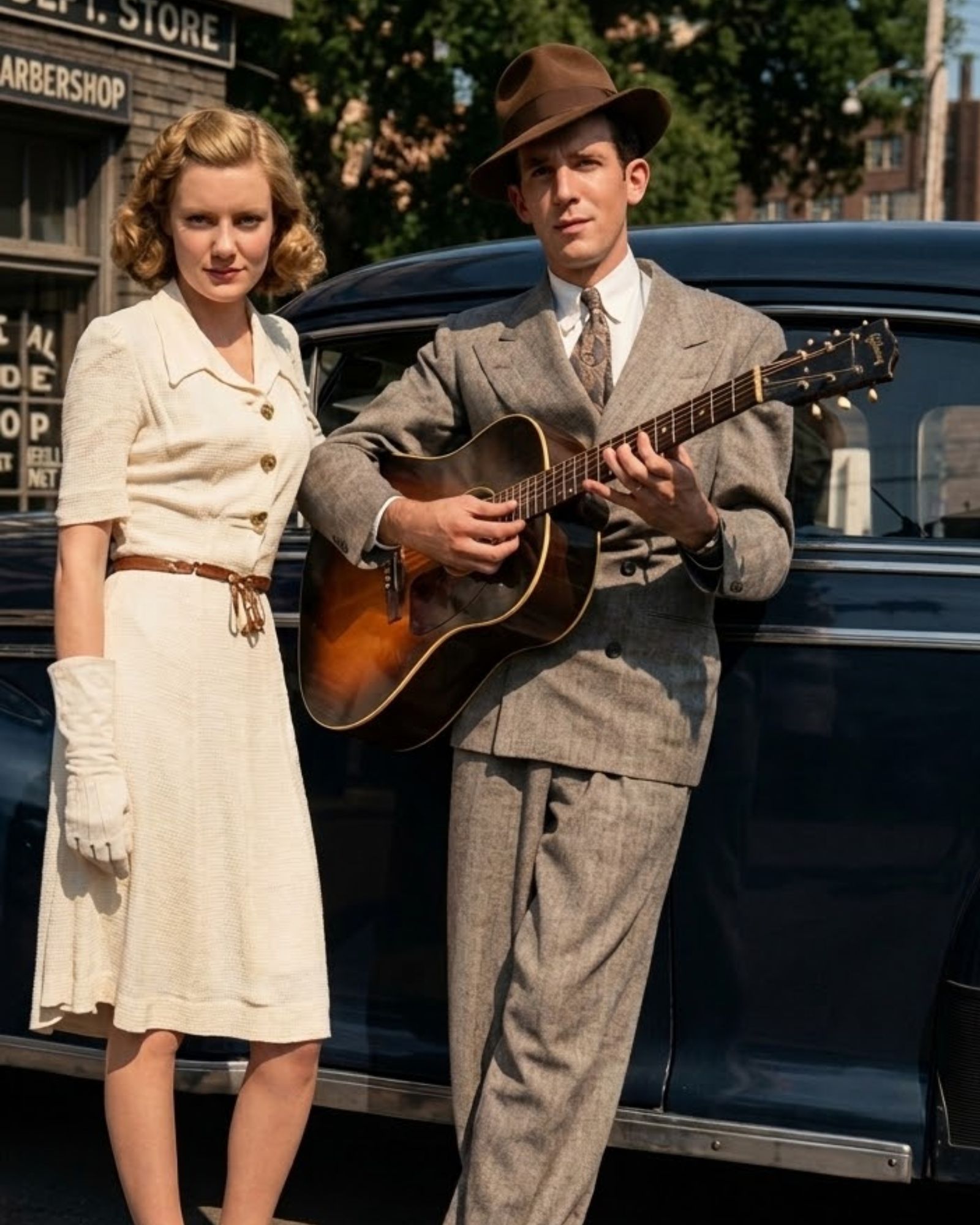
Some songs feel polished. Your Cheatin’ Heart did not. It felt wounded from the first line, as if it had been carried straight out of a private argument and set down in public for the whole world to hear.
That is part of what makes the story so unforgettable. Long before the song climbed to #1 in 1953, Hank Williams was riding in a car with Billie Jean, the woman who had become his new wife. The road stretched ahead, the kind of Southern highway that can make a person quiet. Somewhere between one destination and the next, Hank Williams reached for paper and began writing.
It was not a cheerful song. It was not the sound of a man starting over with a clean heart. It was the sound of old hurt refusing to stay buried.
A Song Born in Motion, But Written from a Standstill
Hank Williams had already lived enough pain for several lifetimes. Fame had come fast, but peace had not. The breakup with Audrey Williams had left scars that were deeper than headlines and gossip could ever explain. By the time Hank Williams was traveling with Billie Jean, the marriage to Audrey Williams was over, but the emotions were not.
That is what gives Your Cheatin’ Heart its strange power. It does not sound like revenge. It sounds more complicated than that. It sounds like a man talking tough while still bleeding underneath every word.
Billie Jean reportedly noticed Hank Williams writing and asked what he was working on. The answer was simple, almost dismissive: something that needed to come out. That may be the truest description of the song ever given.
Because that is exactly what Your Cheatin’ Heart feels like. Not manufactured. Not calculated. Just released.
Why the Song Cut So Deep
Plenty of country songs talk about heartbreak. Very few seem to stare directly at it without blinking. Hank Williams had a gift for that. He could take emotions people were ashamed to admit and turn them into plain, unforgettable lines. No fancy language. No hiding place. Just hurt, blame, memory, and the bitterness that lingers after love has already packed its bags.
That honesty is why the song lasted. Listeners did not hear a performance first. They heard a confession. Even people who knew nothing about Hank Williams’s private life could feel the truth inside it. The song sounded lived-in, as though every line had already been tested by sleepless nights, long drives, and the silence that follows an argument you cannot fix.
Hank Williams did not just write about heartbreak. Hank Williams wrote like heartbreak was sitting in the passenger seat.
The Hit Hank Williams Didn’t Live to See
There is another reason the story continues to haunt people: Hank Williams never got to watch the full impact unfold. The song was released after Hank Williams died at only 29 years old. Then it rose straight to the top.
That fact still feels almost impossible. A man writes a song while carrying the weight of a broken love. He records it. He leaves the world too early. Then the record keeps traveling without him, finding radio stations, jukeboxes, living rooms, and lonely people who understand every word.
In that sense, Your Cheatin’ Heart became bigger than the moment that created it. It stopped being only about Audrey Williams, or Billie Jean, or one hard drive on one long day. It became a permanent country standard because it touched something listeners recognized in themselves: the humiliation of betrayal, the anger that covers sadness, and the stubborn way love can keep talking long after it should have gone silent.
Why the World Still Listens
More than seventy years later, the song still feels immediate. That is rare. Many old hits survive because they are nostalgic. Your Cheatin’ Heart survives because it still hurts. Hank Williams found a way to turn private wreckage into public memory, and that kind of songwriting does not age easily.
Maybe that is the saddest part of the whole story. Hank Williams may have written those words for one woman who had already stopped listening. But the rest of the world never did. And perhaps that is what a classic really is: one person’s pain, written in a moving car, becoming everybody else’s heartbreak for generations.
Post navigation
Behind the Smile: The Hidden Battle Charley Pride Finally Chose to Name
To the public, Charley Pride looked unshakable.
Charley Pride was the voice that made country radio feel warmer. Charley Pride was the man who broke barriers that many people once insisted could not be broken. Charley Pride became country music’s first Black superstar, stacked up hit after hit, won the CMA Entertainer of the Year award, and built the kind of career most artists only dream about. When listeners heard Kiss an Angel Good Mornin’, they heard ease, charm, and confidence. What they did not hear was the private struggle Charley Pride was carrying for years behind the curtain.
That is what makes the revelation in Pride: The Charley Pride Story so powerful. After decades of success, Charley Pride finally told readers that he had been living with what he called manic depression. It was not a passing line meant to shock people. It was something far more personal than that. It was Charley Pride admitting that even a man who had survived rejection, prejudice, and the brutal uncertainty of show business could still be fighting a battle no audience could see.
That quiet honesty changed the way many people understood Charley Pride. The legend onstage was real, but so was the man at home trying to keep himself steady.
The Weight No Crowd Could See
Charley Pride had spent a lifetime learning how to carry pressure without letting it show. Before country music embraced him, baseball had already taught Charley Pride about disappointment. Before award shows celebrated him, the industry had already tested him. Even after the hits came, Charley Pride still had to navigate a world that often treated him like an exception before it treated him like an artist.
So it makes a certain heartbreaking sense that Charley Pride would try to hide one more burden.
For years, the struggle remained private. Charley Pride later admitted that part of him still wanted to deny it. That feeling is one of the most human details in the whole story. Fame does not erase fear. Success does not erase shame. And for someone raised to be tough, dependable, and composed, admitting that control could slip away was not easy.
That is where Rozene Pride’s voice becomes so important in the story. Rozene was not looking at Charley Pride from the audience. Rozene was living beside Charley Pride in the moments no fan ever witnessed. When Rozene said, “You don’t know what you do when you lose control,”strong> it cut through every polished image the world had built.
It was not an insult. It was not cruelty. It was the painful truth that only the closest person in the room could speak.
“You don’t know what you do when you lose control.”
Why That Confession Still Matters
What makes this chapter of Charley Pride’s life so moving is not just that he suffered. It is that Charley Pride eventually stopped pretending the suffering had never happened.
That matters because Charley Pride came from a generation, and a culture, where silence was often treated like strength. Men were expected to push through. Stars were expected to protect the image. Public figures especially were taught to reveal the triumph and bury the struggle. Charley Pride did the opposite when he finally told the truth. Charley Pride allowed the world to see that the calm voice on the record was not proof of an easy life. It was proof of endurance.
And maybe that makes Charley Pride’s legacy even larger than the awards and sales figures.
Yes, Charley Pride broke racial barriers in country music. Yes, Charley Pride became one of RCA’s biggest stars and one of the genre’s most beloved voices. Yes, Charley Pride built a catalog that still feels timeless. But beneath all of that was a man who kept going through seasons that could have broken him in private long before the world ever applauded him in public.
There is something deeply affecting about the contrast. Millions knew Charley Pride as steady. Rozene knew Charley Pride as vulnerable. Fans knew the smile. Family knew the cost of holding it in place.
That does not diminish Charley Pride. It completes the picture.
In the end, Charley Pride’s story is not only about barrier-breaking success. It is also about how complicated survival can be. The man behind the music was not made smaller by that truth. The man behind the music became more real, more human, and in many ways, even more remarkable.
Because Charley Pride did not just sing through hardship. Charley Pride lived through it. And when Charley Pride finally gave that hidden struggle a name, the confession revealed a different kind of courage — the kind that happens far away from the spotlight, when there is no applause waiting at the end.