“I GOT IN THE VAN AND JUST BOO HOO’D FOR THE LONGEST TIME” — DOLLY PARTON REVEALS WHAT REALLY HAPPENED AFTER CARL DEAN’S DEATH. For 60 years, Carl Dean was the man nobody saw. He walked one red carpet in his entire life — hated it so much he never did it again. He drove their little RV through backroads where no one recognized them. He stayed home while Dolly became the most famous woman in country music. But he was always there. When Carl passed away at 82 after a long battle with Alzheimer’s, Dolly tried to hold it together. She smiled through the Dollywood parade, waved at the children. Then she climbed into the van — and completely fell apart. At 79, Dolly admitted she was “worn down and worn out,” grieving not just a husband, but the only person who ever looked at her face first the day they met at a laundromat in 1964. What she said about Carl’s final days has left fans in tears — and what she’s doing to honor him may be the most Dolly thing ever… – Country Music
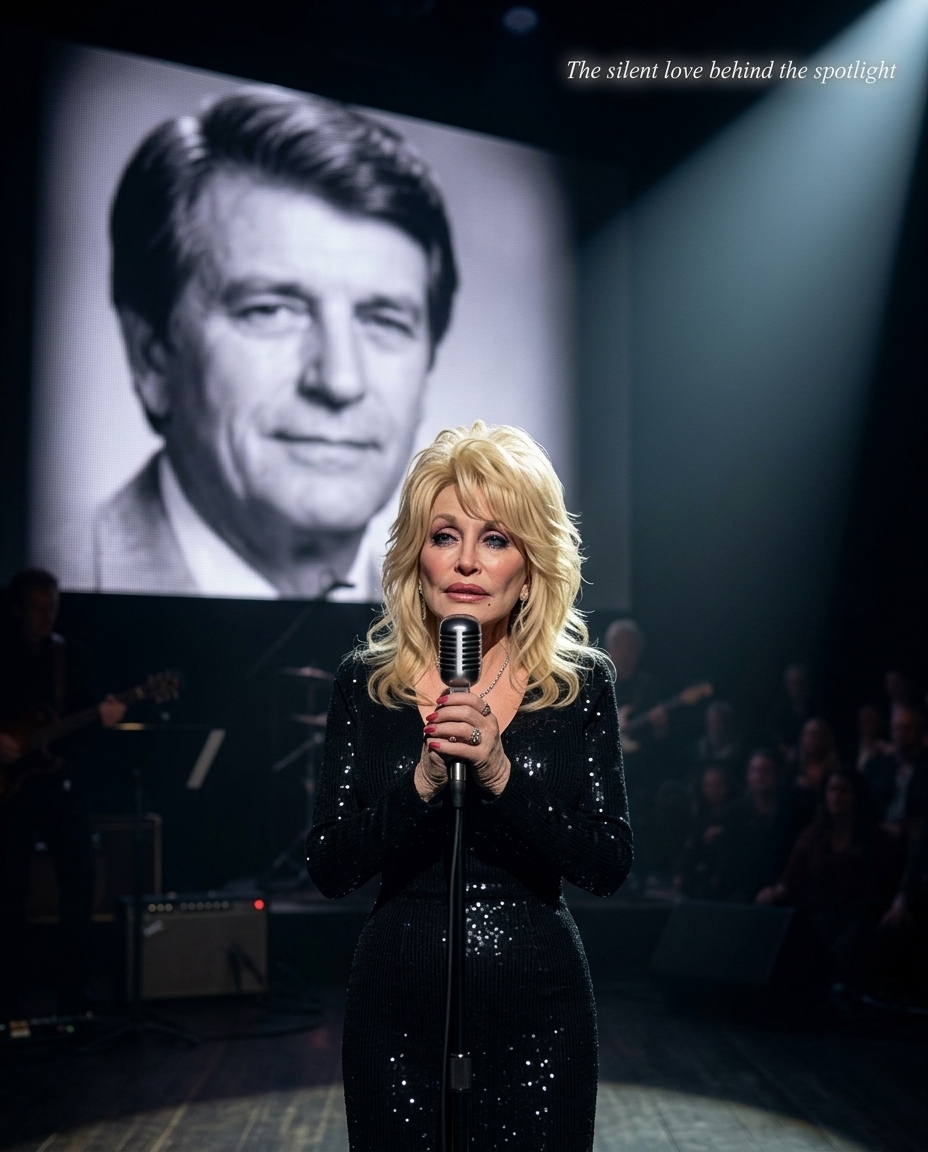
For decades, Carl Dean was one of the great mysteries in country music — not because Dolly Parton hid him, but because Carl Dean truly wanted no part of the spotlight.
While Dolly Parton became one of the most recognized women in the world, Carl Dean stayed far from cameras, interviews, and red carpets. Their love story never depended on appearances. It lived in quieter places: long drives, private jokes, routines built over time, and a bond that survived fame, distance, and nearly six decades of marriage.
So when Carl Dean died at 82, the loss was not just public news. For Dolly Parton, it was deeply personal. It was the end of a daily presence that had shaped almost her entire adult life.
A Love Story That Never Needed the Spotlight
Dolly Parton has often said that she met Carl Dean the day she arrived in Nashville in 1964. She was outside a laundromat, young and full of ambition, when Carl Dean noticed her. What stayed with Dolly Parton all these years was not simply that he approached her. It was how he looked at her.
As Dolly Parton once recalled, Carl Dean looked at her face first. For someone who would later become a global icon known for a larger-than-life image, that detail mattered. It still matters now. In one sentence, Dolly Parton revealed what Carl Dean had always given her: a place where she could just be herself.
They married in 1966, and from then on, they built a relationship that confused some people precisely because it was so private. Carl Dean did not chase fame. He did not follow Dolly Parton from premiere to premiere. He stayed grounded in ordinary life while she stepped into extraordinary success. Somehow, that balance worked.
Maybe that was the secret. Dolly Parton belonged to the world, but Carl Dean belonged to home.
The Parade, the Smile, and the Collapse in Private
After Carl Dean’s death, Dolly Parton kept going the way many grieving people do. She showed up. She smiled. She carried herself with grace in public, even while heartbreak was still fresh.
But grief has a way of waiting until the quiet moment arrives.
Dolly Parton later described what happened after appearing at Dollywood. She had made it through the parade. She had waved to families, accepted the love of the crowd, and done what people have come to expect from her for years: bring joy, even when life is heavy.
Then she got into the van.
“I got in the van and just boo hoo’d for the longest time.”
It is such a simple line, and maybe that is why it hits so hard. There is no performance in it. No polished language. Just the truth of someone who held herself together until she couldn’t anymore.
Dolly Parton also admitted that she felt worn down and worn out. That kind of grief is not dramatic in the way movies often show it. It is exhausting. It sits in the body. It follows routines. It turns familiar rooms into reminders.
More Than a Husband, More Than a Memory
When Dolly Parton speaks about Carl Dean now, the sadness is clear. But so is the gratitude. This was not a short chapter. This was a life shared over 60 years. That kind of love does not disappear when a person is gone. It changes shape. It becomes memory, ache, prayer, habit, silence.
And still, Dolly Parton remains Dolly Parton. Even in sorrow, she finds a way to turn love into something generous. She has spoken with tenderness, not spectacle. She has honored Carl Dean not by making him bigger than life, but by protecting what made him special in the first place: his privacy, his steadiness, and the ordinary devotion that held their marriage together.
That may be the most moving part of all. In a world that rewards constant visibility, Dolly Parton is mourning the man who never needed to be seen to be central. Carl Dean was not the background to her life. Carl Dean was the anchor.
And maybe that is why this story has touched so many people. Beneath the fame, beneath the rhinestones, beneath the legend, it is simply the story of a woman missing the person who knew her best.
Not the icon. Not the voice. Not the image.
Just Dolly Parton.
Post navigation
Loretta Lynn’s Final Night Carried the Kind of Peace Country Music Rarely Knows How to Explain
For decades, Loretta Lynn sang about life in a way that felt plain, direct, and true. Loretta Lynn never needed fancy language to make people feel something. Loretta Lynn just said it the way people lived it. That was the gift. That was the voice. And in the final chapter of Loretta Lynn’s life, that same honesty seemed to remain with Loretta Lynn until the very end.
According to family reflections shared after Loretta Lynn’s passing, the final hours were filled not with chaos, but with a strange, almost sacred calm. The most unforgettable moment came when Loretta Lynn reportedly told daughter Peggy that Doo was there, waiting for Loretta Lynn. For the family, it was not a line from a song. It was not a performance. It was a deeply personal moment that seemed to bring comfort just before goodbye.
A Love Story That Never Really Left the Room
Oliver “Doo” Lynn had been gone for 26 years, but anyone who knew Loretta Lynn’s story understood that Doo’s presence had never fully disappeared from Loretta Lynn’s world. Their marriage was complicated, intense, sometimes painful, and impossible to separate from the songs that made Loretta Lynn a legend. From the earliest days of poverty and young marriage to the rise of one of country music’s most powerful voices, Doo was part of the foundation of that story.
So when Loretta Lynn said that Doo was there, taking Loretta Lynn to heaven, the words landed with enormous emotional weight. To a family gathered around a beloved mother, grandmother, and icon, it must have felt like hearing the final line of a song no one was ready to end.
Peggy Stayed Close Through the Hardest Years
Peggy had become Loretta Lynn’s primary caretaker after the 2017 stroke that changed everything. That year marked the close of Loretta Lynn’s touring life after nearly six decades on the road. For most artists, that would have been the final curtain. But Loretta Lynn was never built like most artists.
Even after the stroke, and even after a broken hip added more pain and limitation, Loretta Lynn kept writing. That detail matters. It says something essential about who Loretta Lynn was. Long after stages became difficult and travel became impossible, the creative fire was still alive. There were still songs to shape, memories to revisit, feelings to turn into melody. Loretta Lynn may have slowed down physically, but Loretta Lynn never truly stopped being Loretta Lynn.
That makes the final years even more moving. They were not years of surrender. They were years of endurance. Family stepped in. Time moved differently. The spotlight softened. But the spirit that built a career from hard truth remained intact.
The Morning Country Music Went Quiet
On October 4, 2022, Loretta Lynn passed away at the ranch in Hurricane Mills, Tennessee. There was no dramatic public farewell, no stage lights, no microphone in hand. Loretta Lynn simply went to sleep and did not wake up. There is something deeply fitting about that for an artist whose greatest strength was always authenticity. Even the ending carried a kind of plain-spoken grace.
What Peggy later shared made the loss feel even more intimate. Peggy described kissing Loretta Lynn goodbye and being struck by how radiant Loretta Lynn looked, even in death. Those are the details that stay with people. Not because they are loud, but because they are tender. They remind us that behind the public legend was a family standing in a room, facing the same heartbreak that any family faces when love has nowhere left to go but memory.
The Songs Were Still There at the End
There is another layer to this story that makes it especially painful for country music fans. Peggy and Patsy later spoke about Loretta Lynn’s unfinished creative ideas and final projects. Even near the end, Loretta Lynn was still thinking like a songwriter. That image is hard to shake: a woman who had already said so much to the world still carrying more to say.
And perhaps that is why this final chapter feels so powerful. It was not only the end of a life. It was the closing of a voice that had spent generations telling women they could be honest, flawed, angry, funny, faithful, broken, and still worthy of being heard.
In the end, Loretta Lynn’s last reported words to Peggy did not sound like fear. They sounded like recognition. Like reunion. Like a woman who had spent a lifetime writing about love, pain, marriage, survival, and home suddenly seeing all of it come together in one final moment.
For fans, that may be the hardest and most beautiful part of all: Loretta Lynn left this world the same way Loretta Lynn lived in it — speaking from the heart, and making people feel every word.